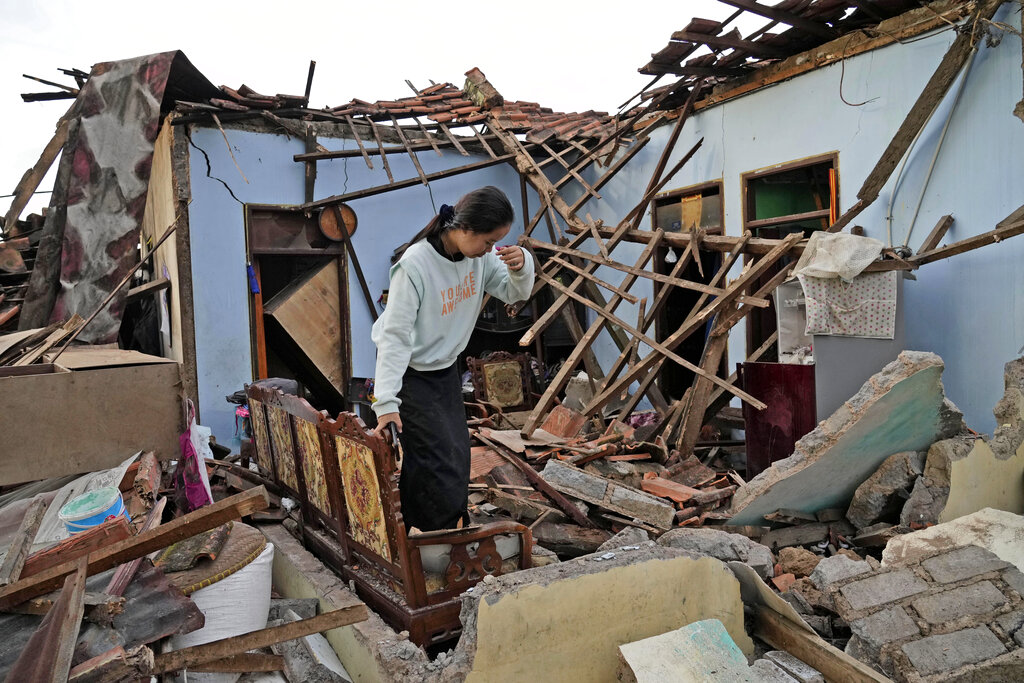
A powerful earthquake measuring 7.4 on the Richter scale struck the Maluku region of Indonesia on Thursday morning, raising concerns about a potential local tsunami in some coastal areas. The earthquake, which occurred at 06:48 local time, had a depth of approximately 30 kilometers, making it felt by residents in the surrounding areas.
According to the earthquake studies center in Sulawesi, the earthquake reflects the complexities of the double plate boundary region, where oceanic plates from two sides (the Sangihe and Halmahera plates) converge, creating a complex pressure system.
Details of the Event
Ardi Arsid, the director of the earthquake studies center, stated that the earthquake was interpreted as a result of a thrust fault movement, rather than along the boundary between major plates. This type of earthquake, while not being deep, could lead to a local tsunami, highlighting the importance of community awareness about potential risks.
Although the earthquake was not of the type that typically causes a large tsunami, experts warned that coastal areas should remain alert, especially those with geological conditions that might exacerbate the earthquake's impact.
Background & Context
Historically, Indonesia has experienced numerous strong earthquakes due to its geographical location in the Ring of Fire of the Pacific, where several tectonic plates meet. This makes the country susceptible to earthquakes and tsunamis, necessitating effective risk reduction strategies.
In recent years, the Indonesian government has enhanced early warning systems and developed emergency plans, but earthquakes still pose a significant challenge for local authorities and communities.
Impact & Consequences
The recent earthquake may lead to negative impacts on infrastructure in the affected areas, particularly in regions with soft soil that may experience increased shaking. There is also a risk of landslides in some areas, necessitating precautionary measures.
It is crucial for local communities to remain alert and follow official instructions from authorities, including the Indonesian Meteorology Agency, which is closely monitoring the situation.
Regional Significance
While the earthquake in Indonesia may seem distant from the Arab region, natural events like this remind us of the importance of preparedness for natural disasters. Arab countries, especially those located in seismic zones, should learn from the experiences of other nations in crisis management.
In conclusion, the earthquake that struck Maluku serves as a reminder of the necessity for preparedness and awareness of natural hazards, as rapid and effective response can save lives and reduce damage.