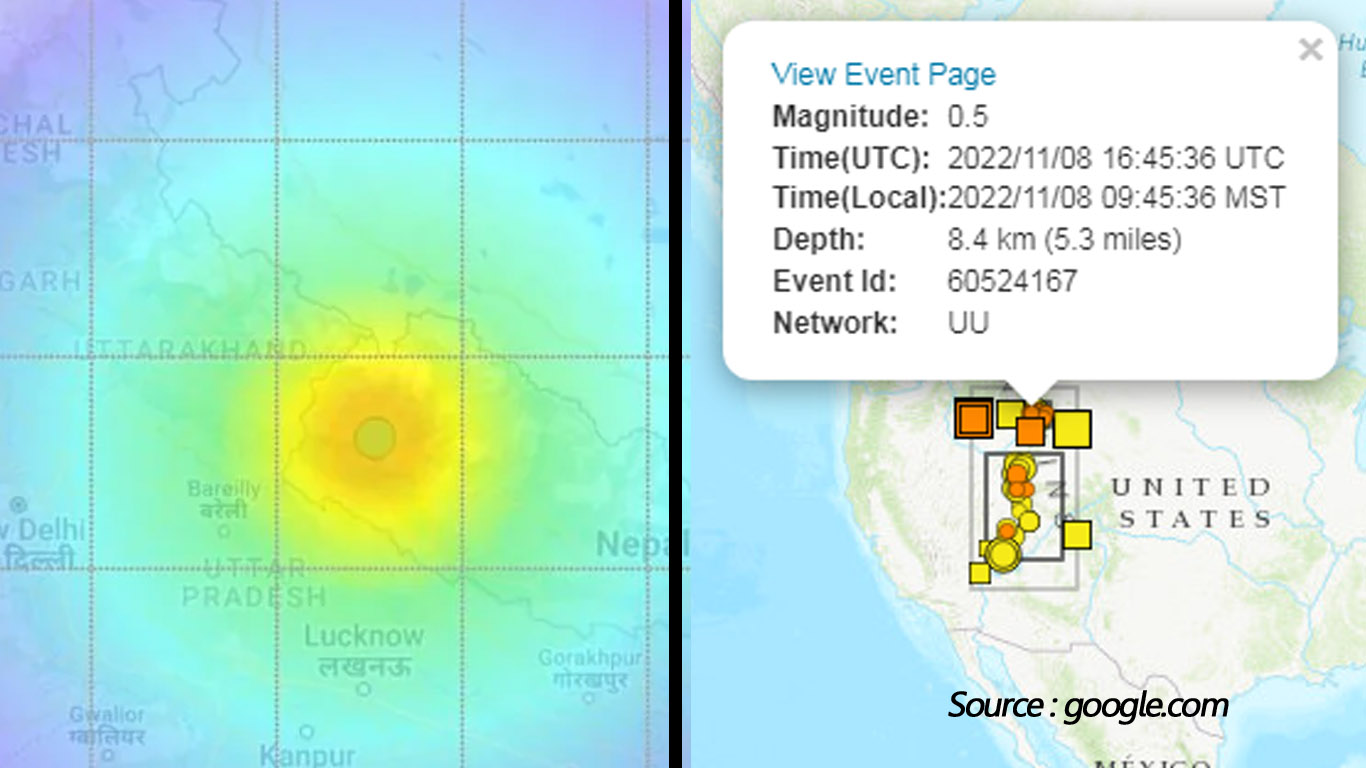
A powerful earthquake struck northern India today, felt by residents of the capital, Delhi, and surrounding areas, causing panic and concern among citizens. The earthquake occurred early this morning, with reports indicating it registered a magnitude of 5.5 on the Richter scale, leading to the shaking of buildings and streets.
According to the Indian Seismological Center, the epicenter of the earthquake was located at a depth of 10 kilometers, near the city of Rohtak in the state of Haryana, an area that experiences relatively high seismic activity. No immediate reports of significant damage or injuries have been recorded, but residents expressed concerns about the recurrence of such natural phenomena.
Details of the Event
The earthquake that occurred in northern India is part of an increasing seismic activity in the region, which has witnessed several earthquakes in recent years. While earthquakes in India are not new, their strength and depth can significantly impact densely populated urban areas like Delhi.
It is noteworthy that earthquakes in India are often accompanied by weather fluctuations, complicating the situation further. Seismologists have pointed out that India is situated in a seismically active zone where tectonic plates intersect, making it prone to such events.
Background & Context
Historically, India has experienced many devastating earthquakes, such as the Gujarat earthquake in 2001, which resulted in thousands of casualties. India is considered one of the most earthquake-prone countries in the world, with several tectonically active regions. This situation has led to the development of strategies to mitigate potential damage, including improving building standards and raising public awareness.
In recent years, the Indian government has intensified its efforts to monitor seismic activity and develop early warning systems, which help reduce human and material losses. However, further work is still needed to ensure the safety of citizens in the most vulnerable areas.
Impact & Consequences
The recent earthquake highlights the importance of preparedness for natural disasters in India. Although no significant damage has been recorded so far, the panic experienced by residents indicates a need for increased awareness and training on how to act in such situations. Additionally, earthquakes can impact the local economy, potentially leading to business interruptions and disruption of daily life.
Moreover, earthquakes can affect infrastructure, necessitating significant investments in reconstruction and rehabilitation. Therefore, it is crucial to have effective emergency plans in place to address any crises that may arise from earthquakes.
Regional Significance
While the earthquake that struck northern India may seem distant from the Arab region, such natural events can influence global markets and trade. India is an important trading partner for many Arab countries, and any disruptions in India could affect economic relations.
Furthermore, awareness of earthquakes and natural disasters can impact how Arab countries address environmental challenges. Enhancing cooperation among countries in the exchange of information and experiences regarding natural disasters can yield significant benefits.
In conclusion, the earthquake that struck northern India serves as a reminder of the necessity of preparedness for natural disasters, whether in India or elsewhere. Strengthening awareness and international cooperation can help mitigate risks and improve countries' responses to such challenges.