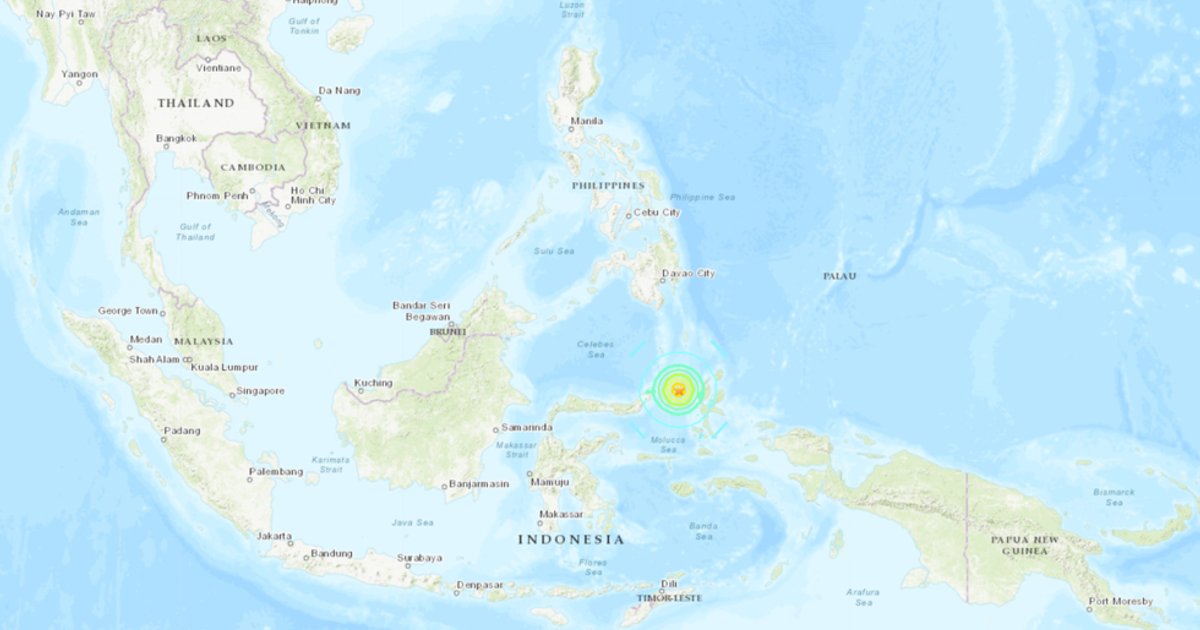
A powerful earthquake measuring 7.8 struck the Maluku Sea off the coast of Ternate, Indonesia, on Thursday morning, prompting tsunami warnings for neighboring countries. According to the United States Geological Survey, the earthquake occurred at 6:48 AM local time, at a depth of 10 kilometers.
The epicenter of the earthquake was located approximately 120 kilometers from the city of Ternate, which is situated in the North Maluku province and has a population of over 205,000 residents. The Tsunami Warning Center in Hawaii warned of the potential for dangerous tsunami waves up to 1,000 kilometers from the earthquake's epicenter, affecting the coasts of Indonesia, the Philippines, and Malaysia.
Details of the Event
The earthquake that struck the Maluku Sea is one of the significant quakes the region has experienced in recent years, occurring at a sensitive time when many countries are suffering from the effects of natural disasters. The quake was strong enough to raise concerns among local residents, leading to the evacuation of some coastal populations as a precautionary measure.
The Maluku region is known for its seismic activity, located on the Pacific Ring of Fire, which makes it susceptible to earthquakes and tsunamis. The area has experienced previous earthquakes, but this one is among the strongest in recent years.
Background & Context
Historically, Indonesia has witnessed numerous devastating earthquakes, making it one of the most earthquake-prone countries in the world. In 2004, Indonesia experienced a catastrophic earthquake measuring 9.1, which triggered a tsunami that claimed the lives of over 230,000 people across several countries. This event prompted Indonesia to invest significantly in early warning systems to combat natural disasters.
The Indonesian government is working to improve disaster preparedness infrastructure, including building tsunami warning centers and training emergency response teams. However, much work remains to ensure the safety of populations in coastal areas.
Impact & Consequences
The recent earthquake may lead to significant economic and social repercussions, especially if a tsunami is confirmed. In the event of a tsunami, coastal areas could suffer severe damage, impacting tourism and the local economy. There are also concerns about the safety of local residents, as the earthquake could trigger landslides or damage buildings.
Such events require a swift response from the government and relevant authorities, as humanitarian aid and medical care must be provided to the injured. Clear emergency plans must also be in place to ensure the safety of residents in the future.
Regional Significance
While the earthquake in Indonesia may seem distant from the Arab region, natural events like this remind us of the importance of disaster preparedness. Many Arab countries, especially those along the Red Sea and the Arabian Gulf, may also face seismic or tsunami risks. Therefore, it is crucial for Arab nations to adopt effective strategies to handle natural disasters.
In conclusion, the recent earthquake in the Maluku Sea serves as a reminder of nature's power and the importance of preparedness and readiness to face such disasters. The international community must collaborate to assist affected countries and provide necessary support.