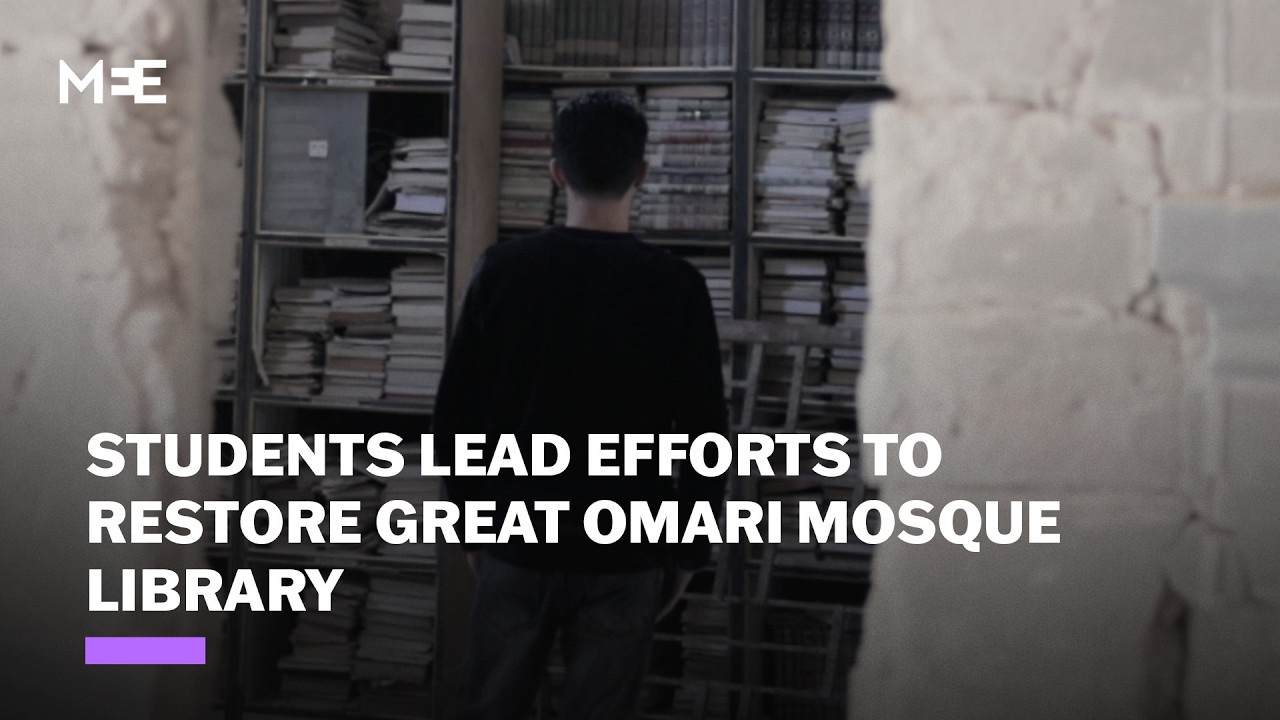
In a move that reflects the spirit of solidarity and resistance, a group of Palestinian medical students in Gaza has launched an initiative to clean and restore the Al-Omari Mosque Library, which sustained significant damage due to Israeli airstrikes. The initiative began after the students visited the mosque following Friday prayers, where they found thousands of books and rare manuscripts, including copies of the Holy Quran, scattered, burned, and covered in debris and dust.
Under the leadership of student Kareem Al-Khudari from the Islamic University of Gaza, the volunteers began their work using limited resources and simple tools. They removed debris and cleaned the remaining books in an effort to preserve what is left of this valuable cultural collection. Despite the challenging security conditions, including nearby shelling and drone activity, the volunteers continued their efforts, viewing this mission as a cultural and moral responsibility.
Event Details
This initiative demonstrates how individual efforts can contribute to rebuilding cultural identity in times of crisis. The library, which was considered a center of knowledge and culture in Gaza, has suffered extensive destruction, significantly impacting the local community. The hardworking volunteers aim to revive this library, reflecting their commitment to preserving Palestinian cultural heritage.
The library contains a rare collection of books and manuscripts dating back centuries, making it a beacon of knowledge in the region. However, the challenges they face are not simple, as substantial financial and human resources are required to fully rebuild the library.
Background & Context
Historically, the Al-Omari Mosque is one of the oldest mosques in Gaza, dating back to the early Islamic periods. It has been an important center for knowledge and religion, hosting many scholars and thinkers throughout the ages. As the conflict in the region escalated, many cultural and religious landmarks were destroyed, leading to a significant loss of Palestinian cultural identity.
The library is an integral part of this heritage, housing a collection of books that reflect the history and culture of the Palestinian people. Restoring the library is not just a humanitarian act; it is also an attempt to preserve the collective memory of the Palestinian people in the face of ongoing challenges.
Impact & Consequences
The effects of this initiative extend beyond merely rebuilding a library; they also reflect the importance of culture in enhancing national identity. Amid the difficult circumstances faced by Palestinians, these efforts stand out as a symbol of hope and resistance. Preserving cultural heritage is a fundamental part of the Palestinian struggle, as the people strive to maintain their identity in the face of challenges.
Moreover, this initiative may inspire more Palestinian youth to engage in similar efforts, fostering a spirit of cooperation and teamwork within the community. Volunteering under such conditions reflects the strength of will and determination to confront difficulties.
Regional Significance
This initiative serves as a model in the Arab world, highlighting the importance of collective action in the face of crises. Amid ongoing conflicts in the region, such efforts can inspire other communities to undertake similar initiatives, enhancing the spirit of solidarity and cooperation.
Preserving cultural and religious heritage is a duty for all, and there should be joint efforts from Arab nations to support such initiatives. Ultimately, these efforts reflect hope for a better future, where peoples can rebuild their identity and culture despite all challenges.