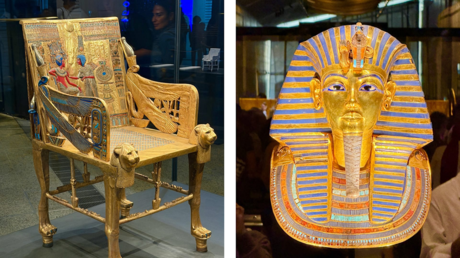
A recent study uncovers intriguing details about the final days of the golden pharaoh Tutankhamun, a prominent figure in ancient Egypt. The findings highlight potential conspiracies aimed at his removal from power.
The study is based on research conducted by a team of Egyptian scientists who utilized modern techniques to analyze available information about King Tutankhamun's life. The results indicate signs of internal conflicts within the royal court, which may explain the mysterious circumstances surrounding his death.
Details of the Event
The history of King Tutankhamun is filled with secrets, as his tomb was discovered in 1922 by British archaeologist Howard Carter. This tomb is renowned for its stunning treasures, but the new study suggests that there are other aspects of his life that deserve further investigation. According to the findings, it appears that the king may have been a victim of a conspiracy aimed at overthrowing him, reflecting the political and social tensions prevalent during that period.
The study also includes an analysis of the physical evidence found in the king's mummy, where some evidence suggests he may have suffered injuries resulting from an assault. These findings open up new questions about how Egypt was governed during that era.
Background & Context
Tutankhamun is one of the most famous pharaohs in ancient Egyptian history, having ascended to the throne at a young age. He was known for renewing the ancient Egyptian religion and altering some traditions, making him a controversial figure. However, his sudden death at a young age left many questions unanswered, prompting scholars to delve into the details of his life.
The history of ancient Egypt is filled with fascinating stories about power struggles, and the reign of Tutankhamun was one of the most complex periods. There were many competing forces at that time, making the king vulnerable to conspiracies.
Impact & Consequences
This study highlights the importance of understanding ancient Egyptian history more deeply, as the new findings could help reassess historical events. Additionally, these discoveries may influence how we understand power and influence during that period.
The implications of this study extend beyond history, as it could inspire future research in other fields such as archaeology and historiography. Understanding how internal conflicts affected ancient governments can provide valuable lessons for modern societies.
Regional Significance
Egypt is considered one of the most important countries in the Arab world, and its rich history influences the cultural identity of the region. The recent discoveries about King Tutankhamun enhance Egypt's status as a center for scientific and cultural research.
Moreover, this study could contribute to attracting more tourists to Egypt, as Egyptian antiquities are among the most prominent tourist attractions in the world. Enhancing tourism could have a positive impact on the Egyptian economy.
In conclusion, the study of King Tutankhamun's life and the conspiracies surrounding him opens new horizons for understanding ancient Egyptian history. These findings are not just historical information but also reflect the challenges faced by societies across different eras.