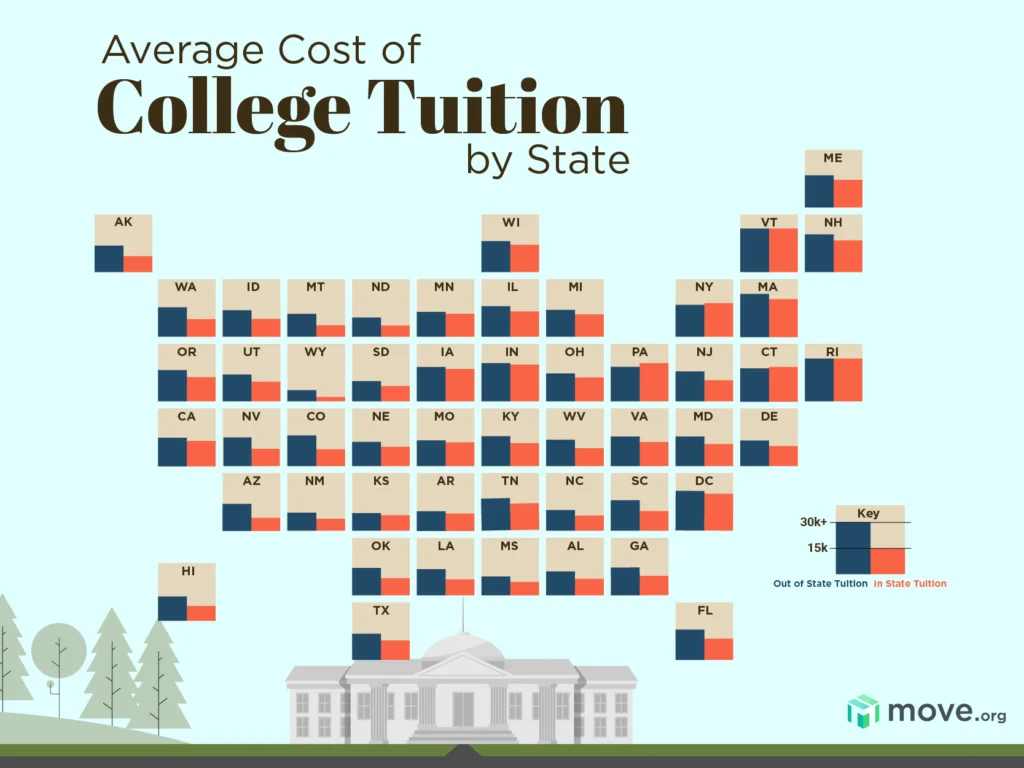
New data has shown that the costs of university education vary significantly based on family income, allowing parents to set more precise savings goals. The recently published study highlights the financial challenges faced by families across different income brackets and provides accurate estimates of university education costs in the United States.
The data indicates that university education costs can range from $10,000 to $50,000 annually, depending on the type of educational institution, whether public or private, as well as its geographical location. This information is crucial for parents striving to secure an educational future for their children, especially amid continually rising education costs.
Event Details
The figures reveal that low-income families, with incomes ranging between $45,000 and $60,000 annually, need to save approximately $10,000 each year to cover university education costs. In contrast, high-income families, with incomes exceeding $250,000, may need to save up to $30,000 annually. This significant gap in figures reflects the challenges families face in financial planning.
It is important to note that these costs include tuition fees only, excluding other expenses such as housing, books, and study materials. Therefore, the actual figures may be much higher than expected.
Background & Context
Concerns about university education costs in the United States are growing, as there has been a noticeable increase in tuition fees in recent years. According to previous reports, education costs have risen by 25% over the past decade, making higher education unattainable for many families. This situation has prompted some states to take action to alleviate the financial burden on families, such as offering scholarships and low-interest loans.
This issue is particularly significant amid global economic challenges, as many parents strive to balance providing quality education for their children with the pressures of daily life.
Impact & Consequences
Studies indicate that rising university education costs can negatively affect families' decisions regarding education, as some parents may choose not to send their children to universities due to high costs. This could lead to a decrease in higher education enrollment rates, impacting the economy as a whole.
Moreover, the inability to afford education may lead to a rise in student debt, as students resort to borrowing to cover educational expenses. This debt can become a significant burden on individuals after graduation, affecting their career and financial choices in the future.
Regional Significance
The issue of university education costs is also significant in the Arab region, where many families face similar challenges in securing education for their children. In some Arab countries, such as Egypt and Jordan, education costs have risen significantly, making university education unattainable for many families.
Some Arab governments are striving to improve the education system and provide scholarships to assist low-income families. However, there remains an urgent need to develop effective strategies to ensure access to education for all, contributing to building a better future for the coming generations.