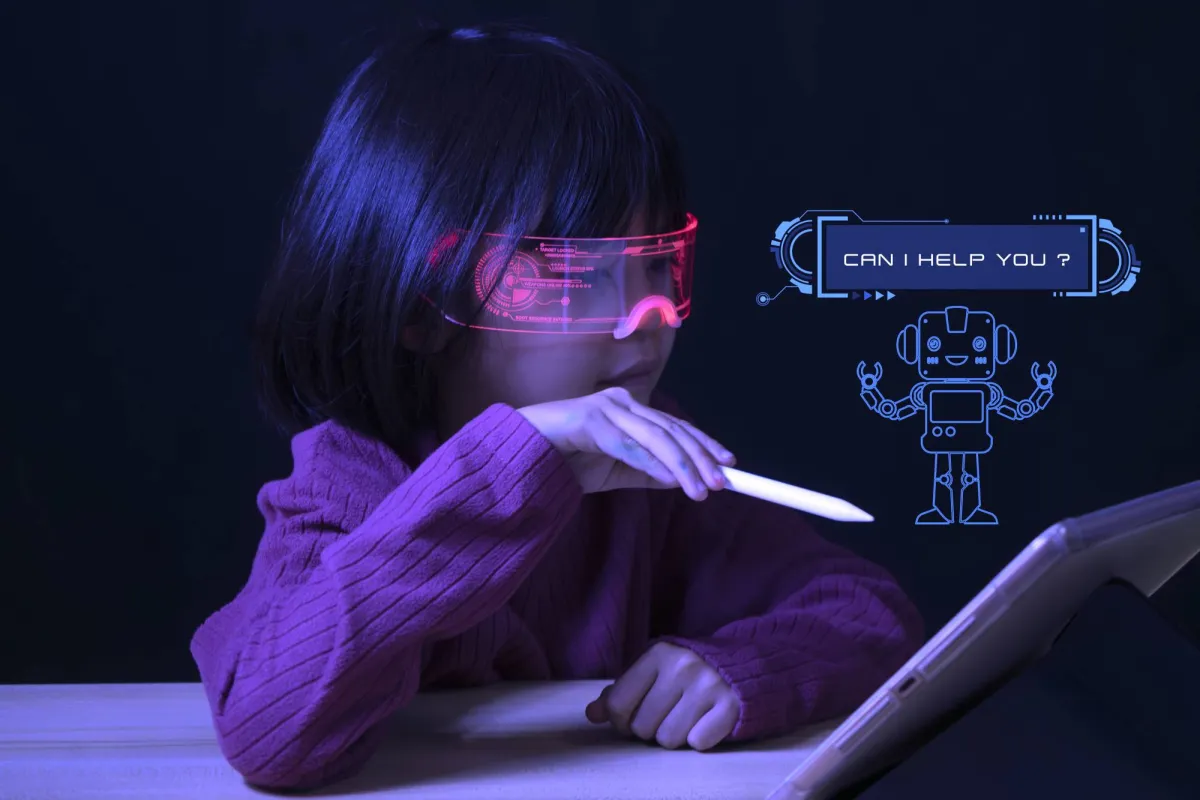
A recent psychological study conducted by researchers from Canterbury University in New Zealand has revealed that exposure to artificial intelligence content at an early age can have dire consequences on children's mental and cognitive health. The study, published in the Journal of Applied Developmental Science, monitored the effects of this content on children aged between 9 months and 8 years.
Researchers explained that many parents struggle to monitor what their children watch online, making them vulnerable to content that can be both frightening and appealing. This content, which includes violent materials or sexual innuendos, can adversely affect children's development.
Details of the Study
The study was based on data from a longitudinal study conducted in New Zealand that tracked the growth of over 6,000 children. Researchers identified four patterns of screen use during early childhood: the first is low or stable use, the second is low use that gradually increases, the third is high use followed by a rapid increase, and the fourth is chronically very high use. The results showed that children who excessively used screens experienced a decline in cognitive skills and academic performance.
Conversely, the study found that children who reduced their screen time exhibited significant improvements in language skills and social interaction, particularly in early childhood stages.
Background & Context
Concerns are growing regarding the effects of artificial intelligence on children as its use in content tailored for them increases. AI-supported content is characterized by its ability to interact with children in simple language, making it more appealing. However, this interaction cannot replace the real human experiences that children need for their psychological and social growth.
Researchers assert that children learn about themselves and the world through all their senses, not just through sight and hearing. Physical and emotional interactions with others are essential for their healthy development, which artificial intelligence cannot provide.
Impact & Consequences
The study warns that increased exposure to artificial intelligence content may lead to irreversible effects on an entire generation of children. As the use of this type of content rises, the need for long-term studies to assess potential risks becomes urgent.
Researchers emphasize that children's normal growth depends on social interaction and physical communication, which are threatened by the increasing reliance on technology. Parents are urged to take steps to protect their children from excessive exposure to AI content.
Regional Significance
In the Arab region, where the use of technology among children is on the rise, this study should serve as a wake-up call for parents and educators. With the increasing reliance on digital content, efforts must be made to educate families about the potential risks of exposing children to artificial intelligence content.
Enhancing social interaction and physical activities should be part of modern parenting strategies to ensure that children grow up healthily and balanced.