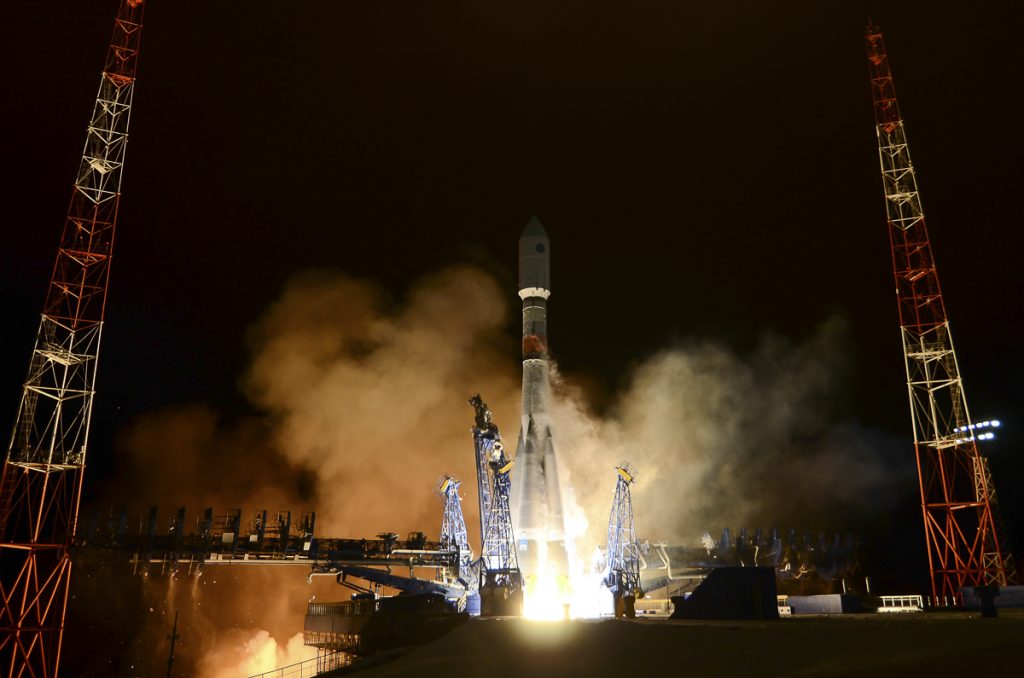
The Russian Ministry of Defense announced today, Friday, the successful launch of the "Soyuz-2.1a" carrier rocket from the Plesetsk space launch facility located in northwestern Russia, with the launch occurring at 10:00 Moscow time. The rocket is carrying a new military satellite, enhancing Russia's defensive capabilities in space.
This step is part of Russia's ongoing efforts to modernize and strengthen its military capabilities, especially amid increasing geopolitical tensions in the region. The Soyuz rocket is one of the most prominent Russian rockets, developed to be versatile and used for launching both civilian and military satellites.
Event Details
The "Soyuz-2.1a" rocket was launched from the launch pad at the Plesetsk facility, one of Russia's main space launch sites. The rocket is equipped with modern technologies that ensure high precision in placing satellites into their designated orbits. This launch is part of the Russian space program aimed at enhancing the country's military and intelligence capabilities.
It is noteworthy that the Soyuz rocket has undergone numerous improvements since its first launch, having been developed to meet modern space requirements. This model is characterized by its ability to carry diverse payloads, making it an ideal choice for many space missions.
Background & Context
Historically, Russia has been a leading country in the field of space, having launched the world's first satellite, Sputnik, in 1957. Since then, Russia has continued to develop its space programs, including sending astronauts into outer space and launching exploratory missions to other planets.
In recent years, Russia has increased its investments in the space sector, particularly in light of the security challenges it faces. Military satellites are a crucial part of Russia's defense strategy, enabling it to monitor military activities of other countries and enhance its intelligence capabilities.
Impact & Consequences
The success of this launch is an important step in strengthening Russian military capabilities and could significantly affect the military balance in the region. With rising tensions between Russia and Western countries, this achievement may lead to increased competition in space, as other nations seek to enhance their space capabilities to meet new challenges.
This launch may also provoke reactions from neighboring countries, which might perceive it as a threat to their national security. These countries are likely to take steps to bolster their own space or military programs in response to this Russian achievement.
Regional Significance
Considering the potential impact of this launch on the Arab region, it could affect relations between Arab countries and Russia. Some Arab nations may seek to enhance their cooperation with Russia in the field of space, especially given global trends towards using space for military and commercial purposes.
This achievement may also open new opportunities for collaboration in technology and scientific research between Arab countries and Russia, thereby enhancing scientific and technological capabilities in the region.
In conclusion, the launch of the "Soyuz-2.1a" rocket from the Plesetsk base represents a significant step in strengthening Russian military capabilities and reflects global trends towards increased investments in space. It remains to be seen how these developments will affect international relations and the military balance in the region.