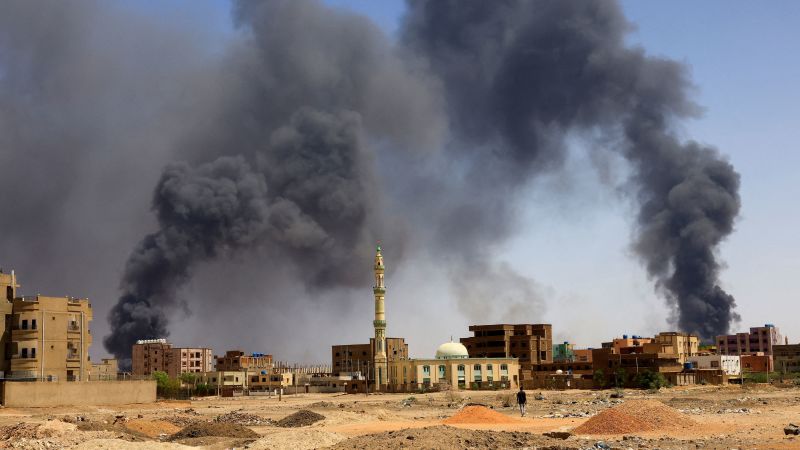
The Sudanese army has accused the Rapid Support Forces of occupying a Gulf embassy in the capital, Khartoum, intensifying the tensions in a country plagued by ongoing internal conflicts. The army stated in an official announcement that the Rapid Support Forces stormed the embassy, which constitutes a blatant violation of diplomatic sovereignty.
These events come at a sensitive time for Sudan, which has been experiencing a political and military crisis for an extended period. These crises have exacerbated humanitarian and economic conditions, raising alarms within the international community.
Details of the Incident
In a statement issued by the Sudanese army, it was confirmed that the Rapid Support Forces had stormed the Gulf embassy, marking a dangerous precedent in the history of diplomatic relations in the country. The statement indicated that this action reflects a lack of respect for international laws that protect diplomatic missions.
The army also added that this assault occurs in the context of ongoing escalation by the Rapid Support Forces, which have been involved in numerous armed conflicts within the country. These forces are considered part of the broader conflict that has engulfed Sudan since the ousting of former President Omar al-Bashir in 2019.
Background & Context
The Rapid Support Forces were established in 2013 and were initially used to combat rebellion in Darfur. Over time, these forces have become a key player in the political and military conflicts in Sudan. The country has witnessed numerous coups and popular protests leading to significant changes in power.
Relations between Sudan and Gulf countries are sensitive, as these nations play an important role in supporting stability in the region. With the escalation of tensions, these events could impact diplomatic relations between Sudan and Gulf countries, further complicating the situation in the country.
Impact & Consequences
These events could lead to an escalation of tensions between the army and the Rapid Support Forces, which may negatively affect security conditions in Khartoum. Additionally, the occupation of the embassy could provoke strong reactions from Gulf countries, which may take diplomatic or economic measures against Sudan.
Moreover, these developments could exacerbate humanitarian crises in the country, where populations are suffering from severe shortages of food and healthcare. Observers fear that the continuation of these crises could lead to an even greater explosion of the situation.
Regional Significance
The events in Sudan have significant implications for the Arab region, as they could lead to changes in political and economic alliances. The rising tensions in Sudan may encourage armed groups in other countries to take similar actions, increasing instability in the region.
Under these circumstances, Arab countries remain vigilant, seeking to maintain regional stability and avoid the spread of crises. These events may require a response from the international community to ensure the protection of diplomats and citizens in Sudan.