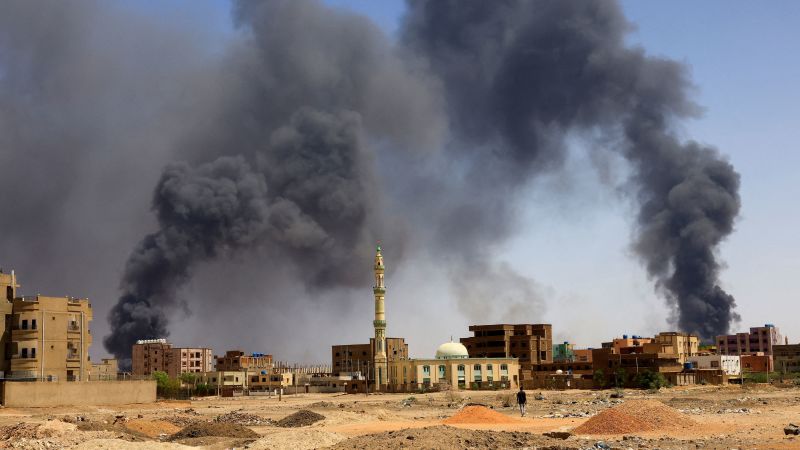
The Sudanese army announced today, Monday, its resistance to an attack launched by the Rapid Support Forces in the Sali area located in Blue Nile state, the southeasternmost part of the country. The Fourth Infantry Division of the army, from its headquarters in Damazin, the capital of Blue Nile state, stated that its forces crushed the Rapid Support Forces militia, inflicting heavy losses in lives and equipment.
In an official statement, the division clarified that its forces were able to repel the militia in the Sali area, reflecting the Sudanese army's capability to face the security challenges the country is experiencing amid the current conditions. This attack came at a sensitive time, as tensions in the region are escalating due to ongoing conflicts between government forces and the Rapid Support Forces.
Details of the Incident
The attack launched by the Rapid Support Forces on the Sali area is part of the ongoing conflict between the Sudanese army and the Rapid Support Forces, which were originally formed as an auxiliary force for the army but have become a significant challenge to Sudanese authorities. Military sources confirmed that the clashes that occurred in the area resulted in the deaths of several Rapid Support Forces personnel, in addition to the destruction of several military vehicles.
This attack is part of a series of clashes that have taken place in various states in Sudan, as the Rapid Support Forces continue to carry out operations in multiple areas, complicating the security situation in the country.
Background & Context
Historically, Sudan has witnessed multiple conflicts, especially following the outbreak of the conflict in Darfur in 2003, where the Rapid Support Forces were formed as part of government efforts to confront rebels. Over time, these forces have become an independent power with significant influence, leading to escalating tensions with the Sudanese army.
In recent years, conflicts between the army and the Rapid Support Forces have intensified, exacerbating the humanitarian situation in the country. These conflicts have significantly affected civilian lives, with increasing numbers of displaced persons and refugees due to the ongoing fighting.
Impact & Consequences
The repercussions of this attack extend beyond military dimensions, affecting political and economic stability in Sudan. As the conflict continues, pressures on the Sudanese government increase, which could exacerbate humanitarian and economic crises in the country.
Furthermore, the continuation of clashes may impact relations between Sudan and its neighbors, especially amid ongoing tensions in the Horn of Africa. This could lead to negative repercussions for regional security, necessitating international intervention to seek peaceful solutions.
Regional Significance
The situation in Sudan is of great importance to the Arab region, as Sudan's stability affects the security and stability of neighboring countries. With increasing conflicts, the movement of refugees and displaced persons in the region may be affected, increasing pressures on neighboring countries.
Moreover, the ongoing conflict in Sudan may impact peace efforts in the region and complicate international efforts to achieve stability in the Horn of Africa. Therefore, the situation in Sudan requires urgent international attention to ensure that conditions do not worsen.
In conclusion, the situation in Sudan remains complex, with increasing security and political challenges. The resistance to attacks by the Sudanese army reflects the government's will to confront these challenges, but lasting solutions require collective efforts from all concerned parties.