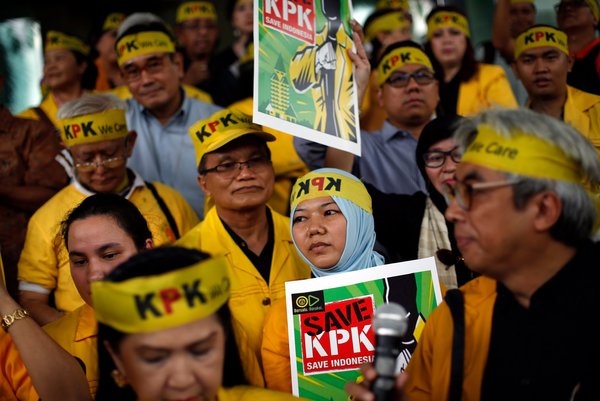
The Indonesian Corruption Eradication Commission (KPK) has summoned five individuals as witnesses in a case related to allegations of corruption and extortion by three prosecutors in the public prosecutor's office in the Hulusungai Utara region, located in South Kalimantan, specifically in the city of Bali.
KPK spokesperson Budi Prasetyo stated to reporters in Jakarta that the witnesses are from the private sector, known by their initials RT, RGS, IGM, MT, and SUD.
Details of the Incident
These investigations come after KPK conducted a surprise operation in the Hulusungai Utara region on December 18, 2025, where six individuals were arrested, including Albertens Barlingoman Napitupulu, the head of the public prosecutor's office in the region, and Asis Budianto, the head of the intelligence division.
The following day, KPK announced that it had seized funds amounting to hundreds of millions of rupiah in connection with the extortion case. On December 20, 2025, it was announced that both Albertens Napitupulu and Asis Budianto, along with Tri Taruna Fariadi, who served as the head of the civil and administrative affairs division in the public prosecutor's office, had been arrested.
Background & Context
This case is part of the Indonesian government's efforts to combat rampant corruption within state institutions, as the country has witnessed numerous scandals involving government officials in recent years. Reports indicate that corruption in Indonesia significantly affects economic and social development, prompting the government to take stringent actions against corrupt individuals.
Historically, Indonesia has struggled with high levels of corruption, leading to a loss of trust in government institutions. The KPK was established in 2002 as part of the government's efforts to enhance transparency and accountability, achieving several successes in the fight against corruption.
Impact & Consequences
This case serves as a true test of the KPK's ability to address corruption within state institutions. If the commission can substantiate the charges against the prosecutors, it may lead to increased trust in the judicial system and encourage greater transparency in government operations.
On the other hand, this case could have negative repercussions on Indonesia's reputation in the international community, especially if further corruption within state institutions is uncovered. Additionally, this case may impact foreign investments in the country, as investors seek a stable and transparent legal environment.
Regional Significance
This corruption case exemplifies the challenges faced by countries in combating corruption, a topic of concern for many Arab nations grappling with similar issues. Corruption is one of the most significant barriers to economic and social development in the Arab region, necessitating effective measures to combat it.
Arab countries can learn from Indonesia's experience in fighting corruption by enhancing transparency and accountability within their government institutions and implementing strict laws against corrupt practices. Strengthening trust in government institutions can contribute to improving the investment climate and promoting sustainable development in the region.