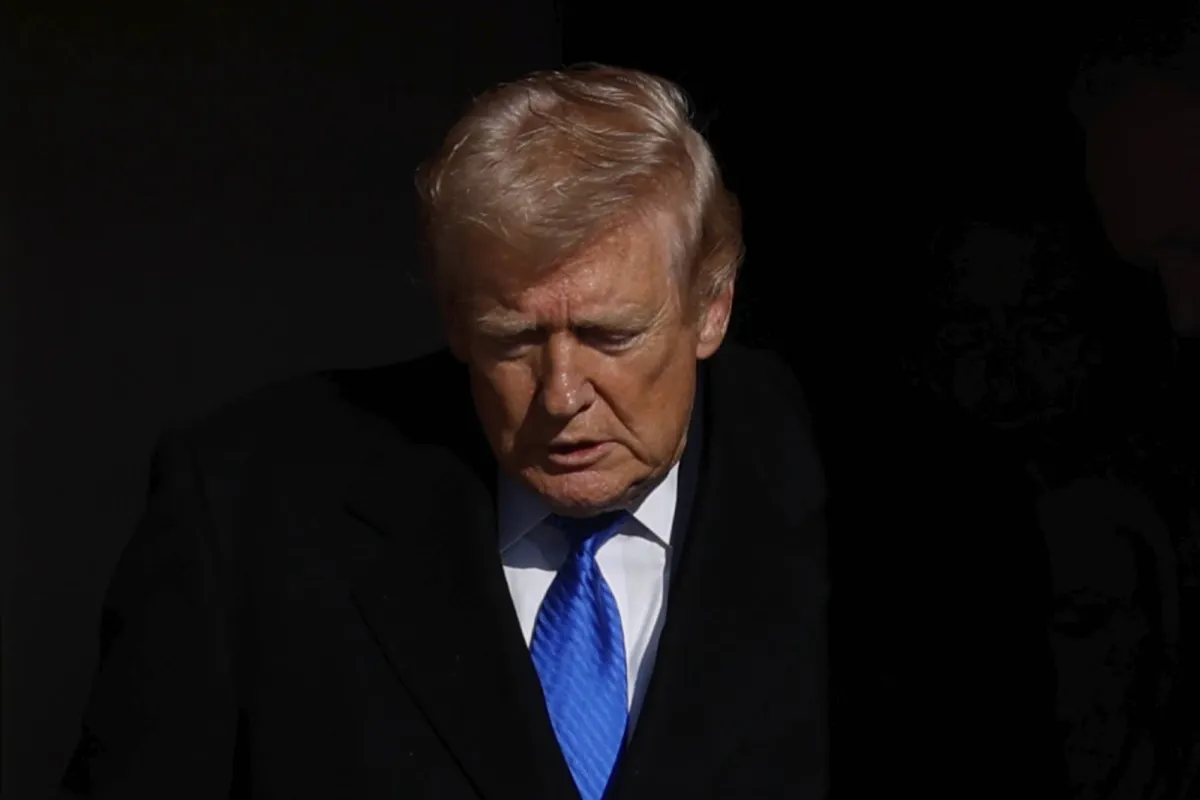
The U.S. Supreme Court commenced its deliberations on Tuesday regarding a case that addresses the core of the immigration policy implemented by former President Donald Trump. The court is examining whether the federal government has the authority to close the doors to asylum for migrants if it deems that its capacity has been reached.
The case revolves around what is known as the "rationing" policy, which allows immigration officials to halt the processing of asylum requests at the border and deny them indefinitely if they believe that the border crossings between the United States and Mexico cannot bear additional burdens. The Trump administration is seeking to reinstate this policy, which was rescinded by the current President Joe Biden in 2021, while a federal appeals court ruled that this policy contradicts federal law.
Details of the Case
The "rationing" policy was not new during Trump’s tenure; immigration officials began applying the principle of denying asylum seekers at the border as early as 2016 during Barack Obama's presidency amid a significant wave of migration. However, this policy gained formal status in 2018 during Trump’s first term when border officials were granted clear authority to suspend the processing of asylum requests whenever they assessed their inability to accommodate more.
The legal question at the heart of the case is a precise yet profoundly impactful one: Does an asylum seeker stopped on the Mexican side of the border count as having "arrived" in the United States? Federal law stipulates that every immigrant who "arrives in the United States" is entitled to apply for asylum and must be inspected by immigration officials.
The Ninth Circuit Court of Appeals in San Francisco answered this question affirmatively, asserting that the law requires inspection of all asylum seekers arriving at designated border crossings, even if they have not yet crossed the border. In contrast, the Trump administration maintains that the phrase "arriving at" means "physically entering a specific location, not merely approaching it," and that "a foreigner stopped in Mexico is not considered to have arrived in the United States."
Background & Context
This case comes amid a series of legal battles that the Trump administration has been engaged in regarding immigration, with the Supreme Court having upheld the administration's positions in several cases, including allowing the deportation of migrants to third countries outside their home nations and rescinding the temporary legal status of hundreds of thousands of Venezuelan migrants.
The court is also set to hear other sensitive cases in the coming weeks, including the constitutionality of Trump’s directive to restrict birthright citizenship, along with the administration's efforts to withdraw temporary legal protections from over 350,000 Haitians and approximately 6,100 Syrians residing in the United States. A ruling in this case is expected by the end of June.
Impact & Consequences
As the Supreme Court continues to deliberate on this case, the Costa Rican presidency announced the signing of a preliminary agreement with the Trump administration, allowing Costa Rica to receive migrants who are deported from the United States from other countries. It clarified that Costa Rica would have the final decision on accepting migrants, with expectations of transferring up to 25 individuals weekly to the country.
In a related context, Mexican authorities discovered 229 migrants in a truck crossing the state of Veracruz, signaling a potential increase in migration since Trump took office. The Deputy Foreign Minister of Veracruz stated that most migrants are from Central America, with some suffering from dehydration.
Regional Significance
This case holds particular importance for the Arab region, as its repercussions raise questions about how countries handle issues of migration and asylum. In light of ongoing crises in some Arab nations, U.S. policies may influence migrant flows to neighboring countries, necessitating a response from Arab governments.
In conclusion, the issue of immigration policy in the United States remains a focal point for global attention, especially amid the political and social tensions accompanying it, making it essential to monitor its developments and potential impacts on various communities.