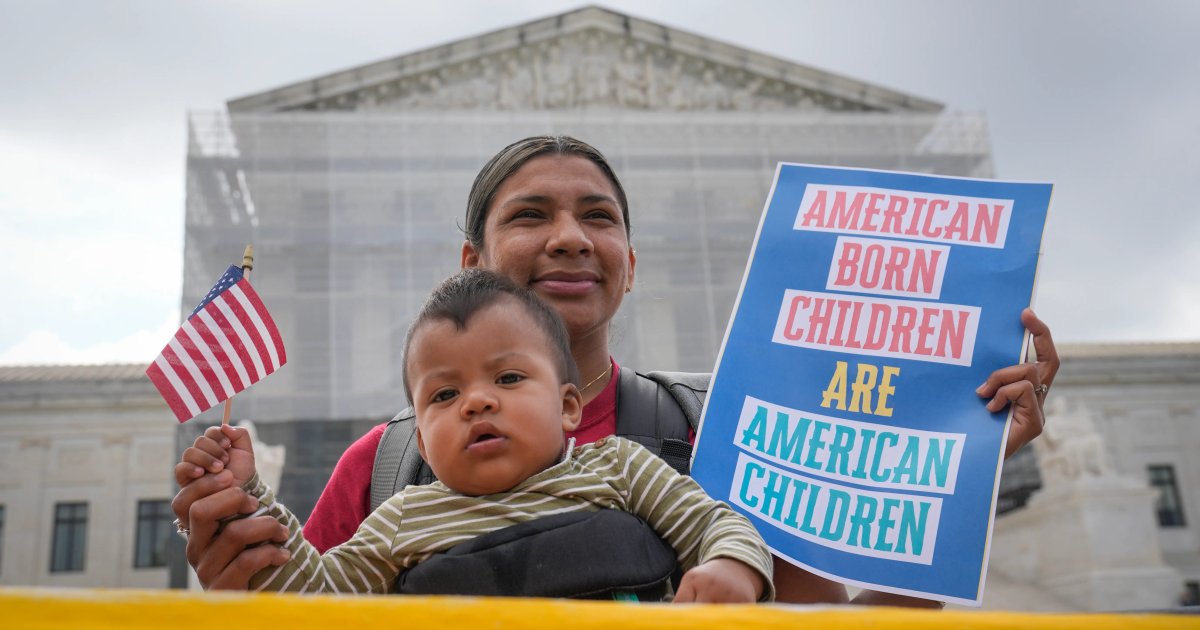
The Supreme Court of the United States is currently deliberating on the possibility of restricting birthright citizenship, a move advocated by former President Donald Trump. This discussion arises at a sensitive time, sparking widespread debate over immigrant rights in the country.
The previous administration under Trump sought to change the laws regarding citizenship, aiming to reduce the number of individuals who automatically receive U.S. citizenship at birth. This approach aligns with the immigration policy followed by the previous administration, which aimed to decrease the number of immigrants.
Details of the Case
The case before the Supreme Court involves a legal review to determine whether the President or the federal government can impose restrictions on birthright citizenship. This topic has sparked significant debate, with supporters arguing that this step is necessary to protect national identity, while opponents view it as a violation of human rights.
Trump's efforts are based on his interpretation of citizenship law, believing that the Fourteenth Amendment, which guarantees citizenship to anyone born in the United States, can be interpreted in various ways. Some legal experts have pointed out that this interpretation may face significant legal challenges.
Background & Context
Historically, the right to birthright citizenship has been included in the U.S. Constitution since 1868, as part of the Fourteenth Amendment established after the American Civil War. This right served as protection for individuals who were victims of racial discrimination and is considered a fundamental part of American identity.
Over the years, the United States has witnessed numerous debates surrounding immigration and citizenship, especially with the increasing number of immigrants from various parts of the world. However, the controversy surrounding birthright citizenship has notably escalated in recent years, particularly with the rise of anti-immigration rhetoric.
Impact & Consequences
If the Supreme Court decides to support Trump's efforts, it could lead to radical changes in U.S. immigration policy. This may directly affect thousands of children born to non-American parents, creating a state of legal uncertainty for them and their families.
Moreover, this move could open the door for further discussions regarding immigrant rights in the United States and may lead to increased social and political tensions in the country. Additionally, this issue could impact U.S. relations with other countries that send immigrants to the United States.
Regional Significance
For Arab countries, these discussions may raise particular interest, especially given the large numbers of Arab immigrants to the United States. Any changes in citizenship policy could affect Arab families seeking stability in the United States, complicating their legal situations.
Ultimately, the issue of birthright citizenship remains one of the most sensitive topics in American politics, with everyone awaiting the Supreme Court's decision that could determine the future for many families and immigrants in the country.