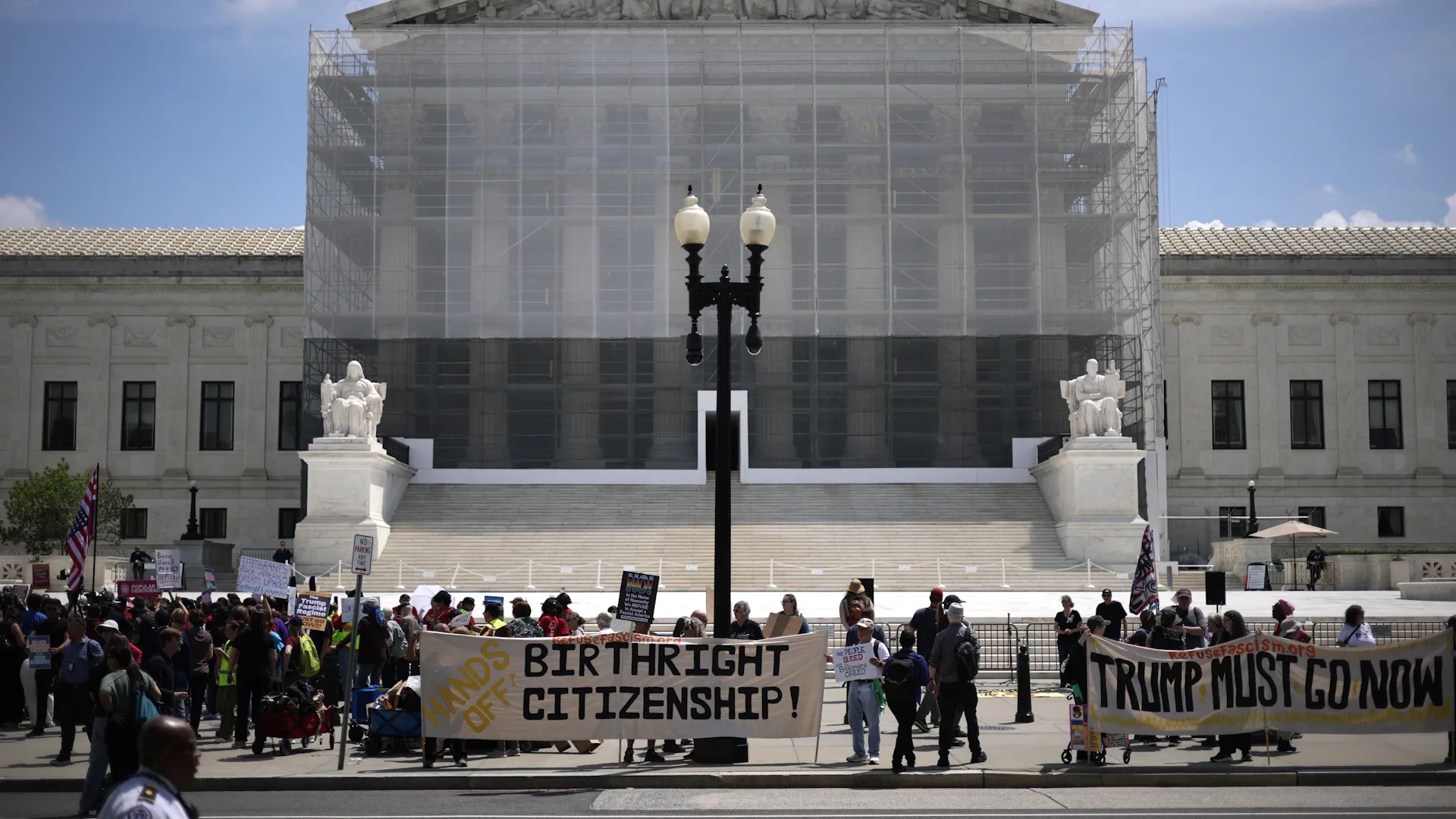
The U.S. Supreme Court has raised concerns regarding former President Donald Trump's attempts to restrict birthright citizenship, reflecting an ongoing legal debate. This development comes at a sensitive time as discussions around immigration intensify in the United States.
During a recent hearing, the justices expressed their concerns about the legal and political ramifications of Trump's proposals, which aim to change the laws regarding citizenship. The justices indicated that any amendment to these laws must be approached with caution, given their potential impact on individual rights and society as a whole.
Details of the Event
The Trump administration sought to change the laws that grant citizenship to individuals born in the United States, known as "birthright citizenship." This proposal has sparked widespread debate in legal and political circles, as many believe that this move could diminish the rights of numerous individuals, particularly those belonging to immigrant families.
During the session, the justices raised questions about the legality of these attempts and whether they align with the U.S. Constitution. Some justices pointed out that any changes should be made through Congress rather than executive orders, reflecting the importance of the separation of powers in the American system.
Background & Context
The roots of the birthright citizenship issue trace back to the Fourteenth Amendment of the U.S. Constitution, which states that "all persons born or naturalized in the United States, are citizens." This amendment was adopted after the American Civil War in 1868, aimed at ensuring the rights of new citizens, particularly those of African descent.
Over the years, citizenship laws have faced numerous challenges, especially amid political and social changes. Recent years have seen a rise in anti-immigration rhetoric, leading to calls for amendments to citizenship laws.
Impact & Consequences
If Trump's proposals are implemented, it could reduce the number of individuals obtaining citizenship, affecting the demographic makeup of the United States. Additionally, this change may provoke strong reactions from human rights organizations and immigrant communities, who would view it as a violation of their fundamental rights.
Moreover, this debate could exacerbate political divisions in the country, as each side seeks to bolster its position on immigration issues. These discussions are expected to continue leading up to the next elections, where immigration will be one of the key issues influencing voters.
Regional Significance
Immigration and citizenship issues are sensitive topics that concern many Arab countries, as a significant number of Arab immigrants reside in the United States. Any changes in U.S. immigration laws could affect these individuals' opportunities to obtain citizenship, raising concerns among Arab families and communities.
This issue may also contribute to shaping immigration policies in Arab countries, as relations between Arab nations and the United States could be influenced by how the latter addresses immigration matters.
In conclusion, the issue of birthright citizenship remains a complex topic that requires a delicate balance between individual rights and national interests. As legal and political discussions continue, the future of this issue remains uncertain.