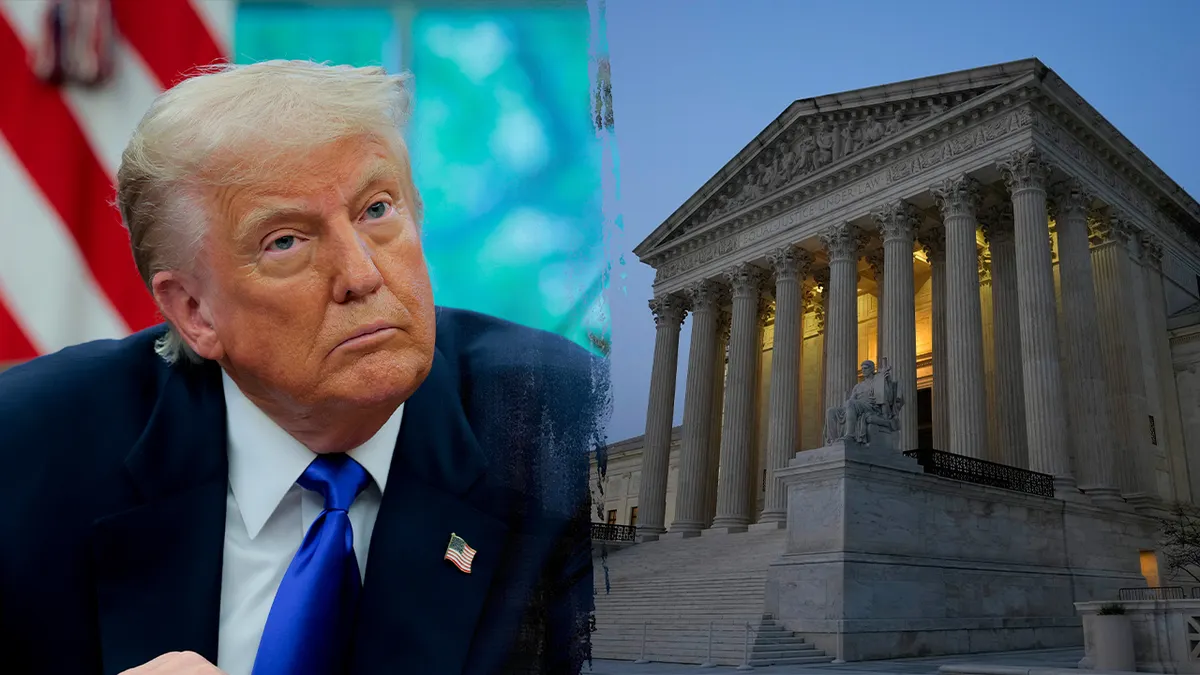
The U.S. Supreme Court appeared skeptical about President Donald Trump's executive order aimed at limiting birthright citizenship, which could pose a significant setback to his immigration agenda. Trump's personal attendance at the hearing is considered a rare move for a sitting president, underscoring the gravity of the case.
During the over two-hour session, U.S. Attorney General John Sauer attempted to persuade the justices that the Fourteenth Amendment, which defines the concept of birthright citizenship, has been misinterpreted through previous rulings and laws enacted by Congress. Opponents argued that this move could radically alter over a century of legal precedents.
Details of the Hearing
The case revolves around the issue of granting citizenship to children born to undocumented parents or temporary visitors in the United States. The justices indicated that the government's interpretation could reshape how Americans and the world understand the process of birthright citizenship in the U.S. Chief Justice John Roberts, a pivotal voice on the court, questioned Trump's authority to exclude children of undocumented immigrants from obtaining citizenship.
Sauer clarified that the legal principle granting citizenship should apply only to children born to individuals with diplomatic immunity, arguing that parents living in the country illegally are not subject to U.S. law. However, several justices expressed concern that this interpretation could lead to a fundamental change in the concept of birthright citizenship.
Background & Context
The roots of birthright citizenship trace back to traditional English law and are enshrined in the Fourteenth Amendment of the U.S. Constitution. This right was reaffirmed in a Supreme Court ruling in 1898 in the case of United States v. Wong Kim Ark, which confirmed the right to citizenship for a child born to Chinese immigrant parents in the U.S. This ruling is considered a significant reference point in the debate over birthright citizenship.
Trump's efforts to curtail birthright citizenship are part of his broader agenda to reduce illegal immigration, a goal he has consistently supported since the beginning of his presidency. However, any setback in this case could represent a blow to his immigration agenda and the expansion of his executive powers.
Impact & Consequences
If the Supreme Court decides to uphold birthright citizenship, it would be a significant setback for Trump, especially following the court's ruling that overturned global tariffs imposed last month. Conversely, if the government prevails, it would assist Trump in fulfilling his promises related to reshaping U.S. immigration policies.
The court is expected to issue its decision in June, making this case one of the most critical immigration-related issues to be resolved since the start of Trump's second term. Some legal experts have suggested that the court may choose to focus on a law enacted in 1952 that enshrines birthright citizenship, rather than delving into the broader constitutional debate.
Regional Significance
Immigration and citizenship issues are sensitive matters affecting many countries, including Arab nations. With the increasing number of migrants and refugees from Arab countries to the United States, any changes in citizenship policy could directly impact the rights of these individuals and their families. This discussion also highlights the challenges faced by nations in addressing immigration and integration issues.
In conclusion, this case remains pivotal in shaping the future of U.S. immigration policies and may have far-reaching effects on international relations, particularly with countries experiencing political and economic crises.