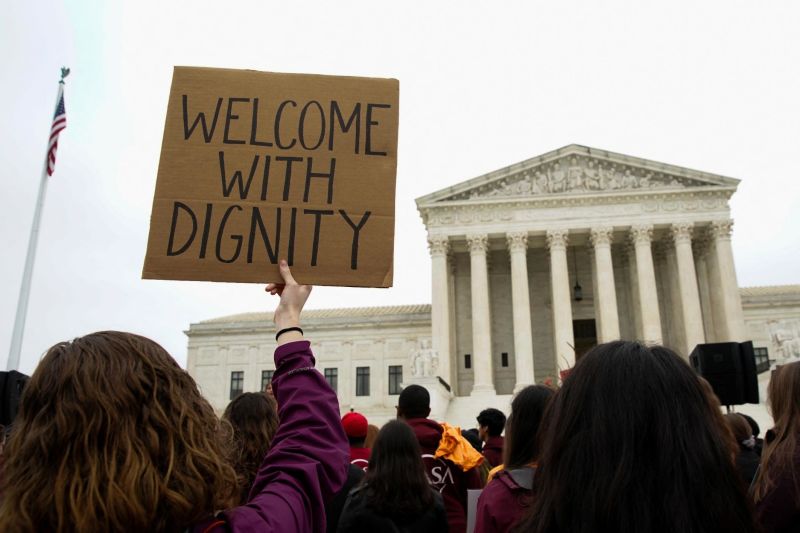
The focus is on the U.S. Supreme Court as President Donald Trump participates in hearings concerning one of the most impactful citizenship policy cases in the country. The justices appear hesitant to support measures aimed at tightening citizenship requirements, raising questions about the future of these policies.
This case is among the most significant issues facing the court, as it pertains to Trump's procedures intended to reduce the number of individuals eligible for U.S. citizenship. The president's attendance at the hearings reflects the importance of the case to his administration.
Details of the Event
The case involves new procedures proposed by the Trump administration, which aim to impose stricter restrictions on granting citizenship to foreigners. These measures have sparked widespread debate in legal and political circles, with some viewing them as a violation of fundamental rights.
During the hearings, the justices expressed some doubts regarding the legality of these measures, indicating the possibility of changes to the current policy. The sessions featured exchanges of opinions between lawyers advocating for the measures and those opposing them, reflecting the deep divide in American society over immigration and citizenship issues.
Background & Context
Since taking office, Trump has implemented a series of controversial measures regarding immigration, including a ban on the entry of citizens from certain Muslim-majority countries. These policies have drawn significant criticism from human rights organizations, which argue that these actions are discriminatory and contradict American values.
Historically, the United States has been considered a safe haven for immigrants, providing them with the opportunity to obtain citizenship after a certain period of residency. However, with the rise of anti-immigration rhetoric, policies have changed significantly, affecting the lives of millions of immigrants.
Impact & Consequences
If the new measures are upheld, it could lead to a reduction in the number of individuals eligible for U.S. citizenship, significantly impacting immigrant communities. This may also provoke strong reactions from voters and civil society, potentially influencing the outcomes of upcoming elections.
Furthermore, this case could open the door to more legal challenges, as advocates for immigrant rights are expected to seek to contest these measures in court. Therefore, any decision made by the Supreme Court will have far-reaching implications for immigration policy in the United States.
Regional Significance
Immigration and citizenship issues are sensitive topics in the Arab region, where many countries are facing humanitarian crises related to refugees and migrants. If citizenship procedures in the United States become stricter, it could exacerbate conditions for Arab migrants seeking new opportunities abroad.
This case may also affect relations between the United States and Arab countries, as pressures may increase on Arab governments to improve the conditions of refugees and migrants. Ultimately, this issue remains in the spotlight globally, intertwining humanitarian and political concerns in a complex manner.