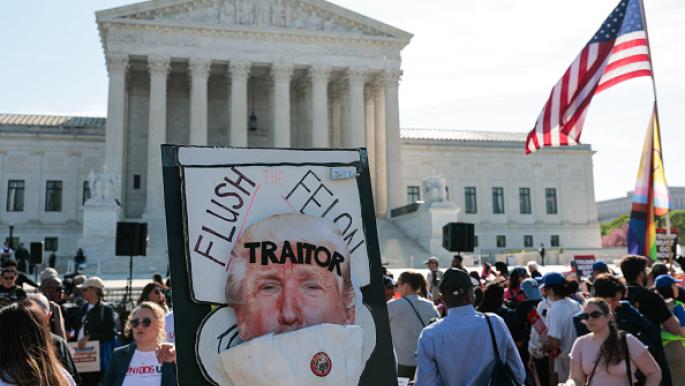
The U.S. Supreme Court has expressed doubts about the efforts made by President Donald Trump to limit birthright citizenship during recent discussions on this sensitive issue. These developments come at a time when political and social pressures regarding immigration and citizenship issues are increasing in the United States.
Birthright citizenship is a central issue in discussions about immigration, as it allows individuals born on U.S. soil to automatically acquire citizenship. Since taking office, Trump has sparked numerous debates about the possibility of amending this law, leading to a significant divide in opinions between supporters and opponents.
Details of the Event
During the sessions held by the Supreme Court, questions were raised about the legal foundations underlying Trump's attempts to reduce birthright citizenship. Some justices indicated that the proposed amendments could conflict with the U.S. Constitution, making implementation difficult. The importance of protecting the rights of individuals born in the United States, regardless of their families' legal status, was also emphasized.
It is worth noting that Trump has stated on several occasions that he seeks to change this law, suggesting that he believes birthright citizenship encourages illegal immigration. However, many legal experts argue that such changes could face significant legal challenges.
Background & Context
The roots of birthright citizenship trace back to the 14th Amendment of the U.S. Constitution, which was ratified after the American Civil War in 1868. This amendment stipulates that all persons born or naturalized in the United States are American citizens, reflecting the country's commitment to human rights and equality.
Over the years, there have been multiple attempts to amend or abolish this law, but they have not succeeded. Nevertheless, the current discussions are gaining new momentum amid the changing political landscape in the United States, making it essential to closely monitor developments on this issue.
Impact & Consequences
If any changes to the policy of granting birthright citizenship are implemented, it could have far-reaching effects on American society. This could lead to increased social and economic tensions, especially in communities that rely on immigration. Additionally, these changes might affect international relations, particularly with countries from which many individuals migrate to the United States.
Moreover, any amendments in this context could open the door to further discussions about the rights of immigrants, potentially influencing future immigration policies in the country.
Regional Significance
Many Arab countries are closely following developments in U.S. immigration policy, as these policies serve as an indicator of how Western nations handle immigration and asylum issues. If birthright citizenship is curtailed, many Arabs seeking to live in the United States may be affected, prompting them to seek alternative options in other countries.
These developments could also impact relations between the United States and Arab nations, as pressures may increase on Arab governments to provide more support for migrants and refugees.
In conclusion, the issue of birthright citizenship remains a contentious topic in the United States, and it appears that the Supreme Court plays a crucial role in determining the future of this policy. As discussions continue, there is hope that individual rights will be preserved and justice ensured for all.