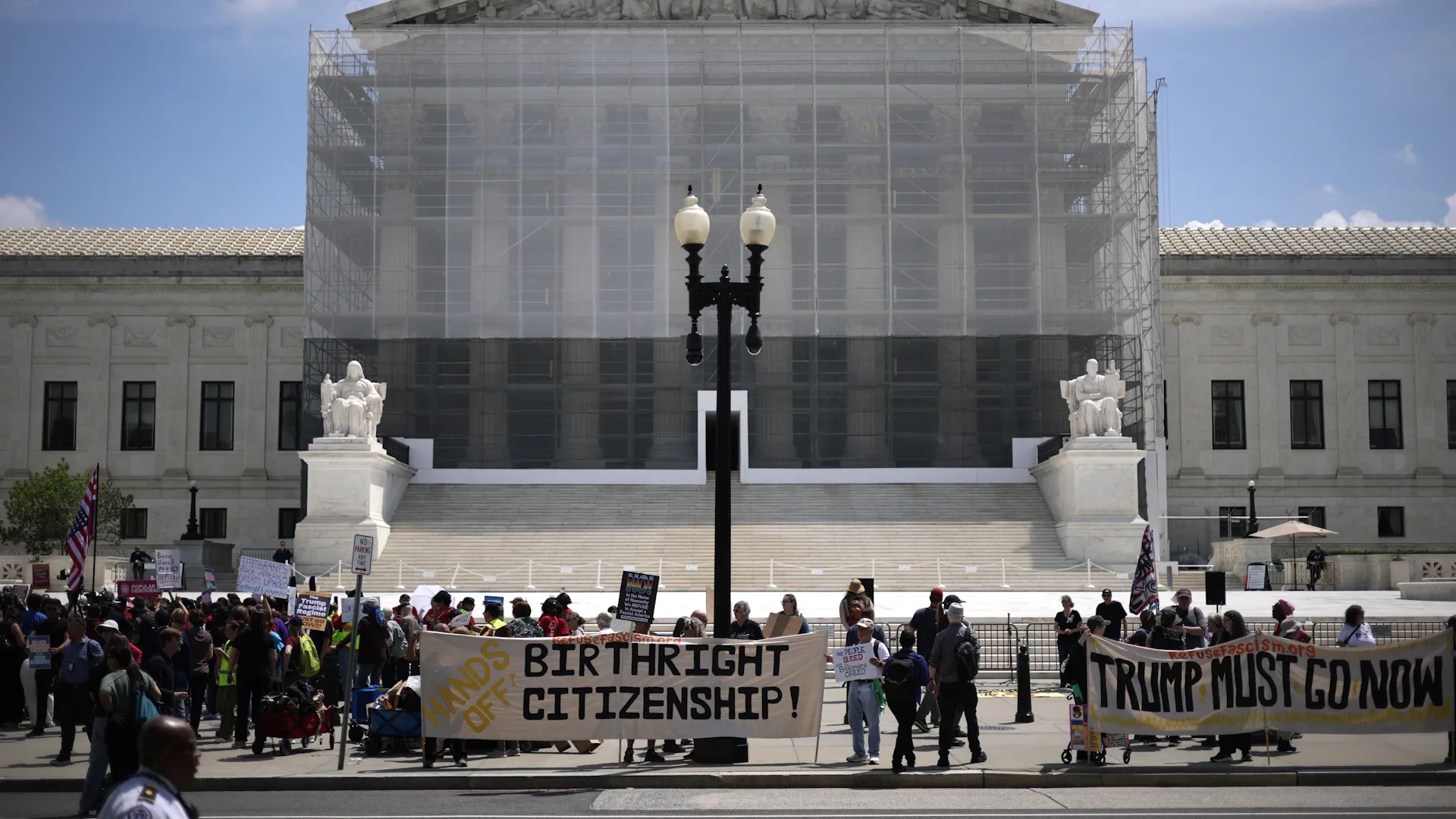
The U.S. Supreme Court is examining a pivotal case regarding an executive order issued by President Donald Trump that defines the right to acquire citizenship by birth. This case is considered one of the most important issues facing the court during its term, as it is expected to significantly influence the future of immigration policies in the country.
The executive order issued by Trump in 2018 seeks to change the interpretation of U.S. citizenship law, which automatically grants citizenship to anyone born on U.S. soil, regardless of their parents' status. This approach is part of the U.S. administration's efforts to curb illegal immigration and enhance national security.
Details of the Case
The case under consideration by the Supreme Court involves legal challenges related to the interpretation of the Fourteenth Amendment of the U.S. Constitution, which states that "all persons born or naturalized in the United States, are citizens." This issue has sparked widespread debate among supporters and opponents of Trump's policy, with some arguing that this interpretation opens the door to illegal immigration, while others view it as a violation of human rights.
During the hearing, a range of legal arguments were presented by U.S. government attorneys, who emphasized the need to reinterpret the law in line with national security interests. In contrast, the plaintiffs' attorneys provided arguments supporting the rights of individuals born in the United States, pointing out that changing the law could lead to family separation and deprive children of their fundamental rights.
Background & Context
Historically, the United States has been seen as a safe haven for immigrants, with citizenship granted to many individuals born on its soil. However, in recent years, there has been a rise in nationalist sentiments and rejection of immigration, prompting the U.S. administration to take more stringent steps in this area. These policies have affected immigrant communities, particularly from Latin American countries.
In 2020, the Supreme Court issued a ruling supporting some of Trump's immigration-related policies, raising concerns among human rights advocates. This ruling is seen as an indicator of the direction the Supreme Court may take in future immigration cases.
Impact & Consequences
If the Supreme Court decides to uphold Trump's executive order, it could lead to radical changes in citizenship policy in the United States. This may result in many children born to undocumented parents being deprived of their right to citizenship, raising widespread concern among immigrant communities.
Moreover, this decision could affect U.S. relations with other countries, especially those experiencing a significant influx of migrants. It could also lead to heightened social tensions within the U.S., as many will feel that their fundamental rights are threatened.
Regional Significance
For the Arab region, this potential decision could have indirect effects on immigration and asylum issues. Many Arabs seeking asylum in the United States may be significantly impacted by these policies, potentially driving them to seek alternatives in other countries.
Additionally, the rise of nationalist sentiments in the United States may encourage some Arab governments to strengthen their policies towards migrants and refugees, reflecting global changes in immigration policies.
In conclusion, the issue of birthright citizenship remains one of the most contentious issues in the United States, with its outcomes expected to influence the future of immigration and social policies in the country.