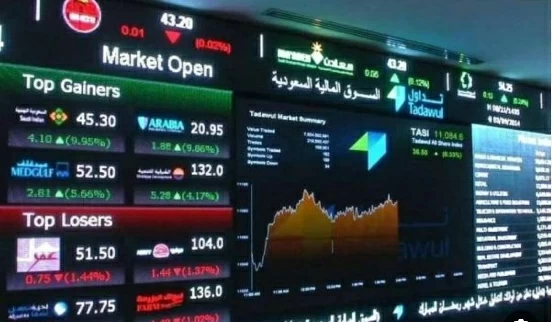
The Saudi financial market (Tadawul) announced the suspension of trading for nine listed companies tomorrow (Wednesday), due to their inability to publish their annual financial results for 2025 within the legally specified timeframe. The companies affected by this decision include Nama Chemicals, Export, Takween, Bahri, Al-Jouf Cement, Production, United Insurance, Kemano, and Al-Dawaa.
According to the applicable listing rules, the failure to publish periodic financial information on time leads to the suspension of trading for one session after the end of the statutory disclosure deadline. After that, trading may resume for an additional twenty sessions, during which companies must disclose their results to avoid a halt in trading of their shares.
Details of the Event
If the trading suspension continues for more than a month, companies are allowed to request trading of their securities outside the platform. If the suspension lasts for six months without rectifying the situation, it may ultimately lead to the delisting of the shares. Disclosures have shown that the most common reason for the inability to publish is the incompleteness of the audit work or its continuation with the external auditor. This reason has been repeated in similar forms among six companies, namely: Nama, Export, Takween, Arab Agricultural and Industrial Investment, Kemano, and Al-Dawaa.
Overall, this delay reflects that the issue is not related to a decision to withhold publication, but rather is linked to the incompleteness of accounting procedures and the final review of the financial statements.
Background & Context
The Saudi financial market is considered one of the largest markets in the Middle East, hosting many major companies across various sectors. This incident underscores the importance of adhering to financial disclosure deadlines, as delays in publishing financial results can negatively impact investor confidence and lead to market volatility. In recent years, the Saudi financial market has witnessed significant changes, including the listing of many new companies and the implementation of stricter regulatory rules.
This step comes at a sensitive time for the Saudi economy, which is striving for economic diversification and reducing dependence on oil. The COVID-19 pandemic has affected many companies, increasing the importance of financial transparency and disclosure in building trust among investors.
Impact & Consequences
The suspension of stock trading serves as a warning to companies about the necessity of improving their audit and financial disclosure processes. Delays in publishing financial results can lead to a loss of confidence from investors, which may affect stock prices and increase market volatility. Additionally, prolonged suspensions may push companies to take drastic measures, such as requesting to trade their securities outside the platform or even delisting.
On the other hand, this situation highlights the need to enhance transparency and accountability in the financial market, as investors rely on accurate information to make their investment decisions. Companies are required to improve their internal processes to ensure compliance with disclosure deadlines.
Regional Significance
The Saudi financial market is seen as a model in the Arab region, where many countries are seeking to strengthen their financial markets and increase transparency. This incident could affect investor confidence in Arab financial markets in general, as any delay in disclosure may be perceived as a sign of weak financial management. Furthermore, enhancing transparency and accountability in financial markets can contribute to attracting foreign investments and boosting economic growth.
In conclusion, this event demonstrates the importance of adhering to financial disclosure deadlines, as delays can lead to severe consequences for companies and the financial market as a whole. Companies must work on improving their processes to ensure transparency and trust in the market.