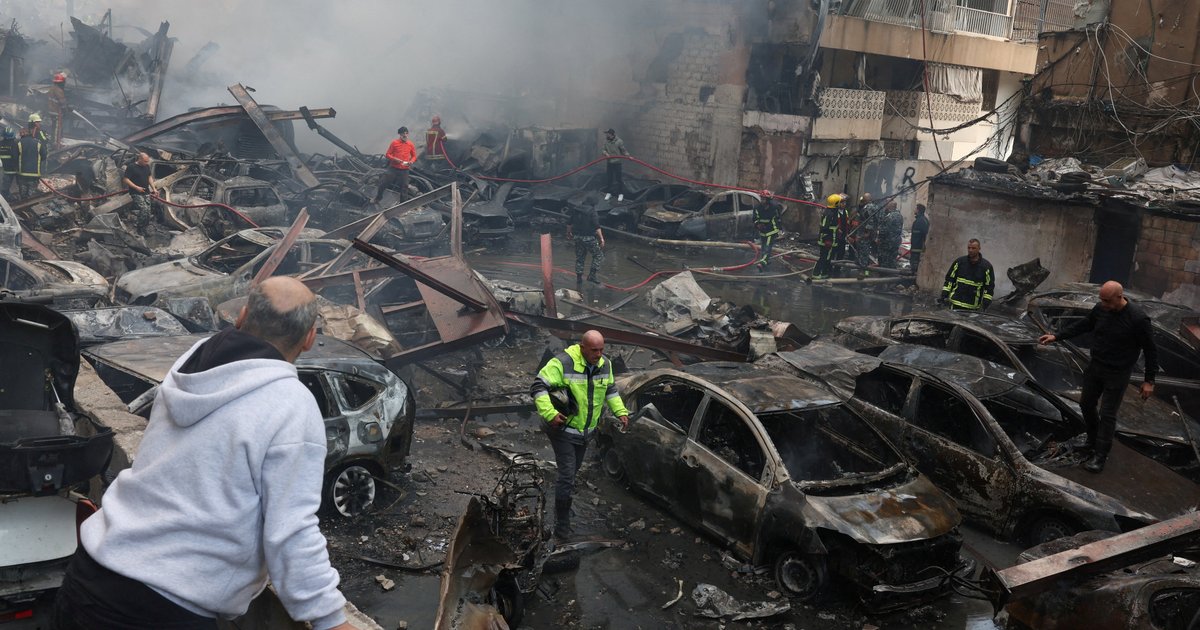
The Syrian Foreign Ministry issued an official statement condemning the recent Israeli attacks on Lebanon, stressing the need for an immediate ceasefire. The ministry affirmed that these aggressions clearly violate international law, humanitarian law, and the principles of the United Nations Charter.
In a post on the platform 'X', the ministry expressed deep concern over the escalation of Israeli attacks, noting that these aggressions require the international community to assume its responsibilities in confronting Israeli violations.
Details of the Attacks
In just ten minutes on Wednesday, Israeli forces launched attacks on approximately 100 targets across Lebanon, focusing most of the strikes on the capital, Beirut. These attacks resulted in the deaths of more than 250 people and injured over 1160 others, exacerbating the suffering of the Lebanese people amid the dire humanitarian conditions they face.
These aggressions come at an extremely sensitive time, as Lebanon is grappling with worsening economic and political crises, complicating the situation further. The attacks have provoked angry reactions from many countries and international organizations, which have called for urgent measures to protect civilians.
Background & Context
Historically, the relations between Syria and Israel have been marked by ongoing tensions, especially following the Arab-Israeli conflict that began in the mid-20th century. Lebanon has suffered the repercussions of these conflicts, becoming a battleground for regional and international disputes. Israeli aggressions against Lebanon are not new; they recur in various contexts, further complicating the regional situation.
Lebanon and Syria are considered sister countries, sharing deep historical and cultural ties. However, Israeli interventions in Lebanese affairs raise significant concerns for the Syrian government, which views these aggressions as a threat to national security.
Impact & Consequences
These aggressions could escalate the conflict in the region, as various Lebanese factions may respond militarily, increasing the likelihood of a full-scale war. Additionally, these events may affect relations among Arab countries, as reactions may vary between support and calls for de-escalation.
Moreover, the continuation of Israeli attacks could exacerbate humanitarian crises in Lebanon, where the Lebanese people are already suffering from severe shortages of essential resources due to economic and political crises. International organizations may intervene to assist those affected, but this requires a swift and effective response from the international community.
Regional Significance
This situation highlights the ongoing tensions in the region and their impact on regional security. The international community's response will be crucial in determining the future stability of Lebanon and its relations with neighboring countries.
In conclusion, the recent Israeli attacks on Lebanon not only threaten the immediate safety of civilians but also have broader implications for regional peace and security. The need for an urgent ceasefire and international intervention is more pressing than ever.