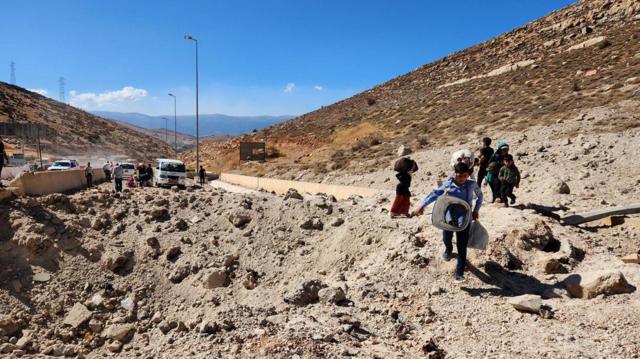
The Syrian General Authority for Ports and Customs has confirmed that the New Jayyid Yabous border crossing, which connects Syria to Lebanon, is exclusively designated for civilian passage and is not used for any military purposes. This confirmation comes at a time when fears of a potential military escalation in the region are increasing, particularly amid rising tensions between Israel and Hezbollah.
In light of the tense security situation, Syria aims to reassure its citizens and the international community that the Syrian-Lebanese border is safe for civilian use. This statement follows media reports about Israel's intentions to target border areas, raising widespread concern among political and public circles.
Details of the Event
The New Jayyid Yabous crossing is one of the main border points between Syria and Lebanon and is considered a vital transit point for civilians and trade. The authority has confirmed that this crossing is not used for military purposes, reflecting the Syrian government's desire to maintain stability in the border region.
At the same time, Israel continues to carry out military operations against what it perceives as security threats, complicating the situation in the region. Israeli officials have indicated that any military activity in the border area will be taken seriously.
Background & Context
Historically, the Syrian-Lebanese border has witnessed numerous tensions, especially amid the ongoing conflict in Syria and its impact on relations between the two countries. Since the onset of the Syrian crisis in 2011, the border has become a battleground for multiple interventions by regional and international powers, affecting security and stability in the area.
The Syrian-Lebanese border is a strategic point where the interests of several parties overlap, including the Lebanese Hezbollah, which is considered a terrorist organization by many countries. This situation complicates efforts to achieve lasting stability in the region and adds complexity to any diplomatic efforts to resolve conflicts.
Impact & Consequences
The Syrian General Authority for Ports and Customs' confirmation of the crossing's use for civilian purposes only may have positive effects on relations between Syria and Lebanon, as it could help alleviate fears of military escalation. Additionally, this statement may strengthen the Syrian government's position in the face of external pressures.
However, the question remains regarding the Syrian government's ability to control the security situation in the region, especially in light of ongoing threats from Israel. Any military escalation could significantly impact civilian lives and increase their suffering amid the difficult economic conditions that Syria is experiencing.
Regional Significance
The situation at the Syrian-Lebanese border is part of the larger picture of regional security in the Middle East. Any escalation in this area could affect neighboring countries and increase tensions among regional powers. The situation in Syria remains a focal point of concern for Arab countries, many of which are seeking to achieve stability in the region.
In conclusion, hope remains that the involved parties can avoid military escalation and work towards achieving lasting peace in the region. Ensuring the safety of civilians should be a top priority, especially under the current circumstances.