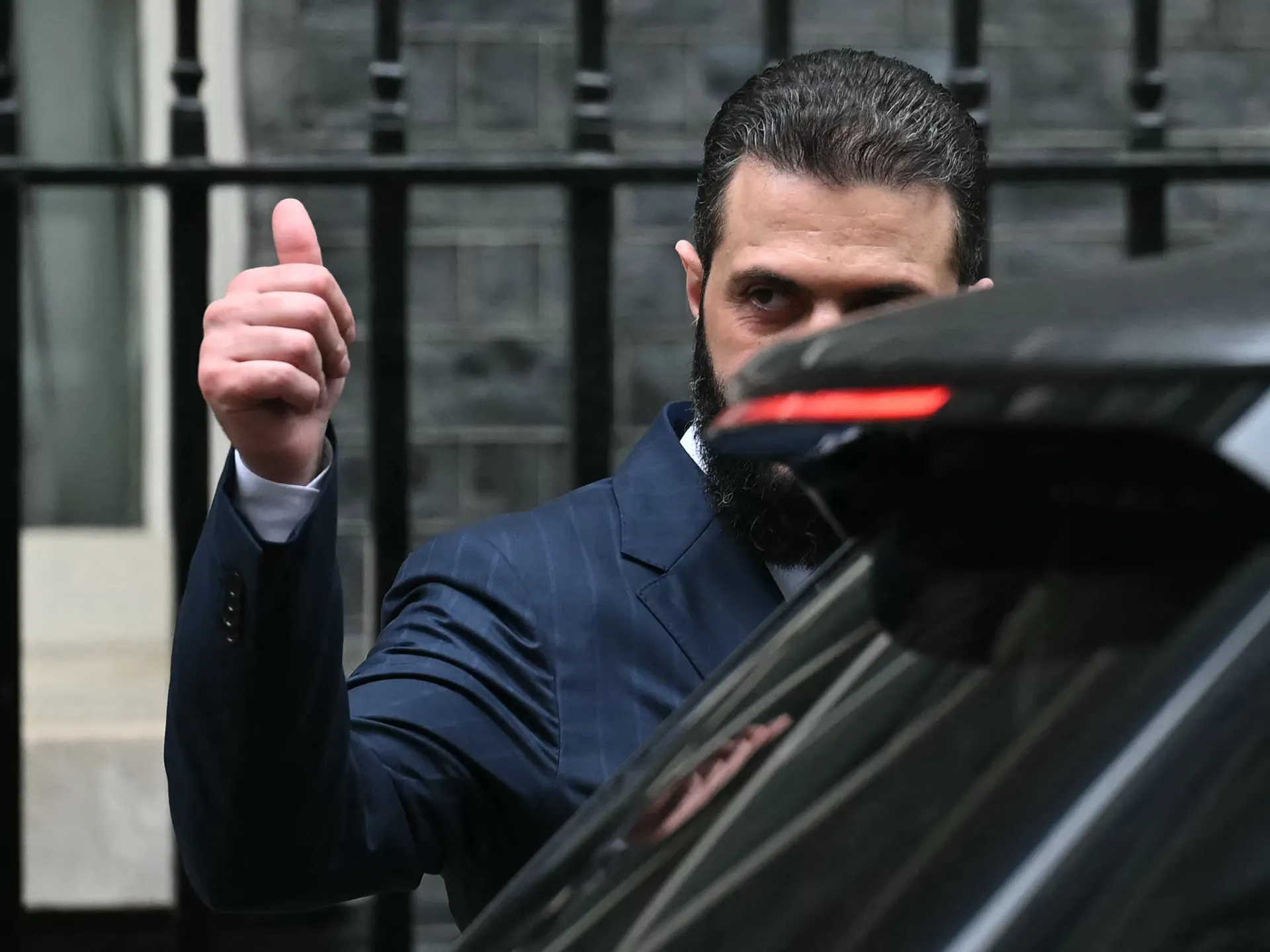
Syrian President Ahmad al-Shara affirmed that Syria is making steady progress towards conducting free elections following the completion of the first term, which is stipulated in the constitutional declaration for a period of 5 years.
During an extensive dialogue at Chatham House in London, al-Shara stated: "We held a national dialogue conference that resulted in recommendations, and we announced the new constitution that regulates the transitional period, with the People's Assembly set to hold its first session next month."
Details of the Event
In discussing the formation of political parties, the Syrian president clarified that the laws governing parties will be restructured within the new constitution, asserting that this process will allow parties to participate in government and authority. Al-Shara also addressed the issue of personal freedoms, indicating that the state administration relies on existing laws and will not impose new standards on citizens regarding social and religious practices. He emphasized: "Our mission is to enforce the law, not to impose new standards on people."
Regarding the state's policy towards armed factions, al-Shara confirmed that Syria has restricted weapons to the state, and agreements have been reached to integrate the Syrian Democratic Forces into the Syrian army. He explained that this approach followed a series of negotiations and understandings with the United States and concerned countries to ensure the unity of the state and avoid military clashes.
Background & Context
Al-Shara touched upon the American-Israeli war on Iran, asserting that Syria will remain outside the conflict unless directly targeted, emphasizing the importance of diplomatic solutions to avoid regional risks. He confirmed that Syria's policy is based on economic stability and development while maintaining balanced diplomatic relations with countries in the region and the world.
He also clarified that indirect and direct negotiations have taken place with Israel, but they have not yet reached a final agreement. In this context, he affirmed that the Syrian state protects its borders from arms smuggling, including preventing Iranian weapons from reaching Hezbollah in Lebanon. Additionally, he mentioned that Russian bases in Syria will gradually be transformed into training centers for the Syrian army.
Impact & Consequences
Regarding transitional justice, al-Shara stressed the necessity of having a clear legal judicial institution to hold accountable those responsible for past crimes, while ensuring credibility and fairness to avoid any revenge or selective targeting. He confirmed that Syria has begun the voluntary return of refugees, with over 1.3 million people returning last year, focusing on linking return with reconstruction and job creation.
He also noted that presenting investment opportunities to European companies, especially German ones, will contribute to reintegrating refugees into the national economy, potentially enabling the return of 80% of Syrian refugees in the coming years.
Regional Significance
In closing the dialogue, al-Shara expressed his ambition to build a stable democratic state capable of playing an active role in the region, focusing on security, development, and justice. Earlier on Tuesday, al-Shara discussed with British Prime Minister Keir Starmer ways to enhance bilateral relations and regional developments.
Al-Shara began an official visit to Britain early today, marking his first since taking office in January 2025, where he is exploring ways to develop bilateral relations and enhance cooperation between the two countries. Syrian-British relations were resumed following the fall of Bashar al-Assad's regime, with al-Shara receiving British Foreign Secretary David Lammy in Damascus on July 5, 2025.
Syria reopened its embassy in London in November 2025 after a closure of 13 years, during an official visit by Foreign Minister Asaad al-Shibani to Britain. London is the second and final stop on a European tour that al-Shara began on Sunday with a visit to Berlin, where he met with senior German officials to discuss ways to develop bilateral relations and enhance cooperation in various fields.