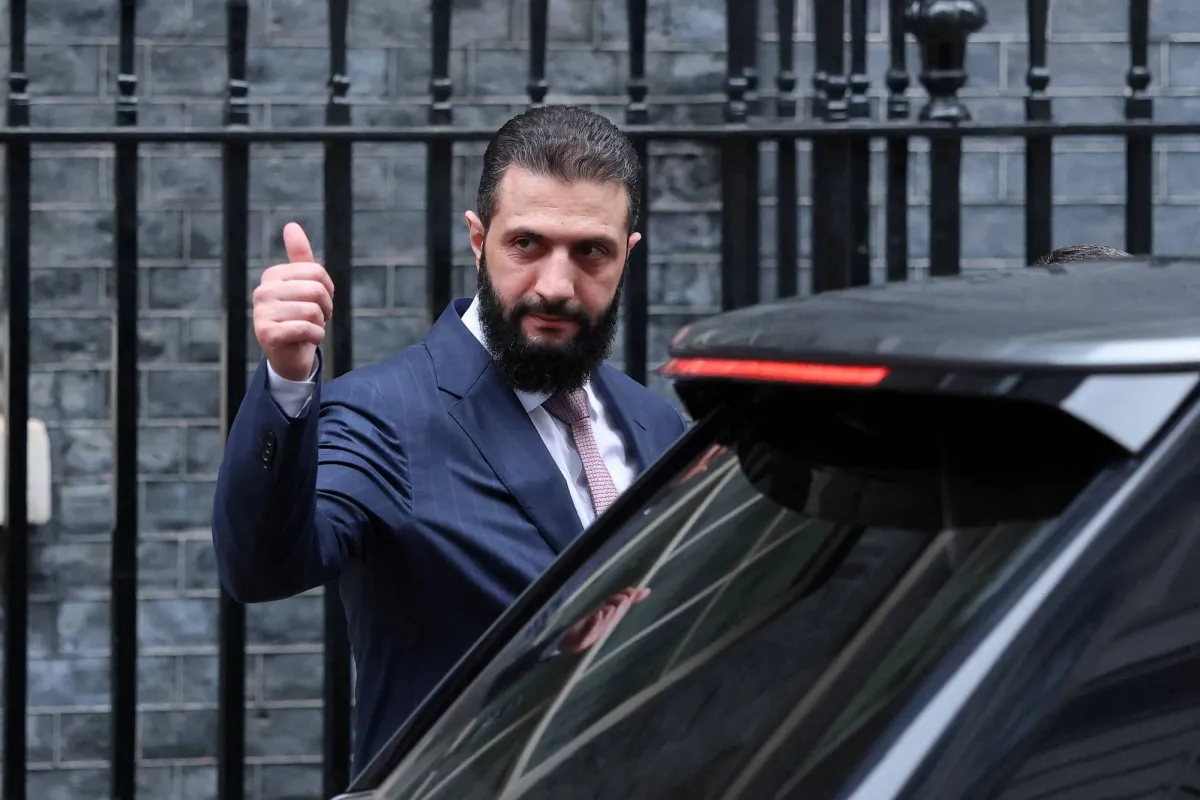
Syrian President Ahmad al-Shara confirmed that Syria is advancing in a comprehensive reconstruction phase aimed at restoring international relations and enhancing trust with nations. This statement was made during a dialogue session at the Royal Institute of International Affairs "Chatham House" in London, where al-Shara emphasized the importance of national dialogue and the constitutional declaration as preliminary steps towards free elections.
Al-Shara stressed that the Syrian state is committed to controlling weapons and enforcing the rule of law, while ensuring freedoms through a clear legal and constitutional framework. He also clarified that Syria is adopting a balanced foreign policy, seeking to avoid conflicts and advocating for negotiated solutions, with a focus on reconstruction and creating conditions for the return of refugees.
Event Details
During his talk, al-Shara confirmed that the path of transitional justice in Syria will be built on legal foundations that ensure accountability and preserve civil peace. He noted that Syria has made significant strides in its relations with the United Kingdom, where Britain has expressed its readiness to support the Syrian people by lifting sanctions, thereby enhancing the level of trust between the two countries.
Al-Shara also addressed domestic issues, explaining that Syria is moving forward with its political commitments, having held a national dialogue conference and issued a constitutional declaration that outlines a five-year transitional phase in preparation for free elections. He confirmed that the first sessions of the People's Assembly elections will begin next month, with a review of laws after the transitional phase concludes.
Context and Background
Al-Shara's statements come at a time when Syria is witnessing political and economic transformations after years of conflict. The Syrian government is striving to rebuild trust with the international community, considering that improving economic conditions and reconstruction are key to the return of refugees. Al-Shara pointed out that the return of Syrians from abroad is linked to the improvement of economic conditions, with more than 1.3 million Syrians having voluntarily returned last year.
He also confirmed that the formation of political parties is linked to the adoption of the new constitution, where committees emanating from the People's Assembly will be tasked with redrafting it to include laws that regulate party life and allow parties to participate in power and government.
Implications and Effects
Strengthening Syria's international relations could open new avenues for economic and political cooperation, potentially contributing to regional stability. Furthermore, improving relations with Western countries, such as the United Kingdom, may help alleviate economic pressures on the Syrian government.
Despite this, the biggest challenge remains how to achieve national reconciliation and ensure the rights of all parties in the political process. Syria's success in this path depends on its ability to build trust among various political and societal groups.
Impact on the Arab Region
The developments in Syria are of significant importance to the Arab region, as they could affect the stability of neighboring countries. Syria's success in rebuilding its international relations may encourage other countries in the region to take similar steps towards improving their relations with the international community.
In conclusion, there remains hope that these steps will contribute to achieving peace and stability in Syria, which will positively reflect on the regional situation as a whole.