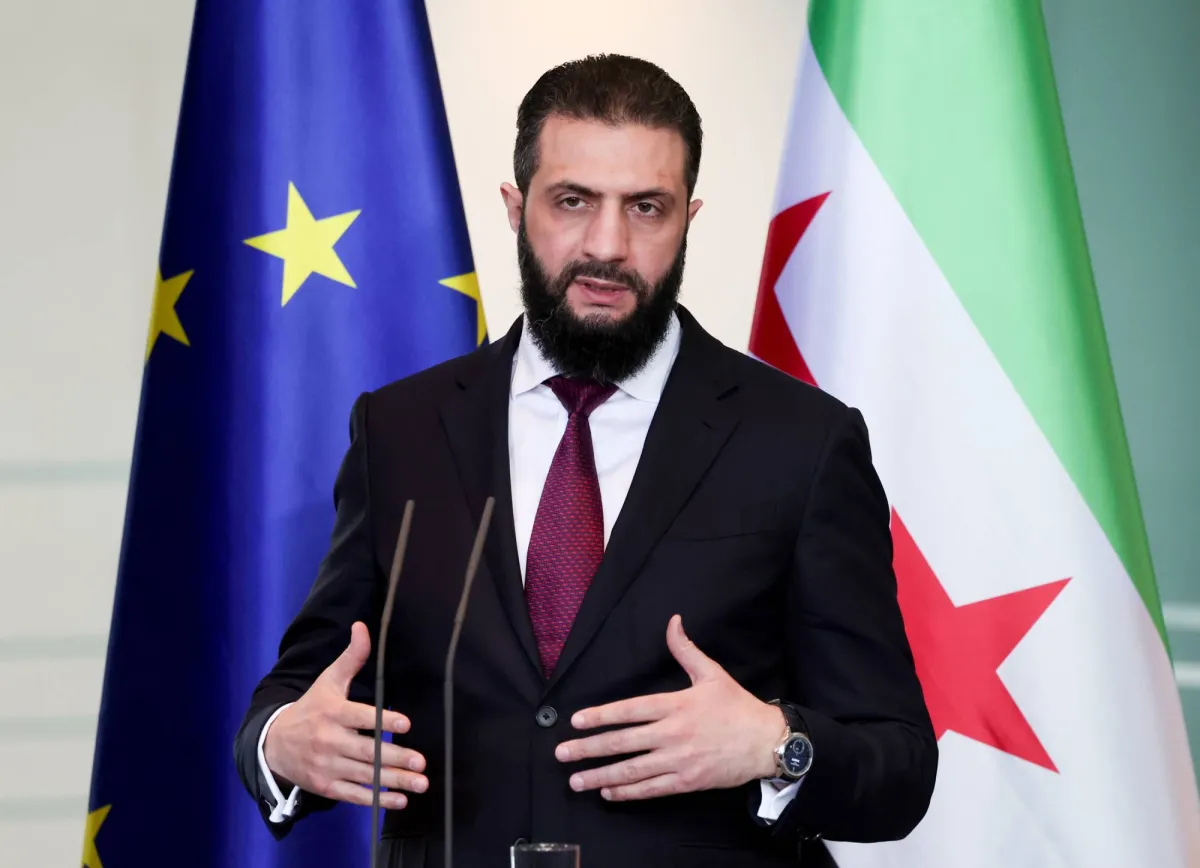
Syrian President Ahmad al-Shara held a phone call on Sunday with Sheikh Mohammed bin Zayed Al Nahyan, the President of the United Arab Emirates, during which he emphasized the deep fraternal relations between the two countries. President al-Shara stressed Syria's commitment to enhancing and developing these relations across various fields to serve the interests of both peoples.
During the call, the two leaders addressed the implications of military escalation in the region and ways to develop mechanisms for Arab cooperation to avoid the repercussions of this escalation on the security and stability of Arab states. They affirmed the importance of adopting joint approaches to face current challenges.
Details of the Event
In a related context, Syria condemned the Iranian aggressions affecting some Arab countries, emphasizing the necessity of respecting the sovereignty of nations and not compromising their security and stability. The Syrian Interior Ministry also pledged to pursue those involved in the protests that occurred in the capital, Damascus, near the Emirati embassy last Friday.
The Interior Ministry clarified that peaceful demonstration is a right guaranteed by law, provided that it adheres to legal frameworks and maintains a peaceful nature. It emphasized that any assault on the Emirati embassy is considered unacceptable behavior and a violation of national laws, stressing that such actions will be met with strict legal measures.
Background & Context
These events come amid rising military tensions in the region, where many Arab countries have witnessed an escalation in hostilities. These tensions have directly impacted relations between Arab states, necessitating enhanced cooperation and coordination among them to confront these challenges.
The protests witnessed in Damascus were an expression of solidarity with Palestinian prisoners, where several protesters attempted to storm the Emirati embassy and raised the Palestinian flag above its building. This act provoked strong reactions from the Syrian government, which reaffirmed the necessity of maintaining diplomatic relations and respecting the sovereignty of nations.
Impact & Consequences
Attention is now focused on how the Syrian government will handle these protests and whether it will take additional steps to enhance security around diplomatic missions. This escalation may also affect relations between Syria and the UAE, which is considered an important partner in the region.
The military escalation in the region could exacerbate security conditions, placing additional pressure on Arab governments to unify their efforts in addressing security challenges. It is expected that these tensions will continue to influence relations between Arab states, necessitating new strategies for cooperation.
Regional Significance
The relations between Syria and the UAE are seen as a model for Arab cooperation, and any tension in these relations could impact regional stability. Under the current circumstances, Arab countries must work together to enhance security and stability, avoiding any escalation that might affect their interests.
In conclusion, recent events highlight the importance of dialogue and cooperation among Arab states, especially in light of increasing security challenges. Arab governments should adopt effective strategies to bolster security and stability in the region.