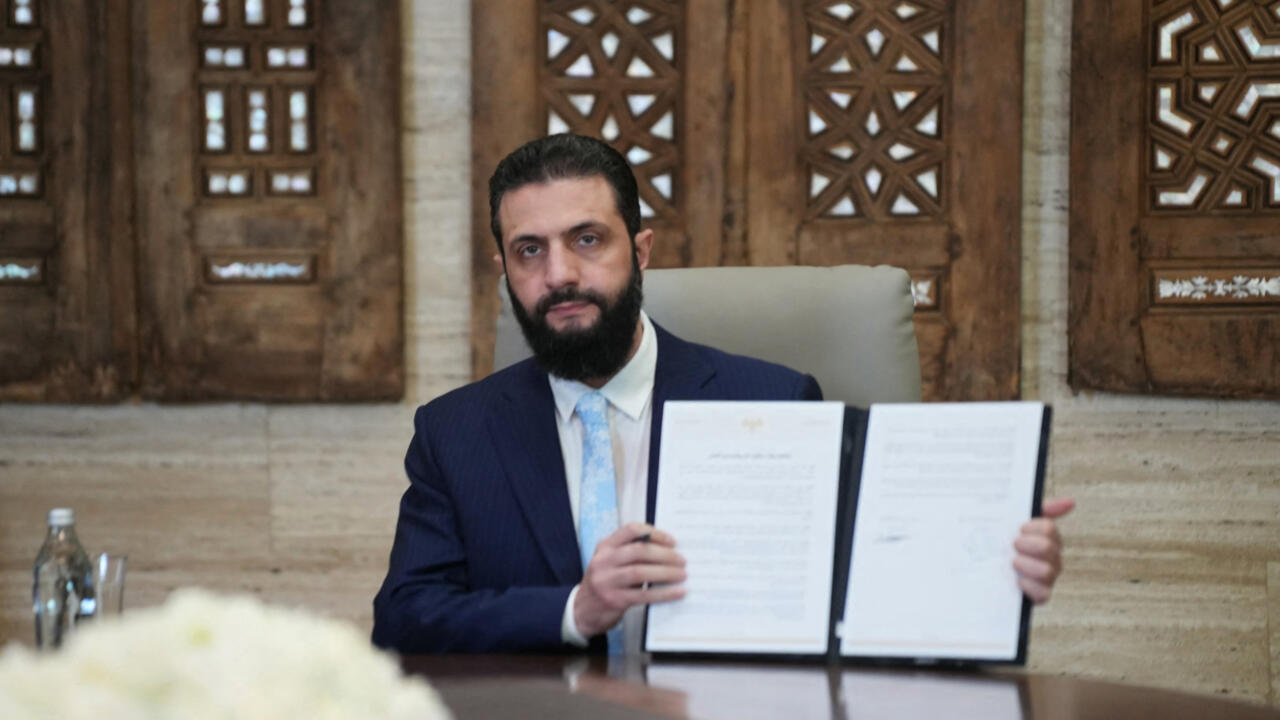
Syrian President Ahmad al-Shara begins an official visit to Germany on Monday, where he is scheduled to meet with several German officials, including Chancellor Friedrich Merz and President Frank-Walter Steinmeier. This visit focuses on several vital issues, primarily the ongoing war in the Middle East, efforts for Syria's reconstruction, and the German government's initiatives to facilitate the return of Syrian refugees to their homeland.
German government spokesperson Stefan Cornelius reported that the meetings will address the political situation in Syria, as al-Shara seeks to enhance cooperation with Berlin in areas of reconstruction and the return of Syrians. Al-Shara will also participate in a political and investment forum aimed at discussing prospects for economic recovery and Syria's reconstruction, reflecting Germany's interest in Syria's future after years of conflict.
Details of the Visit
Al-Shara's visit comes at a time when the Syrian situation is undergoing significant transformations, with many European and international sanctions against the Syrian regime being lifted. The spokesperson for the German Foreign Ministry confirmed that these steps aim to lay the foundations for economic recovery in the country. In this context, the German Ministry of the Interior announced a new initiative aimed at providing support to the Syrian Disaster Management Ministry, including training for emergency services.
It is noteworthy that Chancellor Merz had previously stated that with the end of the war in Syria, there are no longer justifications for Syrian asylum seekers in Germany, which sparked widespread controversy among human rights circles. Many activists believe that the situation in Syria remains unstable and that the voluntary return of refugees could be fraught with risks.
Context and Background
Since the outbreak of the conflict in Syria in 2011, approximately one million Syrians have fled to Germany, with many arriving during the peak of the migrant influx between 2015 and 2016. This migration has significantly impacted German domestic politics, as the government has faced increasing pressure regarding how to handle Syrian refugees. At the same time, calls are growing for the recognition of ongoing human rights violations in Syria, which persist despite the end of the conflict.
In this context, the group “Kurdish Community in Germany” expressed concern over al-Shara's visit, pointing out that he bears responsibility for numerous human rights violations and war crimes. This group has called for protests against the visit, considering that the German government is making a clear mistake by inviting al-Shara.
Implications and Effects
The implications of al-Shara's visit extend beyond bilateral relations between Syria and Germany, as this visit reflects new trends in European policy towards the Syrian regime. With increasing pressure on the German government, this visit may affect Berlin's stance on human rights issues in Syria and reopen discussions on asylum policy.
Moreover, this visit could provoke varied reactions within political and social circles in Germany, with some calling for a stricter policy towards regimes that violate human rights, while others believe that dialogue with these regimes may be necessary to achieve stability in the region.
Impact on the Arab Region
Al-Shara's visit to Berlin is part of broader efforts to reintegrate Syria into the international community, which may influence political dynamics in the region. If these efforts succeed, we may witness shifts in relations between Arab countries and Syria, especially with countries that had severed ties with the Syrian regime.
In conclusion, Ahmad al-Shara's visit to Berlin remains a focal point for many observers, reflecting the challenges facing Syria in the post-conflict phase and raising questions about the future of Syrian refugees and international relations in the region.