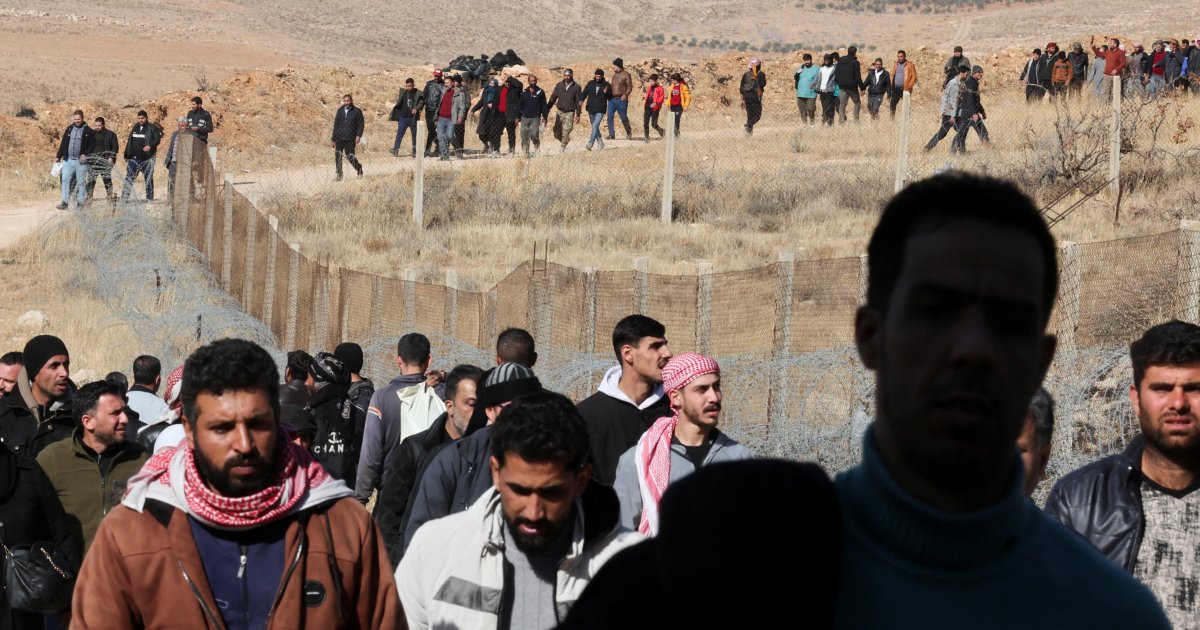
In recent days, several Syrian provinces have witnessed widespread popular activities, including protests and demonstrations in support of Palestinian prisoners held in Israeli jails and in rejection of the execution law passed by the Israeli Knesset.
During these events, Palestinian flags were raised, and chants supporting the Palestinian street and resistance were echoed, particularly in Daraa and Quneitra, provoking anger among large segments of social media audiences in Israel.
Details of the Protests
Israelis commented on these scenes, stating that the volume of videos coming from Syria, documenting the protests, threats, and burning of Israeli flags, is unprecedented and frightening. Numerous movements have been recorded in various Syrian regions, increasing anxiety among Israeli circles.
Israelis also noted the appearance of children singing songs with messages supporting the Palestinian cause and prisoners, set against backgrounds dominated by Syrian and Palestinian flags. They considered this scene to evoke deep fears regarding the "entrenchment of incitement and hatred towards Jews at an early age," and its implications for the "formation of the next generation in the region."
Context and Background
The situation has escalated from mere concern to explicit Israeli calls for the "occupation of Daraa and other areas," claiming that what is happening there highlights the future shape of the Syrian state and its acute positioning on the Palestinian issue. In contrast, Syrian activists believe that what is happening today dispels many narratives that were promoted during the years of the revolution.
One activist stated: "Today, everyone understands why the victory of the Syrian revolution has been delayed... They have let us down! Because the regime of Bashar al-Assad was protecting Israeli interests and carrying their burdens. The evidence? The demonstrations that are now igniting against violations in Palestine! The truth has been revealed, and treachery has shown its true face. Syria has triumphed with the will of its free people, so when will we all raise our voices in support of Palestine?"
Consequences and Impact
Activists assert that the protests that erupted in Syria in rejection of the law to execute Palestinian prisoners are, in terms of size, spread, and direct messages, an unprecedented scene in modern Syrian history. They would not have appeared so clearly if Bashar al-Assad, who was presented as a "resistor," were still sitting in the presidential palace in Damascus.
Activists emphasize that Palestinian prisoners "are not just numbers in the occupation's records, but souls with an inherent right to life and dignity," and that any decision to execute them "constitutes a blatant humanitarian crime and a flagrant violation of all international laws and norms." They assert that silence on such crimes "is no longer an option, and raising our voices is a moral, humanitarian, and national duty."
Impact on the Arab Region
The interaction was not limited to inside Syria, as a circulating question emerged: why is there such celebration of the Syrian people's demonstrations in support of Palestine and Al-Aqsa, to the extent that a statement from the Izz ad-Din al-Qassam Brigades endorsed this movement?
The answer came from one observer: "We know very well what it means for Sham and its people to move, and we realize that even a small movement of this kind can steal sleep from the eyes of the occupation leaders, because they know that if Sham rises, the entire nation rises, for it is a land of jihad and steadfastness."
In conclusion, these protests reflect a growing awareness in the Syrian street regarding the Palestinian cause and highlight the importance of Arab solidarity in facing common challenges.