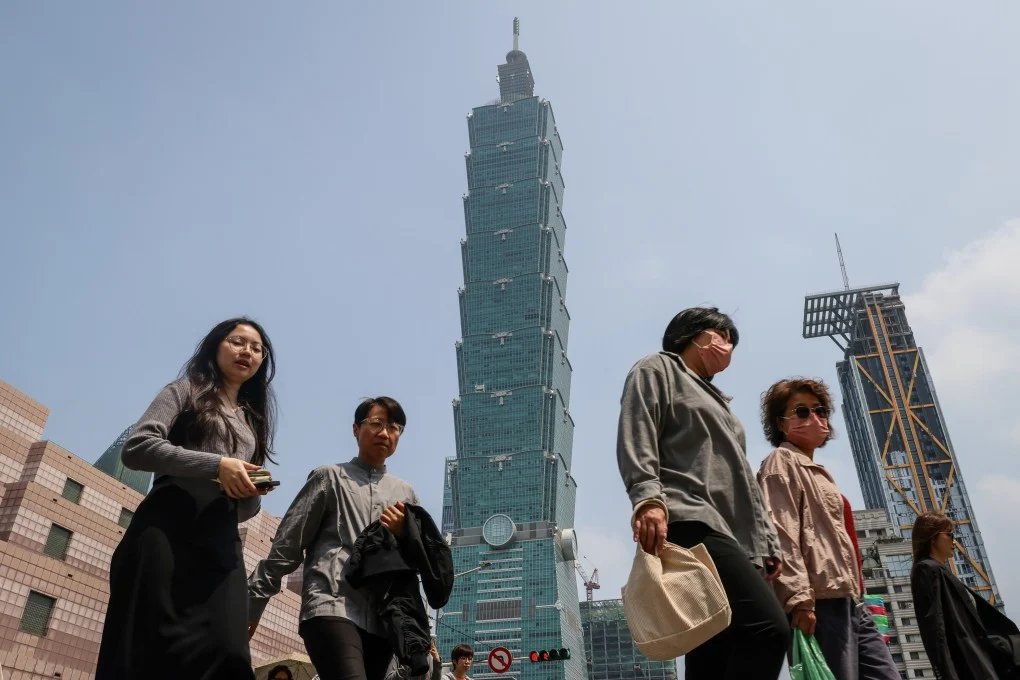
Taiwan is encountering escalating challenges from several foreign governments that classify it as part of China in their internal systems. These tensions have intensified in recent weeks after it was discovered that countries such as South Korea, Denmark, and Cameroon have changed how they categorize the island in official documents, including those related to visas and residency permits.
Taiwan has responded to these actions by bolstering its diplomatic campaign, seeking to enhance its international standing and affirm its identity as an independent state. However, questions arise regarding whether these moves will yield tangible results in the face of increasing pressures.
Details of the Situation
Recently, reports have indicated that several countries have altered their classifications of Taiwan, raising concerns within the Taiwanese government. For instance, South Korea has modified how Taiwan is listed in its visa systems, while Denmark and Cameroon have taken similar steps. These changes come at a sensitive time as Beijing seeks to enhance its international influence and assert its control over Taiwan.
Taiwan views these actions as a threat to its sovereignty, and the Taiwanese government has responded with diplomatic measures aimed at strengthening its relations with countries that recognize it as an independent state. Nevertheless, the effectiveness of these responses in achieving their goals remains uncertain.
Background & Context
Historically, Taiwan has been a focal point of political controversy between China and the West. After the Chinese Civil War in 1949, the nationalist government retreated to Taiwan, while the communist government continued to rule the mainland. Since then, Taiwan has developed as a sovereign state, but China still considers it part of its territory.
In recent years, pressures on Taiwan from China have increased, as Beijing seeks to diplomatically isolate the island. Taiwan has seen a rise in international support, particularly from the United States, which is considered a key ally. However, the economic and political pressures from China continue to pose significant challenges.
Impact & Consequences
The recent moves by countries to change their classifications of Taiwan serve as an indicator of shifts in international policy towards the island. If these trends continue, they could lead to a reduction in international recognition of Taiwan, potentially impacting its economy and international relations.
On the other hand, Taiwan's diplomatic responses may strengthen its position on the international stage, but this depends on the Taiwanese government's ability to build strong alliances with other nations. If Taiwan succeeds in this endeavor, it may enhance its status as an independent state.
Regional Significance
For the Arab region, these developments may have multiple implications. Relations between Arab countries and China are increasing, and the positions of Arab nations towards Taiwan could affect their relationships with Beijing. It is crucial for Arab nations to monitor these developments, as they could influence their economic and political strategies in the future.
In conclusion, the issue of Taiwan remains one of the most complex matters in international politics, intertwining national and international interests. As pressures mount, hope rests on Taiwan's ability to enhance its status as an independent state.