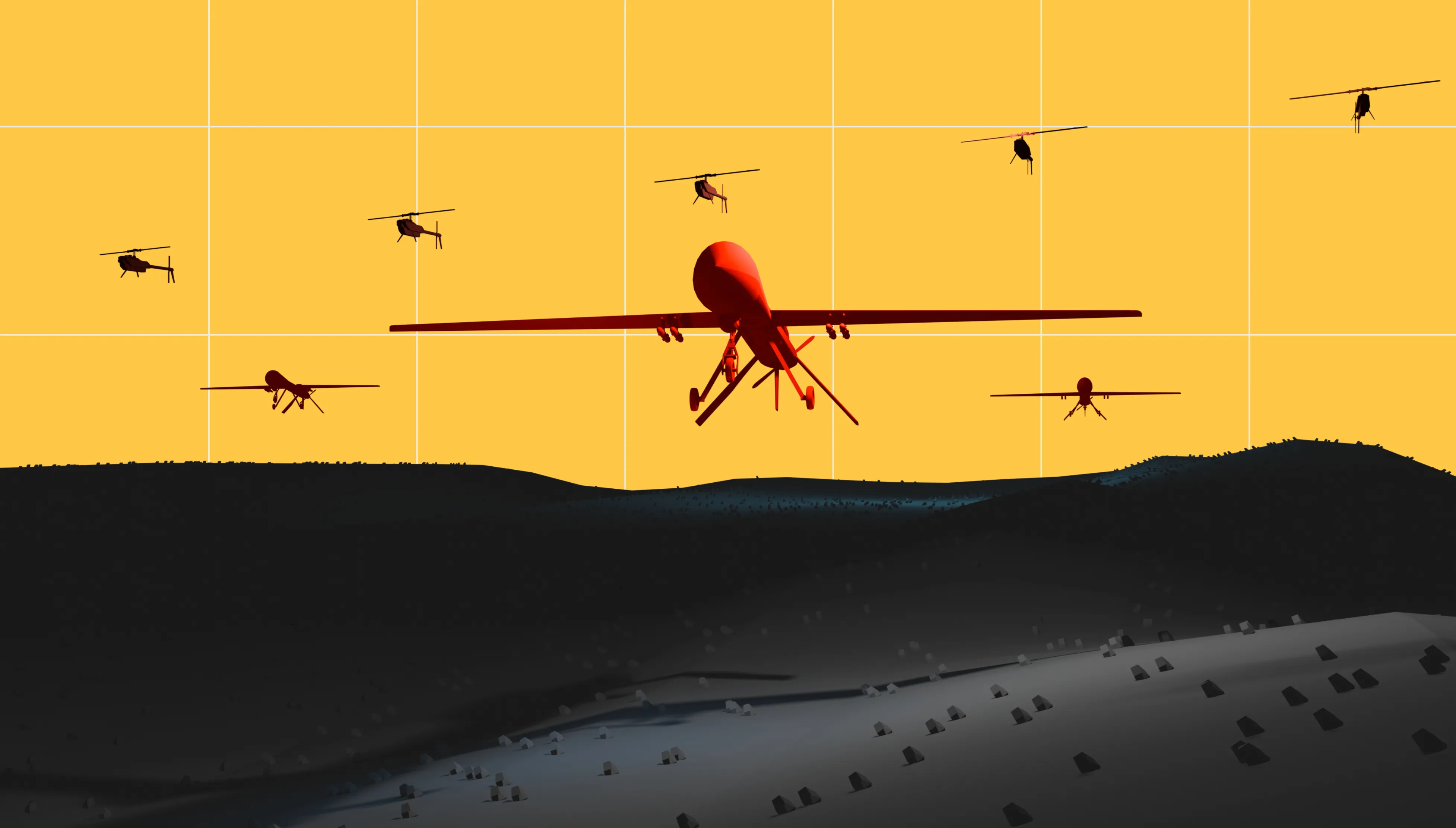
The Islamic Resistance in Iraq conducted 23 offensive operations in a single day, targeting bases and interests it described as belonging to the "enemy" in Iraq and the region. The resistance confirmed the use of dozens of drones in these operations, reflecting a significant escalation in attacks targeting American and regional interests.
In a related development, Iraqi security sources reported an explosion of a bomb-laden drone early Wednesday inside the American diplomatic support center at Baghdad International Airport. This center serves as a logistical and administrative support point for American diplomats and staff in Iraq, containing administrative offices, residential facilities, warehouses, and secure areas. Although there were no casualties, the attack adds to the series of daily assaults on American interests since the beginning of the American-Israeli war on Iran on February 28.
Details of the Events
In the Kurdistan region of Iraq, Al Jazeera's correspondent confirmed that air defenses intercepted four drones over Erbil, where the city's governor revealed that it had been subjected to over 20 drone attacks. This escalation in attacks reflects increasing tensions in the region, as armed factions seek to expand their operations.
On another front, the Kuwaiti Civil Aviation Authority announced early Wednesday that Kuwait Airport was targeted by drone attacks from Iran and its supported factions, indicating that fuel tanks at the international airport were hit, leading to a large fire. Abdullah Al-Rajhi, the authority's spokesperson, explained that Kuwaiti emergency teams dealt with the incident, and the damages were material without any recorded injuries.
In Saudi Arabia, the Ministry of Defense announced that air defenses managed to intercept and destroy two drones in recent hours, reflecting the readiness of Saudi forces to confront aerial threats. The Bahraini Interior Ministry also reported that civil defense extinguished a fire that broke out in a facility belonging to a company due to an Iranian attack, following the activation of alarm sirens for the second time early Wednesday.
Background & Context
Since February 28, Gulf and Arab countries have faced targeting by Iranian missiles, as part of what Tehran describes as "reactions" to American-Israeli raids. These attacks have not only targeted military bases but have also hit civilian locations and energy facilities, resulting in casualties and significant damage to infrastructure.
The Gulf Cooperation Council countries condemned these assaults, calling for their immediate cessation, viewing them as a threat to regional security and stability. This escalation in attacks reflects the increasing tensions between Iran and Arab countries, complicating the security landscape in the region.
Impact & Consequences
Concerns are growing that these attacks could lead to a greater escalation in regional conflict, potentially affecting relations between Arab countries and Iran, and heightening military tensions. The continuation of these attacks may also lead to enhanced security measures in the targeted countries, which could impact air travel and tourism in the region.
These circumstances require Arab countries to strengthen security cooperation among themselves to address common threats and work towards diplomatic solutions for the escalating crises. The international community is also called upon to closely monitor the situation and work to prevent further deterioration.
Regional Significance
These attacks serve as a warning to Arab countries about the necessity of enhancing their defensive capabilities and regional security cooperation. The military escalation could negatively impact local economies and increase pressures on governments facing security challenges.
In conclusion, this escalation in aerial attacks and military operations indicates that the region remains in a state of instability, necessitating a swift and effective response from the concerned countries to protect their interests and security.