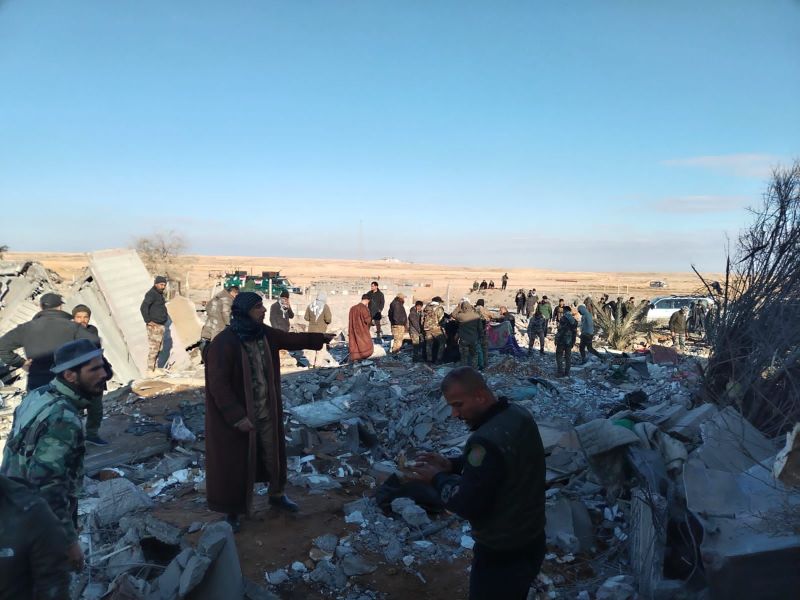
The Popular Mobilization Forces in Iraq announced today that their headquarters were subjected to simultaneous airstrikes in Nineveh and Salah al-Din provinces. The organization confirmed that the airstrikes targeted the intelligence headquarters of Brigade 25 in Nineveh and Brigade 52 in Salah al-Din, describing the operation as "Zionist-American aerial aggression."
In a related development, the city of Erbil in the Kurdistan Region witnessed intense military activity last night, where air defense systems successfully intercepted seven unidentified suicide drones before they could reach their targets within the city. Official sources have not disclosed the party responsible for launching these drones, nor whether the debris caused any material or human losses.
Details of the Incident
This escalation comes just one day after the "Azadi Camp" belonging to the Iranian Kurdish Democratic Party in the "Koy Sinjak" area of Erbil was attacked by a missile and a drone. Reports indicated that the attack on the camp, which houses families of party members, did not result in any injuries, amid official silence from the regional authorities regarding the incident.
Additionally, Iraqi factions belonging to what is known as the "Islamic Resistance in Iraq" announced targeting the "Victoria" military base attached to Baghdad International Airport with drones on Sunday evening. According to posts shared by faction-affiliated platforms on the Telegram app, videos were circulated showing what was claimed to be "flames rising" from within the base as a result of the attack.
Context and Background
The tensions in Iraq are escalating amid ongoing regional conflicts, with these developments linked to the direct war being waged by Israel and the United States against Iran since February 28. This war has resulted in thousands of casualties and injuries on the Iranian side, intensifying tensions in the region.
Tehran is responding to these attacks by launching missiles and drones towards Israel, alongside targeting what it calls "American interests" in Arab countries, causing significant damage to civilian property and provoking widespread condemnation from affected nations.
Impact and Consequences
These events underscore the rising tensions in Iraq, where armed factions continue to target American military bases, threatening stability in the country. Furthermore, these operations could provoke military responses from the United States, complicating the security situation in the region.
These incidents are part of a larger conflict between Iran and the United States, reflecting the political and military ramifications of these struggles on regional security. The escalation may also exacerbate the humanitarian situation in Iraq, where residents are suffering from the ongoing conflict's effects.
Impact on the Arab Region
These developments affect regional security, as Iraq serves as a launch point for many Iranian-backed armed factions. The military escalation may lead to increased tensions between Arab states and Iran, threatening stability in the region.
In light of these circumstances, Arab countries must take serious steps to maintain security and stability, working to enhance regional dialogue to avoid military escalation that could lead to catastrophic outcomes.