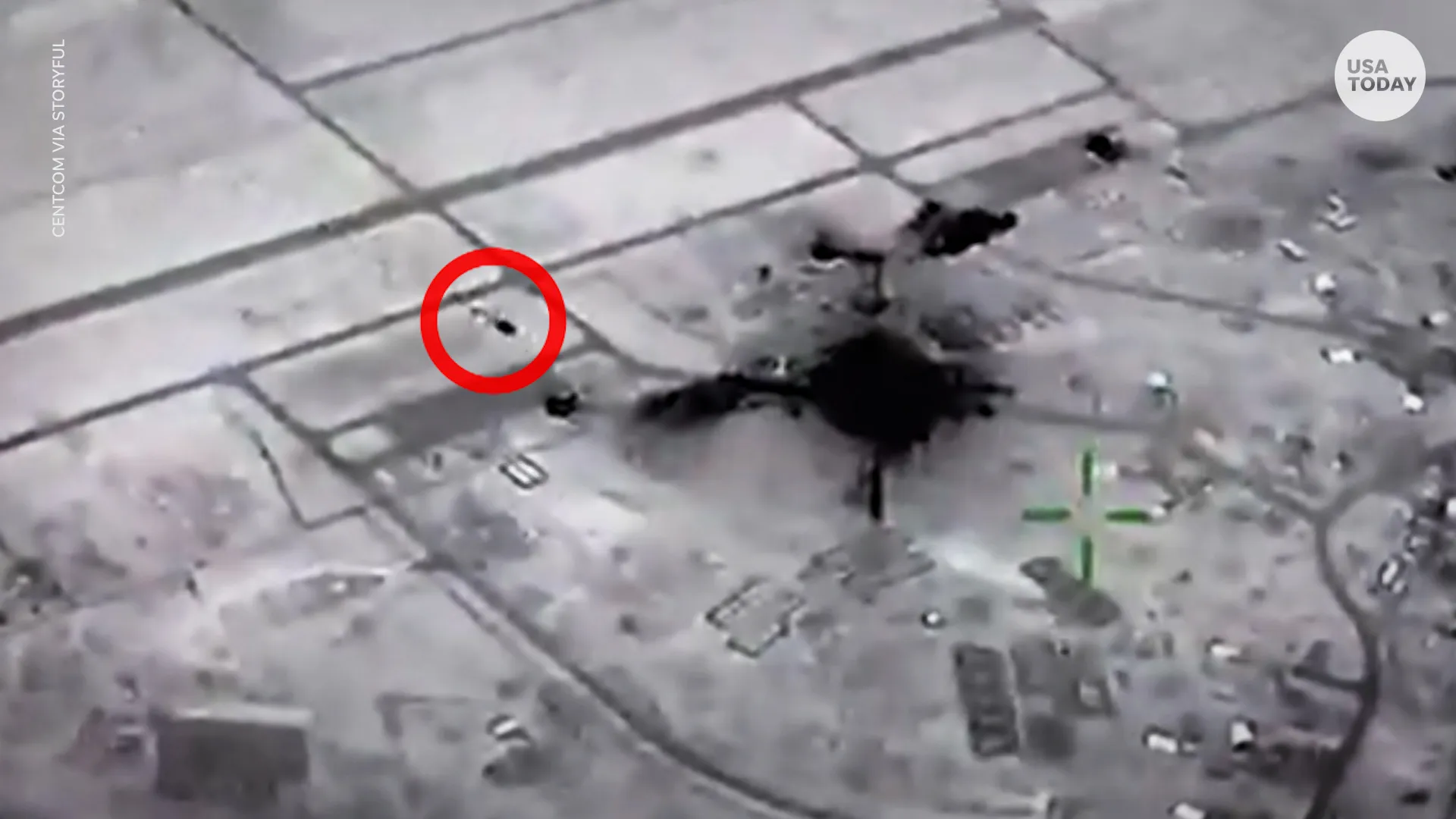
An analysis conducted by The New York Times, in collaboration with weapons and munitions experts, indicates that the attack on the city of Lamerd in southern Iran on the first day of the war likely marked the first combat use of an American ballistic missile known as the 'Precision Strike Missile' (Prism).
According to the newspaper, the strikes targeted a gymnasium and a nearby elementary school adjacent to a military facility belonging to the Iranian Revolutionary Guard Corps, resulting in at least 21 fatalities and dozens of injuries, according to the Iranian news agency (IRNA).
Details of the Incident
Videos verified by the newspaper captured the moments of the missile's impact, where it exploded in the air above the targets, releasing small projectiles made of tungsten, a pattern consistent with the characteristics of the Prism missile designed to cause widespread damage to personnel and unarmored vehicles.
Post-attack images showed a dense spread of holes in buildings, partial collapse of the gymnasium's roof, and damage inside the school, including shattered windows, signs of fire, and blood stains.
Experts noted that the absence of a large explosion crater at the strike site supports the hypothesis of an airburst, which aligns with the design of this type of missile.
According to the report, it was only a year after the missile completed its prototype testing—according to a press release from the U.S. Army—that it appeared in a video released by U.S. Central Command on March 1, documenting its launch during the first 24 hours of the war, before its commander, Admiral Brad Cooper, confirmed its actual use in combat.
Background & Context
An American official told the newspaper, speaking on condition of anonymity, that the weapon used in the Lamerd strike was indeed of the 'Prism' model, which experts considered the first actual appearance of the combat component of this system.
Despite the American promotion of the missile's 'accuracy' in its combat debut, the realities on the ground in Lamerd painted a completely different narrative, as the strike hit civilian facilities separate from a Revolutionary Guard complex, including a school and a gymnasium.
Satellite images and digital mapping platforms indicate that the school and gymnasium had been completely separated from the military complex by a wall for years, and they were classified as civilian facilities.
Impact & Consequences
For his part, Iran's ambassador to the United Nations, Amir Saeed Iravani, stated that the gymnasium was being used at the time of the bombing by a women's volleyball team, while published images and videos showed that the school was being used normally by children.
Furthermore, The New York Times investigations revealed a potential third site of the attack. The newspaper's team verified a video documenting the rise of an additional column of smoke in the vicinity of the simultaneous attacks, amid local reports circulating on Telegram and Iranian media indicating that a cultural center was struck, which remains under independent verification.
Given that this is the first time the Prism missile has been used in the field, the newspaper could not verify whether the strike was intentional, but the facts on the ground confirm that the bombing targeted civilian facilities. Iranian reports indicated that among the victims were children and volleyball players who were inside the gym during the strike, while images and videos showed a mass funeral held the day after the attack.
Regional Significance
In a statement to The Times, U.S. Central Command spokesman Tim Hawkins said, 'We are aware of these reports and are investigating them. U.S. forces do not target civilians indiscriminately, unlike the Iranian regime.'
The Prism missile is part of the latest generation in the U.S. Army's arsenal, developed by Lockheed Martin to replace the Tactical Missile System (ATACMS), with advanced capabilities including higher targeting accuracy over a range of approximately 400 miles (about 644 kilometers), in addition to its design for conducting airburst strikes that scatter lethal metal fragments over a wide area, making it effective against personnel and unarmored vehicles.
This is not the first time the U.S. military has used weapons under development in combat zones, known as 'combat assessment,' raising questions about the risks associated with using untested systems in complex and densely populated environments, where the risks of targeting errors or collateral damage are heightened.
Additionally, the nature of the warhead of the Prism missile, which explodes in the air and scatters tungsten pellets, increases the likelihood of hitting non-military targets in the vicinity of the strike, further fueling the debate over the appropriateness of its use in areas close to civilian facilities.