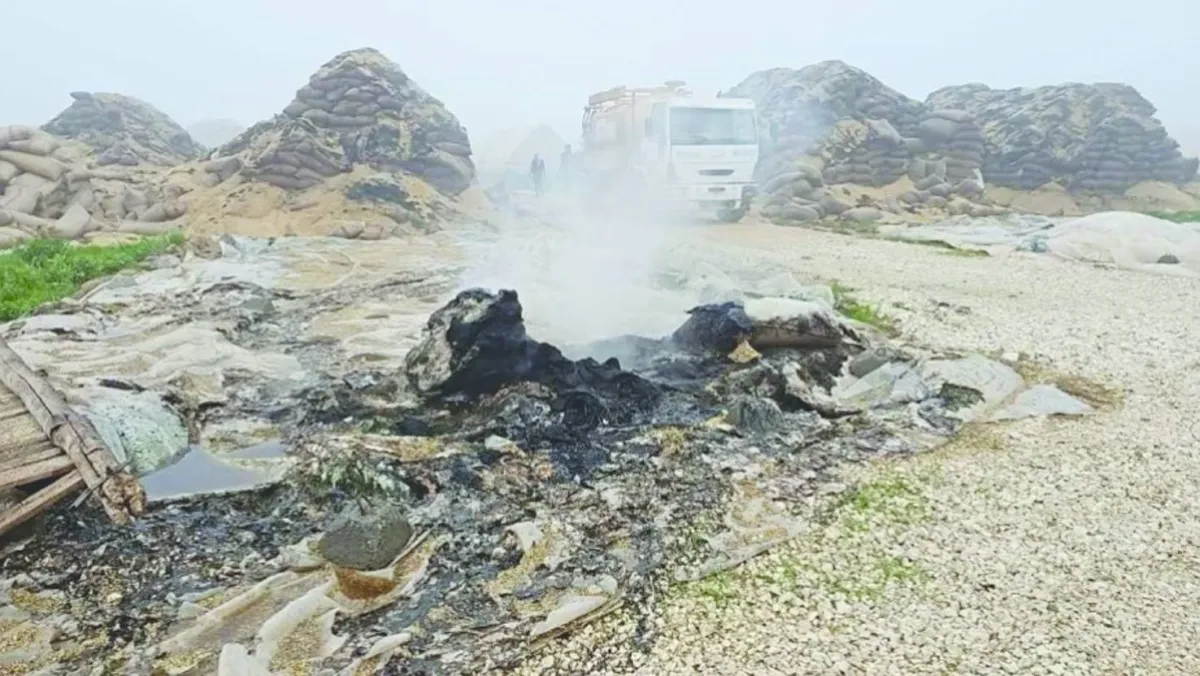
Four drones originating from Iraq targeted the Qasrk base in Al-Hasakah province, northeastern Syria, according to a Syrian military source on Tuesday. The attack occurred at night, hitting the area that was hosting U.S. forces.
The source, who requested anonymity, explained that three drones were intercepted by coalition aircraft, while the fourth drone fell in an empty area near the base.
Details of the Incident
The attack comes at a time when the region is witnessing military escalation, with ongoing airstrikes attributed to the United States and Israel targeting locations of Iranian-backed Iraqi armed factions. In response, attacks claimed by Iraqi factions are targeting U.S. interests, complicating the situation further.
On March 30, the Syrian army announced a wide-scale drone attack targeting its bases near the border with Iraq, marking the largest incident of its kind since the onset of the war in the Middle East. A Syrian defense ministry official also indicated that his forces repelled a drone attack launched from Iraq, aimed at a U.S. base in northeastern Syria.
Background & Context
In recent months, U.S. forces in Syria have been withdrawing from the Al-Tanf and Al-Shaddadi bases, and they have also begun to withdraw from the Qasrk base. The repeated attacks on military bases indicate rising tensions in the region amid the ongoing conflict between the United States and Iran.
In this context, the Popular Mobilization Forces announced the death of one of its members in a bombing in western Iraq near the border with Syria, accusing the United States and Israel of carrying out the attack. The Popular Mobilization Forces is a coalition of factions established in 2014 to combat ISIS, including brigades affiliated with Iranian-backed fighting factions.
Impact & Consequences
The repeated attacks on military bases suggest an escalation of tensions in the region, which could lead to a larger escalation in the conflict between Iranian-backed armed factions and U.S. forces. This escalation may affect regional stability and complicate the situation in Iraq and Syria.
Additionally, these events may reflect shifts in the strategies of armed factions, which seek to enhance their influence in the region, thereby increasing the risks of military escalation in the future.
Regional Significance
The Arab region is significantly affected by these events, reflecting the ongoing conflicts between regional and international powers. The repeated attacks could exacerbate the humanitarian situation in Iraq and Syria, increasing the suffering of civilians in those areas.
In conclusion, the current situation in the region requires close monitoring by the international community, as military escalation could lead to serious repercussions for regional security and peace.