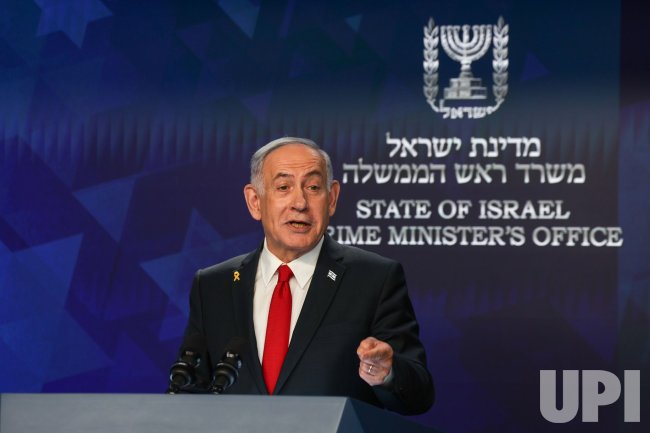
Israeli Prime Minister Benjamin Netanyahu affirmed that the targeting of Iranian Revolutionary Guard Navy Commander Admiral Ali Reza Tangsiri reflects the strategic cooperation between Israel and the United States. This was stated during a press conference where Netanyahu pointed out that this action is part of ongoing efforts to confront Iranian threats in the region.
Admiral Tangsiri is considered a prominent figure in the Revolutionary Guard, having led naval operations aimed at enhancing Iranian influence in the Gulf waters. He was targeted in a coordinated military operation, which has sparked varied reactions in political and military circles.
Details of the Incident
Reports indicate that the operation that led to Tangsiri's death was executed with precise coordination between Israeli and American intelligence agencies. The operation took place during a time of significant tension between Tehran and Washington, particularly following the United States' withdrawal from the Iranian nuclear agreement.
Netanyahu, who is facing increasing internal pressure, used this event to reaffirm his government’s firm stance towards Iran, stating that Israel will continue to take all necessary measures to protect its national security. He also added that cooperation with the United States is a crucial factor in this strategy.
Background & Context
Historically, relations between Iran and Israel have been marked by ongoing tension, as Tel Aviv views Tehran as an existential threat. Since the Islamic Revolution in 1979, Iran has taken steps to enhance its influence in the region, prompting Israel to bolster its military and intelligence capabilities.
In recent years, Israeli military operations against Iranian targets in Syria and Lebanon have increased, as Tel Aviv seeks to prevent Iran from establishing a military presence near its borders. The targeting of Tangsiri fits into this context, being part of a broader strategy to counter Iranian threats.
Impact & Consequences
This operation could escalate tensions between Iran and Israel, with Tehran expected to respond to this targeting in various ways, either through increased military activities or by utilizing its proxies in the region. Additionally, this incident may affect Iran's relations with other countries, particularly those seeking to mediate in the conflict.
Moreover, these developments could lead to a reassessment of major powers' strategies in the region, including the United States, which may find itself needing to adopt more cautious positions amid escalating tensions.
Regional Significance
These events are of significant importance to the Arab region, reflecting the ongoing conflicts between regional powers. The increasing tensions between Iran and Israel could have negative impacts on stability in countries such as Iraq, Syria, and Lebanon, where pro-Iran groups are present.
Furthermore, these events may affect the course of negotiations regarding the Iranian nuclear program, potentially complicating efforts to reach a comprehensive agreement. Under these circumstances, Arab countries must be prepared to deal with the repercussions of these escalations.
In conclusion, the situation in the region remains influenced by rapid developments, and the international community must closely monitor these events, as any escalation could lead to unforeseen consequences affecting regional and international security.