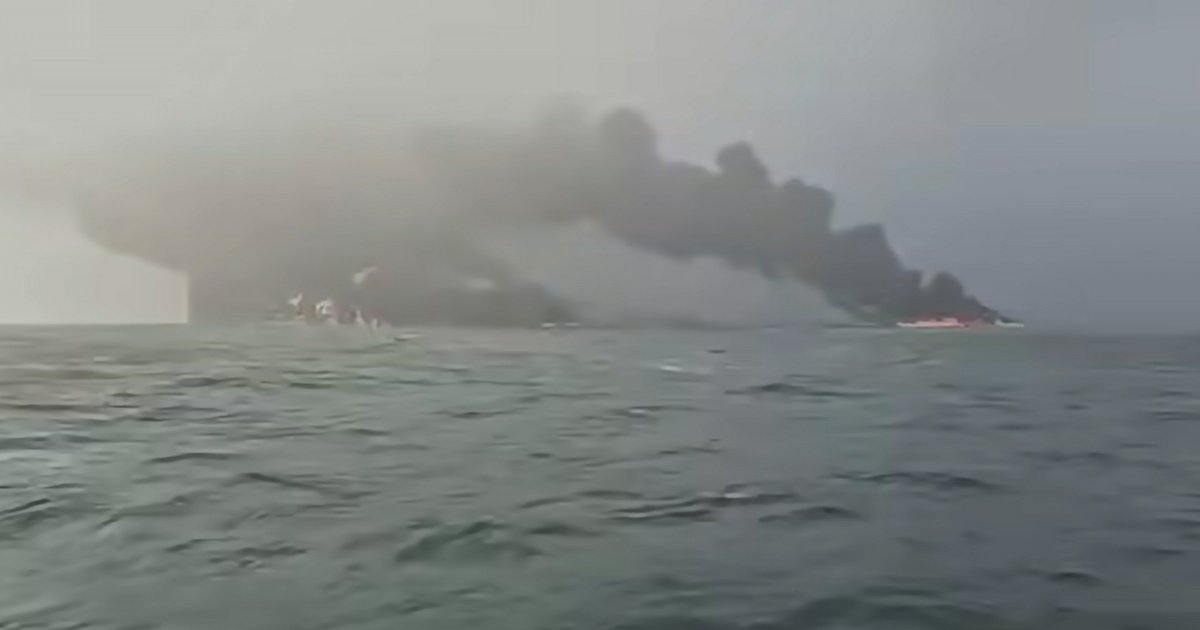
In a new escalation of tensions in the Gulf waters, two vessels were targeted in separate attacks, highlighting the increasing instability in the region. According to the maritime monitoring site "Marine Traffic," a container ship and a Kuwaiti oil tanker were attacked in two separate incidents, leading to a fire on the tanker.
Data from the site reported that the Liberian-flagged container ship "Express Rome," with a capacity of 10,100 standard containers, reported two projectiles falling into the water near it while sailing off the coast of "Ras Tanura" in Saudi Arabia. The incidents occurred about an hour apart, with confirmation that all crew members were safe and no damage was recorded to the ship's structure.
Details of the Incident
Later, at 20:20 GMT, the Kuwaiti oil tanker "Al-Salmi" was struck directly at a location approximately 31 nautical miles northwest of the Emirate of Dubai, resulting in a fire on board. The tanker measures 332 meters in length and was built in 2011. It was en route to the city of Qingdao in China, carrying a cargo estimated at around two million barrels of crude oil.
These attacks come at a time when maritime traffic in the Strait of Hormuz and its surroundings is experiencing near-total paralysis, amid increasing pressures exerted by Iran on commercial vessels in the territorial waters. According to data from S&P Market Intelligence, fewer than 150 tankers crossed the strait during March, while approximately 140 ships typically transit this vital waterway daily, according to figures from the UK Maritime Trade Operations.
Context and Background
Historically, the Strait of Hormuz is one of the most important maritime passages in the world, through which about 20% of total global oil exports pass. The region has witnessed increasing tensions in recent years, particularly with the escalation of Iranian military activities, which include targeting commercial vessels. These activities have significantly impacted maritime traffic, raising concerns about potential crises in global oil supplies.
In recent years, many commercial ships have been attacked, prompting concerned nations to bolster their military presence in the region. The UK Maritime Trade Operations has issued reports warning of the increasing number of suspicious incidents affecting vessels in the Gulf and the Strait of Hormuz.
Impact and Consequences
Reports indicate that these attacks could exacerbate security conditions in the region, potentially affecting global oil prices. If these attacks continue, countries may resort to more stringent measures to protect their vessels, which could lead to greater military escalation.
Moreover, the continuation of these tensions could impact the global economy, as many countries rely on oil supplies from this region. Any disruption in maritime traffic could lead to rising oil prices, affecting global markets.
Significance for the Arab Region
These events serve as a warning to Arab countries bordering the Gulf, as they must enhance security cooperation and coordination to face the increasing threats. Additionally, these incidents may affect relations between Arab countries and Iran, necessitating diplomatic efforts to resolve disputes.
In conclusion, the region remains on alert as events continue to unfold. The international community must take effective steps to ensure maritime safety in the Gulf and maintain stability in global markets.