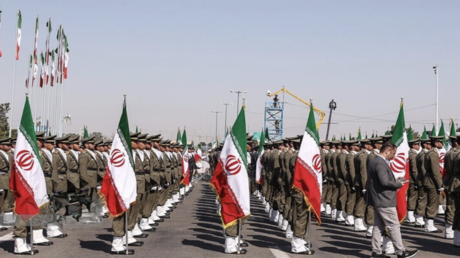
The Iranian Revolutionary Guard has announced that groups of local tribes in several Iranian regions have carried out operations targeting two American helicopters, as part of the ongoing confrontations in the country. The Revolutionary Guard indicated that these operations are a reaction to the American military presence in the region, which many view as a threat to Iran's national security.
Tensions are escalating in the rugged mountainous areas where tribes are clashing with American forces, reflecting a rise in local resistance against what they perceive as occupation. Reports have shown that these operations come at a sensitive time, as Iran seeks to reinforce its control over border areas and assert its military strength.
Details of the Incident
According to official statements, the two American helicopters were targeted in hard-to-reach mountainous regions, showcasing the tribes' capability to execute complex operations against foreign forces. These incidents have been documented by local media, which emphasized the bravery of the tribes in confronting American troops.
These events occur amid escalating tensions between Iran and the United States, as the latter continues to bolster its military presence in the region. The Iranian Revolutionary Guard views these operations as a strong message to the United States that its presence will not be easy and that popular resistance is ongoing.
Background & Context
Historically, Iranian tribes have played a pivotal role in local conflicts, demonstrating an ability to organize themselves and confront challenges. In recent years, there has been a surge in tribal activity, particularly in border areas experiencing tensions with foreign forces.
These operations are part of a broader strategy aimed at enhancing national identity and resisting foreign interventions. Iranian tribes have shown significant resilience in facing challenges, making them a force that cannot be ignored in the political and military equation of the country.
Impact & Consequences
These operations could lead to further escalation of tensions between Iran and the United States, as American forces may respond more aggressively to these attacks. Additionally, these events could affect regional relations, prompting other countries to adopt more cautious stances regarding the American presence in the region.
Moreover, these operations may encourage more tribes in other areas to take similar stances, complicating the security situation in Iran. These dynamics could lead to changes in local and international policies towards Iran.
Regional Significance
These events are particularly significant for the Arab region, as they reflect a rise in resistance against foreign interventions. These dynamics may impact regional security, as they could encourage other countries to enhance their military capabilities in response to external threats.
Furthermore, the escalating tensions between Iran and the United States could have indirect effects on neighboring Arab countries, significantly impacting economic and political relations in the region as a result of these events.
In conclusion, these operations reflect the ability of Iranian tribes to organize themselves and confront challenges, adding a new dimension to the conflict in the region. It appears that tensions will continue to escalate, necessitating close monitoring by the international community.