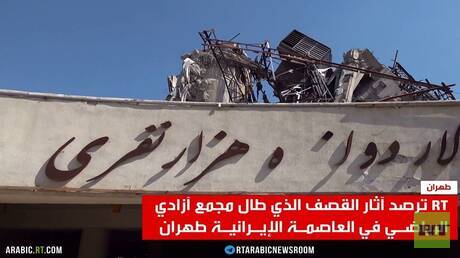
U.S. and Israeli attacks on civilian facilities in Iran continue, recently targeting the Azadi Complex in Tehran. These attacks have led to significant human and material losses, raising international concerns about escalating tensions in the region.
Facilities like Azadi are symbols of sports and culture in Iran, and these attacks may represent a violation of international standards that prohibit targeting civilian infrastructure. These assaults have provoked angry reactions from the Iranian government, which has asserted its right to defend its sovereignty.
Details of the Incident
Recently, the Azadi Complex, one of the largest stadiums in Iran, was subjected to an airstrike that resulted in the destruction of part of its infrastructure. The attack, believed to have been coordinated between the United States and Israel, occurred at a sensitive time as Iran faces multiple internal and external challenges.
Reports indicate that the attack resulted in injuries among civilians, further heightening tensions between Iran and Western countries. Iranian officials have indicated that these attacks will not go unanswered, emphasizing the necessity of protecting civilian facilities.
Background & Context
Historically, relations between Iran and the United States have seen increasing tensions, especially following Washington's withdrawal from the nuclear agreement in 2018. Since then, reciprocal attacks between the two sides have escalated, with Iran seeking to bolster its defensive capabilities in the face of external pressures.
Israel, viewing Iran as an existential threat, has carried out numerous military operations against Iranian targets in recent years. These dynamics reflect the ongoing conflict in the region, which extends beyond mere military disputes to include political and economic conflicts as well.
Impact & Consequences
The repercussions of these attacks extend beyond Iranian borders, affecting regional stability as a whole. The escalation of violence could provoke reactions from other countries in the region, increasing the likelihood of new conflicts erupting.
Moreover, attacks on civilian facilities could lead to a deterioration of relations between Iran and Western nations, complicating efforts to reach diplomatic solutions. These events may also impact global markets, particularly in the energy and economic sectors.
Regional Significance
Neighboring Arab countries are on high alert, as any escalation in the conflict could have direct implications for their security and stability. Many Arab nations adopt varying stances towards Iran, complicating the regional landscape.
These events may also affect relations between Arab nations and the West, as some countries seek to enhance their security cooperation with the United States in response to Iranian threats. At the same time, other nations may strive to maintain good relations with Iran, reflecting the delicate balance many Arab states attempt to achieve in their foreign policies.
In conclusion, the recent attacks on the Azadi Complex in Tehran highlight the escalating tensions in the region, necessitating urgent international steps to curb violence and promote dialogue.