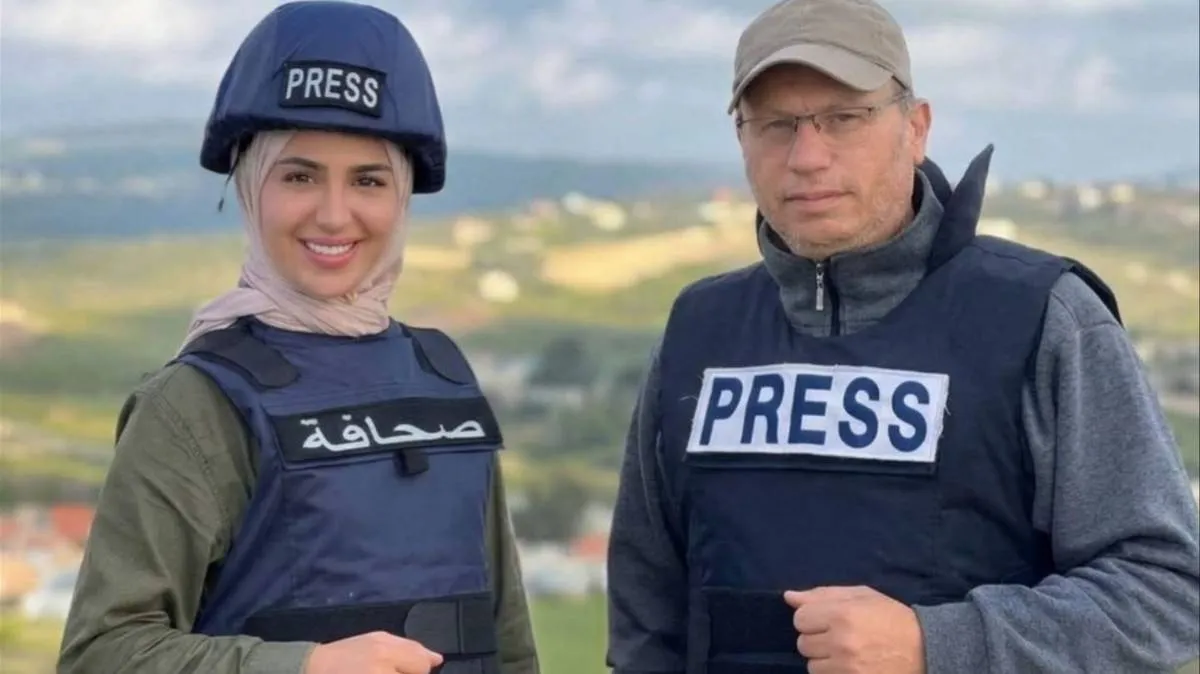
The risks facing journalists and paramedics in southern Lebanon are escalating, as clashes extend beyond combat lines to include attacks on civilians protected under international law. A recent airstrike resulted in the deaths of three journalists, raising international concerns about the protection of reporters in conflict zones.
In a tragic incident, an Israeli airstrike targeted a civilian vehicle on the Kfarhouna - Jezzine road, resulting in the deaths of four individuals, including three journalists: Ali Shaib, a correspondent for Al-Manar, journalist Fatima Fatouni, and her brother, photographer Mohammed Fatouni from Al-Mayadeen. This incident is not merely a statistic in the list of victims; it reflects a dangerous shift in the nature of confrontations, where conflicting parties are directly targeting journalists.
Details of the Incident
The Israeli army announced that it targeted Ali Shaib due to his alleged connection with the "Radwan Force," raising questions about the boundaries between journalistic work and security accusations. In this context, Lebanese President Joseph Aoun condemned the targeting, considering it a blatant violation of international laws, and affirmed that journalists are civilians performing a professional duty.
Lebanese Prime Minister Nawaf Salam also stated that targeting journalists constitutes a clear violation of international humanitarian law, calling for respect for the rules protecting journalists. For his part, Minister of Information Paul Marqus deemed the incident a described war crime, noting that Lebanon has submitted a detailed list to the UN Special Coordinator regarding attacks on journalists.
Background & Context
Historically, the region has witnessed an escalation in violence, where attacks have not only targeted journalists but also medical teams. Three ambulances were targeted in Zawtar al-Gharbiyeh and Kfar Tebnit, resulting in the deaths of six paramedics while they were performing rescue missions. These incidents reflect the widening scope of targeting to include anyone attempting to provide assistance in conflict areas.
In recent years, Lebanon has experienced an escalation in Israeli attacks, with civilians being repeatedly targeted. Reports have shown that many journalists have fallen while covering events, raising concerns about their safety and their right to work freely.
Impact & Consequences
The repercussions of these incidents go beyond humanitarian dimensions, raising questions about the future of journalism in conflict areas. Targeting journalists reflects a shift in the nature of modern warfare, where journalistic work has become a target in itself. This threatens freedom of expression and undermines journalists' ability to cover events objectively.
Moreover, targeting medical and media teams directly impacts the international community's ability to provide humanitarian aid. Amid escalating violence, it becomes increasingly difficult for humanitarian organizations to operate effectively, exacerbating the suffering of civilians in conflict zones.
Regional Significance
These events serve as a wake-up call for the entire Arab region, highlighting the need to protect journalists and medical teams in conflict areas. The continued targeting of these individuals could lead to a decline in media freedom in Arab countries, negatively affecting democracy and human rights.
Under these circumstances, the international community must take effective steps to protect journalists and ensure their safety. Failure to act could lead to a culture of impunity, threatening the future of freedom of expression in the region.
In conclusion, the recent events in southern Lebanon underscore the necessity of enhancing the protection of journalists and medical teams in conflict areas. There must be urgent international action to put an end to these violations and ensure the safety of civilians and humanitarian workers.