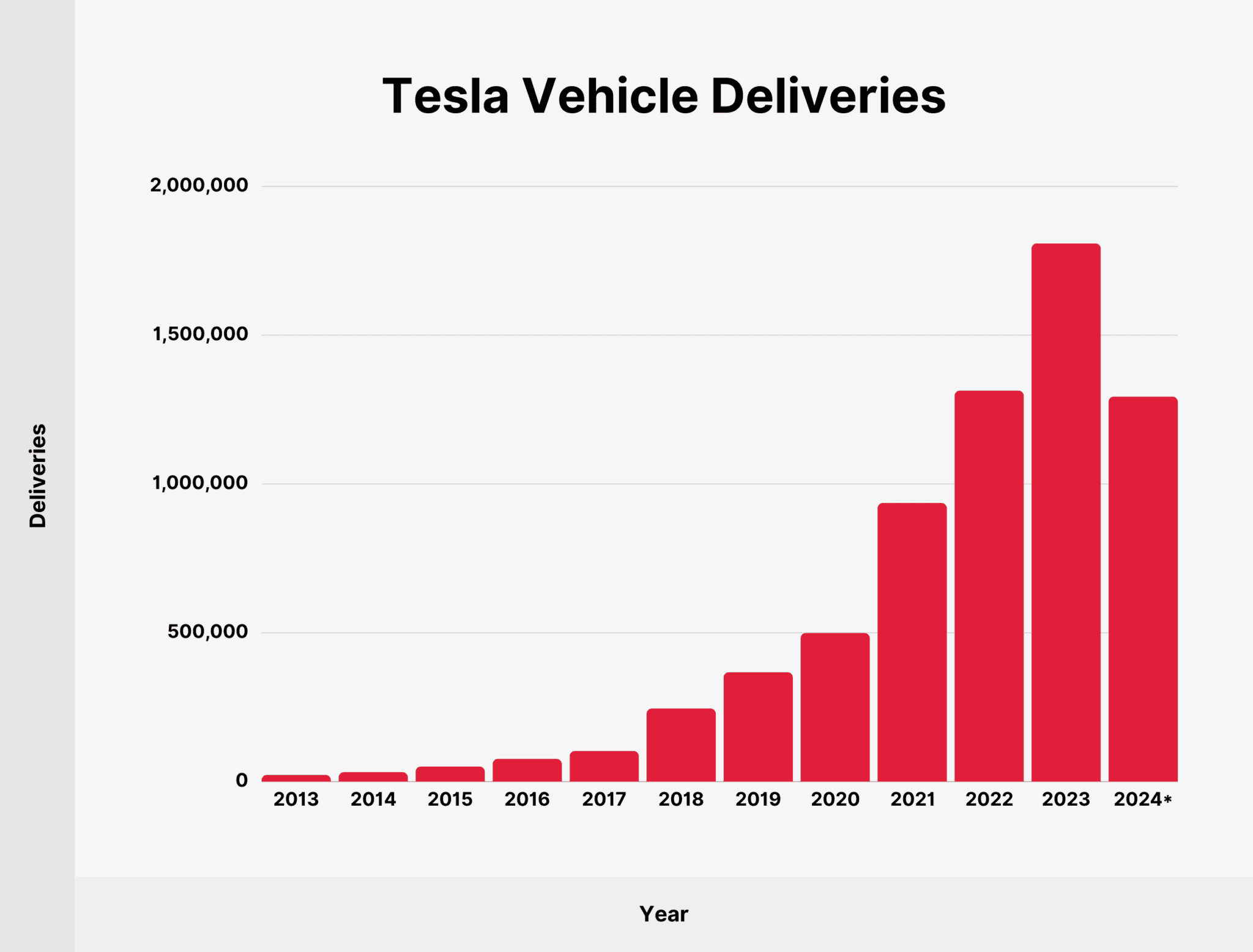
Tesla, the American leader in electric vehicle manufacturing, reported a 6% increase in its car deliveries during the first quarter of this year, which is below expectations that indicated a larger growth. This increase occurs at a time when the market is experiencing heightened competition, with reports indicating that Chinese competitor BYD has seen a 25% decline in its electric vehicle sales.
These figures show that Tesla faces significant challenges in maintaining its position in the electric vehicle market, especially with more companies entering this sector. While Tesla aims to increase its production and expand its reach, it appears that competition is intensifying, affecting its overall performance.
Details of the Event
Although the 6% increase is considered positive in the context of overall growth, it does not meet expectations that pointed to a larger increase. This weak performance can be attributed to several factors, including increasing competition from Chinese companies like BYD, which has seen a notable drop in its sales. Additionally, Tesla is facing supply chain challenges, impacting its ability to meet the growing demand for its vehicles.
Tesla, founded by Elon Musk, has achieved significant successes in recent years, but it now needs new strategies to address the increasing challenges. It is worth noting that Tesla had announced plans to expand its factories and increase production, but these plans have yet to translate into tangible results in the market.
Context and Background
Founded in 2003, Tesla has since become one of the leading companies in the electric vehicle sector. However, the market has undergone a significant transformation in recent years, with new companies such as BYD, NIO, and Xpeng entering the fray, increasing the level of competition. BYD, considered one of the largest electric vehicle manufacturers in China, has experienced substantial growth in recent years, but it is now facing difficulties in maintaining this momentum.
China is a key market for electric vehicles, with the government showing significant support for this sector through incentives for consumers. However, this support has not been enough to save BYD from its recent sales decline, indicating that competition in the market has become more complex.
Implications and Effects
These figures suggest that Tesla may need to reassess its strategies to confront the increasing challenges. This competition could affect prices, potentially leading to reduced profit margins. Additionally, BYD's declining sales may indicate a shift in consumer preferences, prompting Tesla to be more innovative in its products.
Furthermore, these dynamics could impact the global electric vehicle market, where competition is expected to intensify in the coming years. Companies that can adapt to changes in the market will be the most successful, while others may struggle to survive.
Impact on the Arab Region
In the Arab region, the electric vehicle market is in the early stages of growth, but there is increasing interest from governments and companies in this sector. The challenges faced by Tesla and BYD may influence the strategies of Arab companies looking to enter the electric vehicle market. It is crucial for these companies to learn from Tesla's experiences and develop effective strategies to face the competition.
In conclusion, Tesla's recent performance shows that the market is changing rapidly, and companies need to innovate and adapt to remain competitive. With growing interest in electric vehicles in the Arab region, these challenges may present an opportunity for local companies to introduce new products that meet consumer needs.