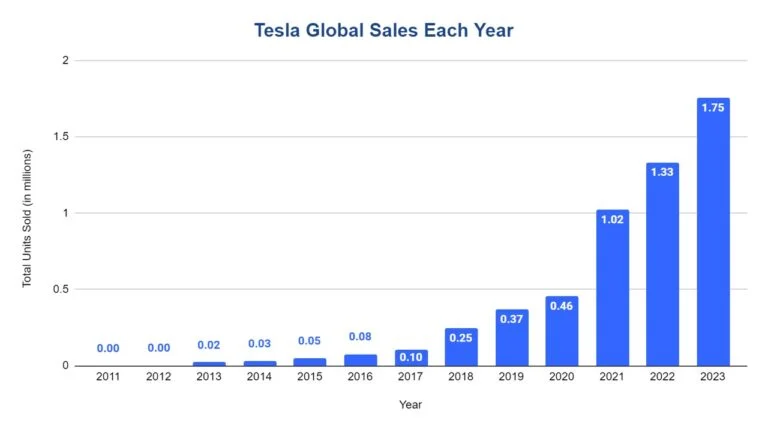
Tesla, a leader in the electric vehicle industry, has announced a noticeable decline in its sales in recent times, raising concerns among investors and resulting in a decrease in its stock value in financial markets. According to reports, electric vehicle sales and energy deployments were significantly below Wall Street's expectations, suggesting that the company may be "sacrificing" some production operations.
This decline comes at a sensitive time for Tesla, which is striving to maintain its position in the growing electric vehicle market. Data has shown that Tesla's sales did not meet expected figures, raising questions about the company's future strategies.
Details of the Event
According to reports, Tesla did not meet its sales targets, as expectations indicated a significant increase in demand for electric vehicles, yet the results were disappointing. This sales drop may be attributed to several factors, including increasing competition from other companies in the sector, as well as challenges related to the supply chain.
Additionally, Tesla is facing pressure from investors who expect strong performance amid the ongoing market growth. Some analysts have indicated that the company may need to adjust its strategies to adapt to market changes.
Background & Context
Founded in 2003, Tesla has since become one of the most prominent companies in the electric vehicle sector. Elon Musk, the company's CEO, has played a significant role in enhancing Tesla's image as an innovative brand. However, the market is now witnessing the entry of many new companies offering electric vehicles at competitive prices, increasing pressure on Tesla.
Over the years, Tesla has achieved significant successes, but current challenges may impact its future. In recent years, the company has seen remarkable growth in its sales, but with increasing competition, it may need to reassess its strategies.
Impact & Consequences
The decline in Tesla's sales could have wide-ranging effects on the financial market, as the drop in stock value may lead to a loss of confidence from investors. Furthermore, this decline could affect the company's expansion plans, negatively impacting its future investments.
Moreover, Tesla's downturn may open the door for other companies to strengthen their market share, increasing competition in the electric vehicle sector. This could lead to improved options available to consumers, but it may also put Tesla in a difficult position if it fails to adapt to these changes.
Regional Significance
As many Arab countries seek to enhance the use of electric vehicles as part of their environmental strategies, Tesla's decline may impact these countries' plans. Tesla is considered one of the leading companies in this field, and any downturn in its performance could affect Arab nations' investments in this sector.
Additionally, Arab countries looking to attract investments in renewable energy may find this downturn an opportunity to encourage other companies to enter the market, potentially contributing to innovation and growth in this sector.
The decline in Tesla's sales represents a significant challenge for the company and may have broad implications for the financial market and the electric vehicle industry. Amid increasing competition, it will be crucial to monitor how Tesla responds to these challenges and how it will affect its future.