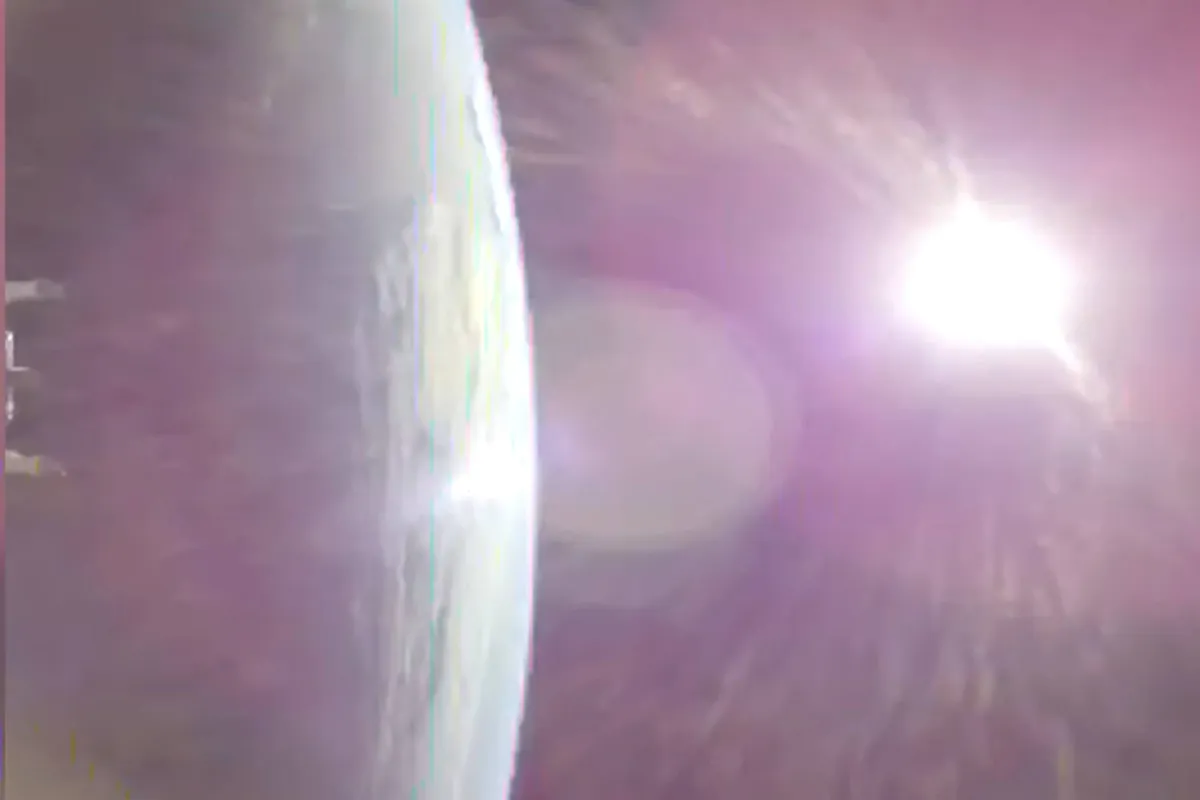
NASA's Artemis 2 astronauts wrapped up their first day in space on Thursday by testing the cameras they will use to photograph the Moon, successfully capturing images of Earth as it slowly diminished in size during their ascent.
Mission commander Reid Wiseman shared with the mission control center in Houston while taking pictures of Earth using an iPhone: "It's like going out to your backyard and trying to take a picture of the Moon. That's the feeling I have right now as I try to capture a picture of Earth." Wiseman explained that taking photos from over 40,000 miles (about 64,000 kilometers) away, where the planet appears as a small glowing ball in sunlight, made it challenging to adjust the exposure settings on the phone camera.
Details of the Event
The mission, which launched from Florida at 6:35 PM EST (2235 GMT) on Wednesday, carried four astronauts. The spacecraft is equipped with multiple devices to capture images of space from inside the Orion capsule throughout the journey. These devices include a small GoPro camera, iPhones, and professional Nikon cameras, a brand more familiar to NASA astronauts who have used them on the International Space Station for years.
NASA has not yet released any images taken by the crew, but it expects to publish them later in the mission after more exciting moments. Astronauts are expected to reach a distance of about 252,000 miles from Earth on the sixth day of the mission, the farthest point humans have ever traveled, where the planet will appear the size of a basketball behind the dark side of the Moon.
Background & Context
The Artemis 2 mission is part of NASA's ambitious program to return to the Moon, aiming to explore the lunar surface and conduct new scientific research. This program represents an important step towards achieving larger goals, such as sending humans to Mars in the future. This mission may also serve as a launchpad for developing new technologies in space.
Historically, the United States sent the first human to the Moon in 1969 during the Apollo 11 mission. Since then, space programs have seen significant developments, as major countries seek to enhance their presence in space and explore other planets.
Impact & Consequences
The Artemis 2 mission is considered a strategic step in enhancing the United States' space capabilities, which could impact the geopolitical balance in space. The success of this mission may encourage further investments in space and strengthen international cooperation in scientific research.
On the other hand, this mission could open new avenues for cooperation between Arab countries and the United States in the fields of space and technology, contributing to the development of local space programs in Arab nations.
Regional Significance
Space programs are part of the vision of many Arab countries to enhance their technological and scientific capabilities. With increasing interest in space, the Artemis 2 mission could inspire Arab nations to invest more in space science and technology, potentially leading to the development of joint space projects.
In conclusion, the Artemis 2 mission represents a historic step towards space exploration, opening new horizons for international cooperation, which could positively impact the future of scientific research in the region.