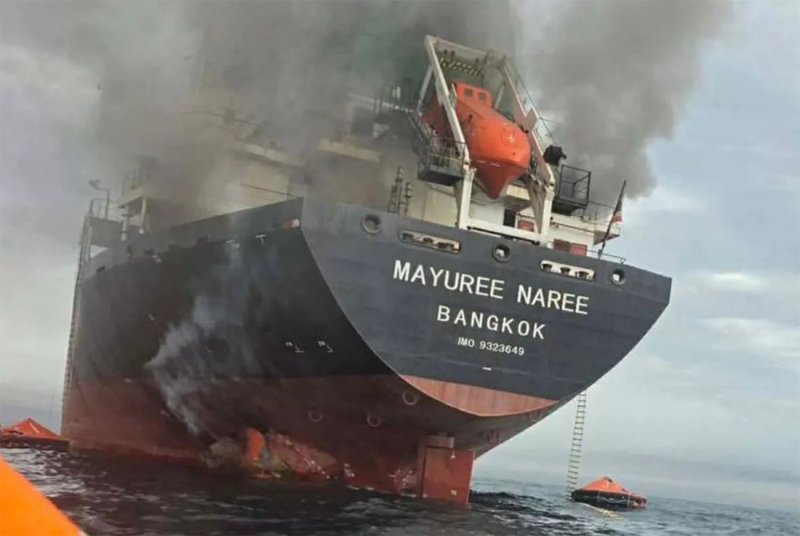
A Thai-flagged cargo ship was attacked by unknown projectiles in the Strait of Hormuz, running aground off the coast of Qeshm Island, Iran. The incident occurred earlier this month, raising international concerns about maritime security in one of the busiest waterways in the world.
The ship, named Maiori Nari, suffered an explosion at the stern, leading to a fire in the engine room. According to reports, 20 crew members were rescued by the Omani navy, while three crew members are still missing.
Details of the Incident
The incident took place in the Strait of Hormuz, a vital transit point for oil and natural gas shipments. The attack on the Thai ship comes at a time of increasing tensions in the strait between Iran and Western countries, raising fears of escalating conflict in the region.
This incident is part of a series of attacks targeting commercial vessels in the area, as concerns grow that such actions could lead to a larger escalation in regional conflict. The recent incident underscores the urgent need to enhance maritime security in this sensitive area.
Background & Context
The Strait of Hormuz is one of the most important waterways in the world, through which approximately 20% of global oil exports pass. Historically, the strait has witnessed numerous conflicts between Iran and Western nations, especially amid sanctions imposed on Tehran due to its nuclear program.
In recent years, tensions in the region have escalated, with the United States accusing Iran of hostile actions against commercial vessels. There are also concerns that these events could lead to military escalation that might impact oil prices and global markets.
Impact & Consequences
The attack on the Thai ship may provoke strong international reactions, particularly from countries that rely on the security of navigation in the Strait of Hormuz. This incident could potentially lead to an increased military presence in the region, heightening tensions between Iran and Western nations.
Moreover, the incident could affect global oil prices, as any escalation in tensions may raise fears of supply disruptions. This could negatively impact the global economy, especially amid current economic crises.
Regional Significance
Arab countries neighboring the Strait of Hormuz, such as the United Arab Emirates and Saudi Arabia, are among the most affected by this incident. Any escalation in tensions could impact trade and maritime transport, adversely affecting the economies of these nations.
The incident also highlights the importance of regional and international cooperation to enhance maritime security in the area. Given the increasing threats, it may be essential for Arab countries to work together to secure their waterways and protect their economic interests.