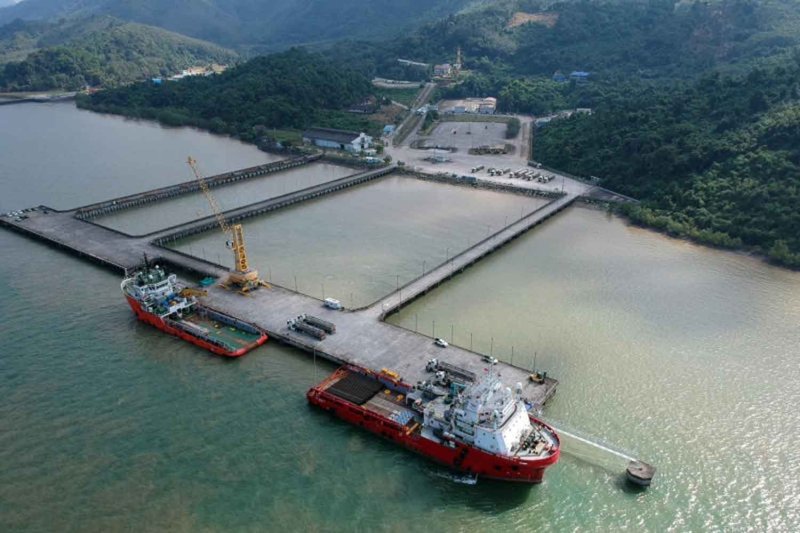
Researchers from the Transport Institute at Chulalongkorn University in Bangkok have expressed their concerns regarding the bridge project proposed by the Thai government. During a forum titled "The Bridge Project: Future Prospects for Transport and Logistics in Thailand," it was emphasized that the project may face significant challenges in competing with regional shipping routes, which could negatively impact the expected economic returns.
The forum, held at the Social Innovation Center of Chulalongkorn University, brought together a group of researchers and experts to discuss the economic feasibility, environmental impacts, and policies associated with the project. This initiative is part of a government plan aimed at attracting investments of up to 900 billion Thai Baht, intending to connect the Gulf of Thailand with the Andaman Sea through ports, roads, and railways.
Project Details and Economic Feasibility
Sompong Siri Suponsilp, a specialist in transport and logistics, pointed out that the proposal backed by the Office of Transport Policy and Planning (OTP) primarily aims to establish a transport hub rather than a major port serving Thailand's exports. He clarified that approximately 80% of the anticipated economic feasibility depends on container transport activities.
He added that if the goal is to build a port on the western coast to support Thai shipping, the project should be developed as a major port instead, which could reduce environmental impact and lower investment risks.
Background & Context
Historically, Thailand has seen multiple attempts to develop its transport infrastructure, but many major projects have faced challenges in execution and financing. In recent years, there has been increasing pressure on the government to deliver effective infrastructure projects that enhance economic growth and provide social benefits. However, environmental and financial challenges remain obstacles to achieving these goals.
Sorachart Bamrungsuk, a security and geopolitical expert, emphasized the need to evaluate the project from economic, environmental, and security perspectives, asserting that Thailand must balance financial gains with environmental sustainability.
Impact & Consequences
Concerns are growing that the funding required for the bridge project could negatively affect investor confidence and increase the country's public debt. Sorachart stressed the importance of transparency and accountability to prevent the project from becoming a case of corruption that could lead to its collapse. At the same time, over 100,000 signatures have been collected on a petition demanding the government review the project, indicating significant public pressure to reconsider this initiative.
Regional Significance
The bridge project is seen as a crucial part of the Thai government's strategy to enhance infrastructure, but economic and environmental challenges could affect its success. The project's implications extend beyond Thailand, potentially impacting regional trade dynamics and investment flows.
In conclusion, while the bridge project holds promise for improving connectivity and economic opportunities, careful consideration of its feasibility and sustainability is essential to ensure it meets its objectives without compromising environmental integrity.