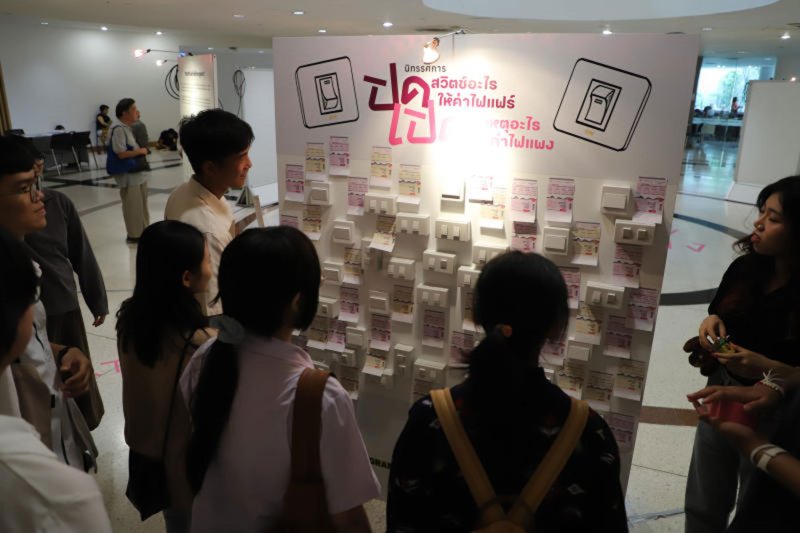
The Energy Regulatory Commission in Thailand announced on Wednesday a 1.8% increase in electricity prices during the period from May to August. The lowest available options were selected, with the tariff reaching 3.95 Thai Baht per kilowatt-hour, necessitating an expenditure of over 9 billion Baht as support.
In a statement, Bunphat Leesompatpaiboon, the Secretary-General of the Commission, confirmed that the committee reviewed public feedback and approved a slight adjustment in the fuel tariff, which will reach 16.23 Satang per unit. This variable tariff reflects changes in fuel costs, exchange rates, and other factors.
Details of the Price Increase
The new tariff will combine the fuel tariff and the base tariff of 3.78 Baht per unit, resulting in an average charge of 3.95 Baht, an increase of 7 Satang from the current price of 3.88 Baht. The commission also considered prices reaching 4.08 and 4.59 Baht, based on different scenarios, amid significant increases in liquefied natural gas costs due to conflicts in the Middle East.
It is noteworthy that liquefied natural gas accounts for 58% of the fuel used in the country’s power generation plants. Choosing the highest tariff would ensure full payment of outstanding costs owed by the Electricity Generating Authority of Thailand, which currently stands at 36 billion Baht due to electricity bill support.
Context and Background
This price increase comes at a sensitive time, as many consumers are feeling the effects of conflicts in the Middle East on energy costs. There have been calls to freeze the tariff at 3.88 Baht per unit, given the impact of the war in the Middle East on consumers. However, Bunphat indicated that freezing prices would be costly.
He added that any decision regarding freezing electricity tariffs must consider financial constraints, system security, and long-term impacts, while adhering to principles of balanced, transparent, and fair regulation for all stakeholders involved.
Implications and Effects
This price increase is a significant step given the current economic conditions, as the government seeks to maintain price stability. The new Minister of Energy Akhanat Promphan has committed to keeping electricity prices stable at 3 Baht per unit for households consuming less than 200 units monthly, with tiered pricing for higher consumption.
Akhanat also emphasized the need to reduce dependence on natural gas and expand the use of renewable energy. He proposed developing a commercial electricity market inspired by models like Singapore and Japan, allowing customers to choose service providers through direct power purchase agreements instead of government agencies.
Impact on the Arab Region
These developments are particularly significant for the Arab region, which is also suffering from the effects of regional conflicts on energy prices. With rising liquefied natural gas prices in global markets, Arab countries may face similar challenges in managing energy costs and their impact on consumers.
These circumstances require Arab nations to consider new strategies to enhance the use of renewable energy and reduce reliance on fossil fuels, which could contribute to achieving economic and environmental sustainability.