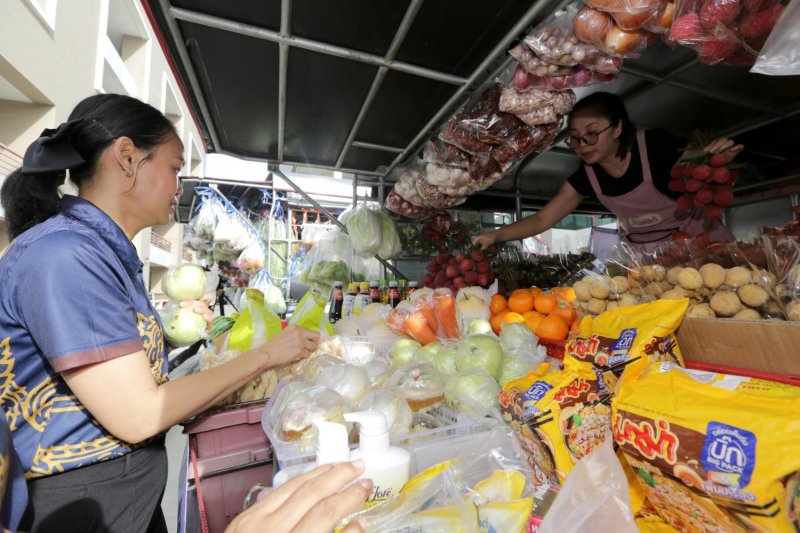
The Thai government has launched a new stimulus program called 'Tai Chai Tai Plus', designed to support local consumption and bolster economic stability. The program will run from June 1 to September 30, targeting 43.2 million beneficiaries, including 30 million participants in the standard program and 13.2 million holders of government welfare cards.
While analysts believe that this program may not have a significant economic impact, it is expected to help alleviate pressures on local spending amid rising living costs and weakened consumer confidence. Projections indicate that the program could add 0.4 percentage points to GDP, assisting in maintaining household purchasing power.
Event Details
According to assessments from 'Tris Rating', this program is viewed as a means to redirect consumer spending rather than significantly generating new consumption. With a total budget of approximately 43 billion baht, this program is considered a small part of the Thai economy, which is estimated at 18 trillion baht, suggesting that it is unlikely to markedly boost economic growth.
Reports from 'P Securities' indicate that this program should be seen as an economic stabilizer rather than a strong growth catalyst. Nevertheless, the monthly support may assist families in managing their daily expenses during a period of weakened purchasing power.
Background & Context
This initiative comes at a sensitive time for the Thai economy, which is experiencing economic pressures due to rising living costs. Historically, Thailand has relied on similar stimulus strategies to support the economy, particularly during times of crisis. However, current challenges require a swift and effective response to ensure market stability.
In recent years, Thailand has faced fluctuations in economic growth, prompting the government to seek new ways to support local consumption and enhance confidence in the economy. The 'Tai Chai Tai Plus' program is part of this response.
Impact & Consequences
The stimulus program is expected to have varying effects across different market sectors. Predictions indicate that traditional retailers and small shops will be the primary beneficiaries of this program, while modern businesses may face temporary pressures due to a shift in spending towards supported channels.
'Tris' anticipates that large stores will experience the most significant short-term impact due to their high exposure to price-sensitive consumers, especially in essential product categories. However, negative risks are expected to remain limited, as large stores still benefit from a wide range of products and competitive prices.
Regional Significance
This program illustrates how countries can adopt stimulus strategies to support their economies during crises. For Arab nations, this experience could serve as a model for addressing economic challenges, particularly given the difficult economic conditions faced by some countries in the region.
In conclusion, the 'Tai Chai Tai Plus' program represents an important step towards supporting the Thai economy and reflects the ongoing need to adapt to global and local economic changes.