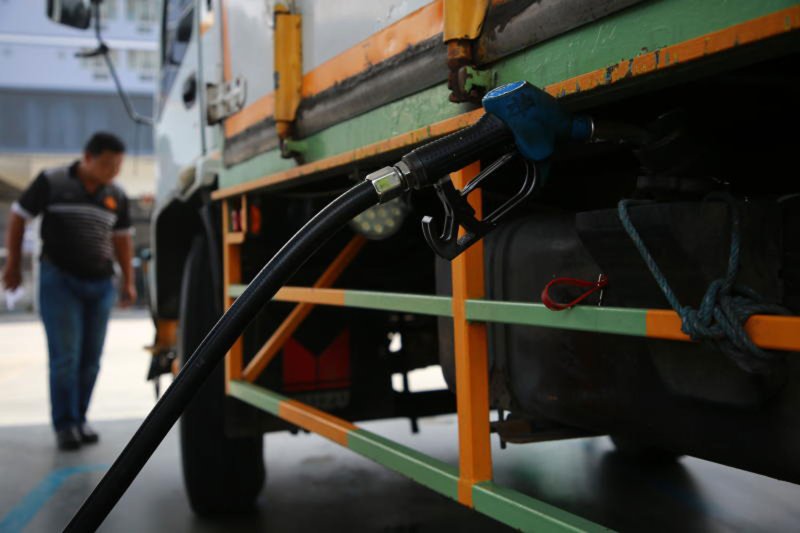
Thailand is pursuing a loan of up to 150 billion baht to support local fuel prices, amid a significant rise in global diesel costs. Prasert Sinsukprasert, the permanent secretary for energy, stated that this loan will be essential for stabilizing the fund's public finances and continuing fuel price support in the country.
The fuel fund recorded losses amounting to 48.2 billion baht as of April 2, exceeding the legal limit set at 40 billion baht. Consequently, the government was forced to reduce the subsidy provided for diesel, decreasing it from 22.89 baht to 17.78 baht per liter, which led to an increase in local diesel prices by 3.5 baht to reach 44.24 baht per liter, representing an increase of nearly 50% compared to last month.
Details of the Situation
Government support for diesel is crucial for the transport and industrial sectors, helping to maintain reasonable prices for consumers. Currently, the subsidy cap for diesel is set at 1.4 billion baht per day. Prasert explained that the proposed loan would enable the fund to continue providing support for an additional two months, helping to alleviate the burden on citizens.
Global diesel prices are experiencing severe fluctuations, having surpassed levels not seen since the onset of the Russian-Ukrainian conflict. Prices have risen from an average of 92 dollars per barrel before the Israeli-American conflict with Iran to 290 dollars per barrel on April 2, exceeding the 150 dollars recorded during the Russian invasion of Ukraine.
Background & Context
In recent years, Thailand has faced significant challenges regarding fuel prices, as the country heavily relies on oil imports. With escalating geopolitical conflicts impacting energy markets, governments worldwide are under increasing pressure to maintain price stability. In this context, Thailand is striving to manage its resources effectively to avoid economic crises.
The Thai government has also extended the price ceiling for liquefied petroleum gas (LPG) until May 31, setting the price at 423 baht per 15 kg cylinder. The fund supports LPG by 1.17 baht per kg, keeping prices around 25 baht per kg.
Impact & Consequences
The current situation in Thailand necessitates swift and effective actions, as any further increase in fuel prices could exacerbate the economic burdens on citizens. Prasert noted that authorities are examining overall refining margins, which is the difference between crude oil prices and refined product prices, and have requested detailed cost data from all local refineries.
No decision has yet been made regarding adjustments to refinery prices or imposing an unexpected tax on refineries benefiting from high oil prices. Additional measures include targeted support for small fishing boats, which can purchase oil tax-free, and promoting the use of B20 biodiesel, a blend of 80% diesel and 20% methyl ester derived from palm oil, to ease the burden on consumers.
Regional Significance
Arab countries are also affected by fluctuations in global fuel prices, as many of these nations rely on oil exports as a primary source of revenue. Under the current circumstances, Arab governments may seek to reassess their support and pricing strategies to maintain economic stability. Additionally, rising fuel prices could impact living costs, necessitating effective measures to protect citizens.
In conclusion, the current situation in Thailand exemplifies the challenges faced by countries in managing their resources amid global market fluctuations. A swift and effective response is required to maintain price stability and alleviate the burdens on citizens.