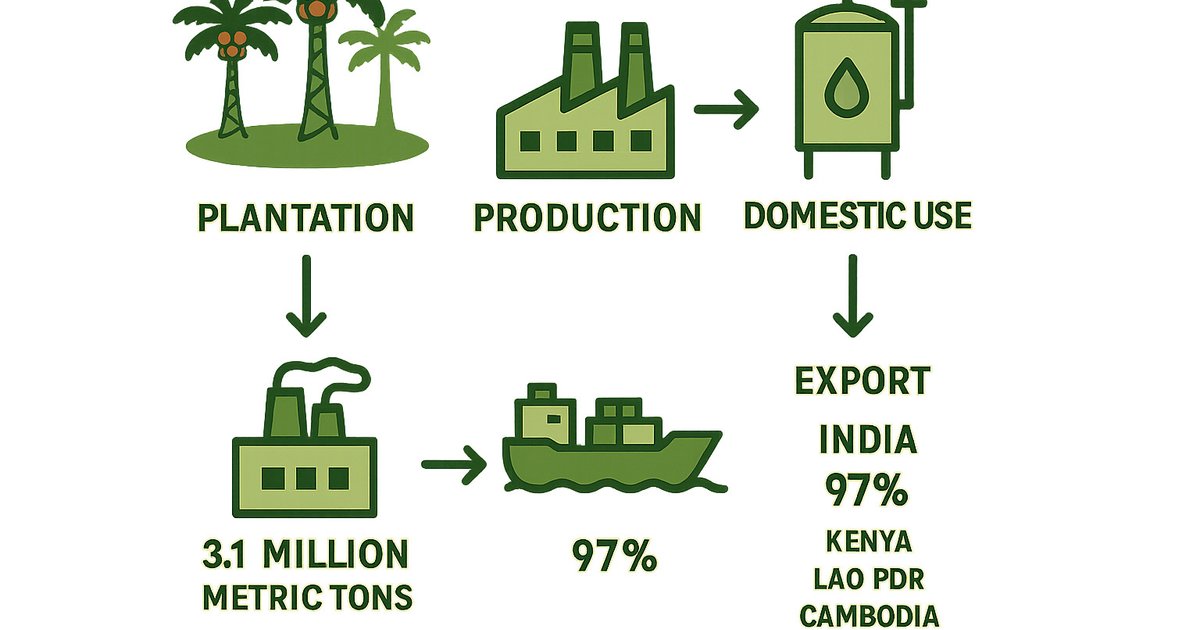
The Thai government has declared its intention to tighten controls on crude palm oil exports as part of its efforts to secure the necessary supplies for the local market. This decision will come into effect on April 7, 2026, and will last for a full year. This move comes at a time when the country is witnessing an increase in demand for palm oil, which is considered one of the essential agricultural products in the Thai economy.
Thailand is the third-largest producer of palm oil in the world, with an estimated production of approximately 3.94 million tons by 2026, according to forecasts from the Thai Agricultural Economic Office. Palm oil is used in various food and non-food industries, making it a vital component of the local economy.
Details of the Announcement
Reports indicate that the Thai government aims to achieve a balance between exports and local needs through these measures. In recent years, there has been a noticeable increase in global palm oil prices, affecting the purchasing power of local consumers. Thus, the government hopes to mitigate the impact of global price fluctuations on the local market.
The new measures include imposing restrictions on the quantities of palm oil exported, allowing the government to control supplies and ensure availability in the local market. The government will also monitor prices to ensure they do not rise excessively, which could negatively impact consumers.
Background & Context
Historically, Thailand has seen significant development in palm oil production, starting to cultivate palm trees in the 1970s. Since then, Thailand has become one of the leading countries in this field, contributing to the enhancement of the national economy. However, challenges related to sustainability and the environment have begun to emerge, prompting the government to take more cautious steps in resource management.
In recent years, Thailand has faced increasing pressure from the international community regarding sustainable farming practices, leading the government to adopt new policies aimed at improving the sustainability of palm oil production. There are also ongoing efforts to enhance transparency in the supply chain, contributing to improving the country's reputation on the global stage.
Impact & Consequences
This move by the Thai government is seen as a reaction to the economic and social challenges facing the country. Tightening export controls may lead to multiple effects on both the local and global markets. On one hand, this decision could result in increased local prices, affecting consumers. On the other hand, it may reduce Thailand's share in the global market.
These measures could also impact trade relations with importing countries, as the export restrictions may lead to strained trade relationships. However, the government hopes that this step will enhance stability in the local market, contributing to improving the economic conditions for local farmers.
Regional Significance
Thailand is one of the main exporters of palm oil to many Arab countries. Therefore, any changes in palm oil export policy could affect prices in Arab markets. Many Arab countries rely on palm oil for their food industries, making them sensitive to any fluctuations in supplies.
Additionally, these policies may affect Arab investments in the agricultural sector in Thailand, as Arab investors seek to achieve returns through investments in this vital sector.
In conclusion, tightening controls on palm oil exports in Thailand represents a strategic step aimed at protecting the local market, but it carries significant challenges on a global level. The Thai government must balance local market needs with its international commitments to maintain its position in the global market.