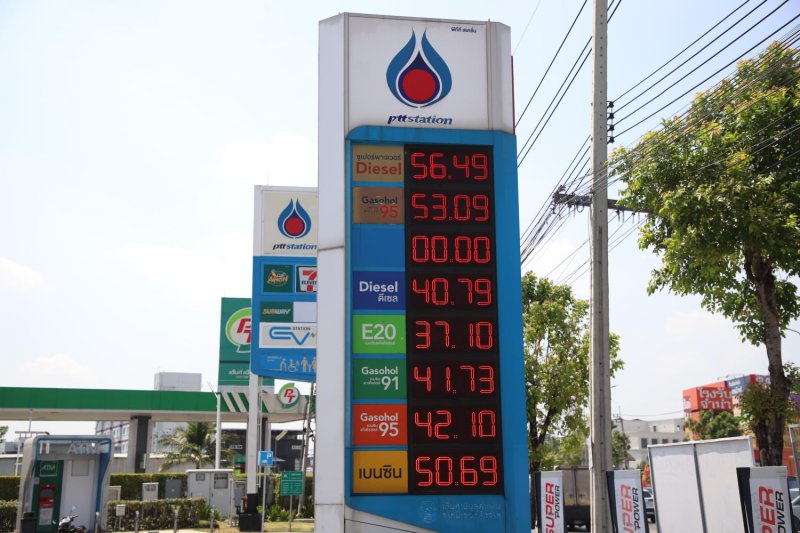
The Joint Committee on Commerce, Industry, and Banking in Thailand (JSCCIB) has announced a reduction in its GDP growth forecasts for the country to a range of 1.2-1.6%, citing the impact of the ongoing energy crisis triggered by the conflict in the Middle East. Earlier forecasts indicated growth between 1.6-2.0%, reflecting a significant deterioration in economic conditions.
During the committee's meeting, Kreingkrai Thienukul, President of the Federation of Thai Industries, warned that the continuation of the conflict could lead to rising global crude oil prices, exacerbating the slowdown of the Thai economy and increasing the cost of living. He noted that the outlook for the country's exports appears bleak, with expectations of a contraction between 0.5-1.5%.
Details of the Situation
Inflation forecasts for 2026 have also been adjusted to 2-3%, compared to previous estimates ranging from 0.2-0.7%. The committee has urged the government to take immediate steps to manage energy prices and provide support to small and medium-sized enterprises and vulnerable households.
The Federation of Thai Industries is also calling on the government to implement urgent measures, including the possibility of reducing the excise tax on fuel to help small and medium-sized businesses cope with rising operational costs due to increasing global oil prices. Kreingkrai emphasized that these businesses represent 80-90% of the Thai economy and are struggling under the burden of rising transportation, logistics, and manufacturing costs.
Background & Context
These developments come at a time when many countries are suffering from the effects of the war in the Middle East on energy prices. The rise in oil prices directly impacts the economies of oil-importing countries like Thailand, which heavily relies on imports to meet its energy needs. Oil prices have seen significant increases in recent months, adding pressure to the Thai economy.
Historically, Thailand has depended on imported energy sources, making it vulnerable to fluctuations in the global market. Previous crises have shown how geopolitical tensions can affect the domestic economy, necessitating effective measures to mitigate these impacts.
Impact & Consequences
The committee anticipates that these conditions will exacerbate economic situations in the country, potentially leading to increased unemployment rates and a decline in citizens' purchasing power. Additionally, rising living costs may impact social stability, raising concerns about potential public protests.
On the other hand, Kreingkrai urged the government to accelerate the transition to renewable energy, emphasizing that solar energy could play a vital role in reducing dependence on imported oil and gas. He also expressed support for the 2026 Energy Development Plan, which is expected to enhance renewable projects and incorporate nuclear energy into the national energy mix.
Regional Significance
Arab countries are significantly affected by fluctuations in oil prices, as the region is a major source of oil. Therefore, crises in the Middle East impact the economies of oil-importing nations like Thailand, increasing pressures on global markets. Furthermore, rising oil prices may lead to increased living costs in Arab countries, necessitating a swift response from governments.
In conclusion, the current situation in Thailand requires urgent measures to mitigate the effects of the energy crisis, with a focus on enhancing renewable energy sources to ensure the sustainability of the economy in the future.