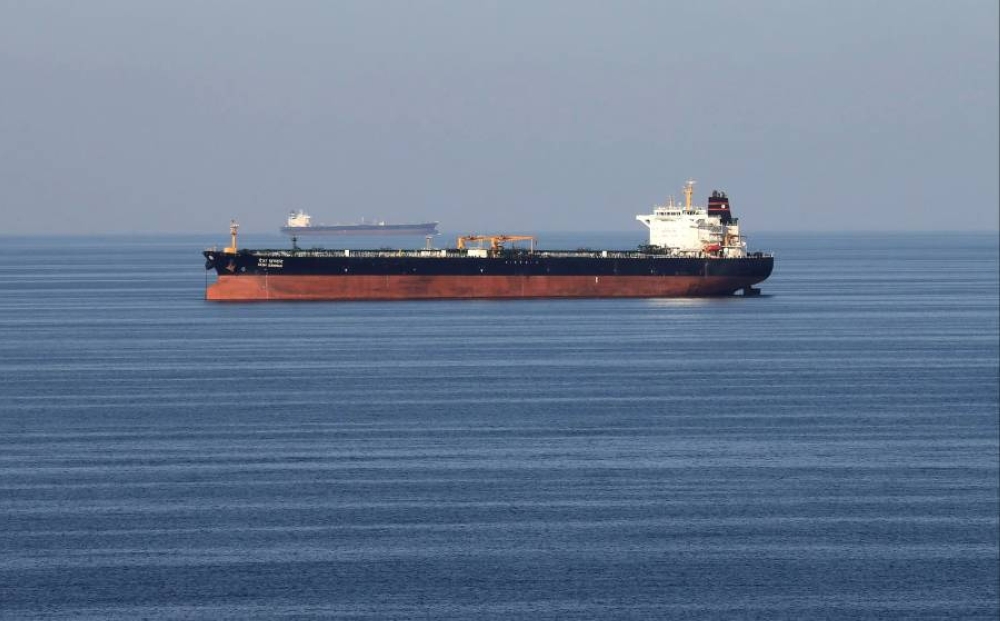
The Wall Street Journal indicates that the renewed crisis in the Strait of Hormuz is just the latest chapter in a long-standing struggle among competing empires for control of this waterway, which has a rich history stretching back centuries. According to the article, tensions are currently rising due to Iran's response to American and Israeli attacks, raising the specter of a potential global energy crisis.
Since ancient times, the Strait of Hormuz has drawn the attention of civilizations such as ancient Persia, Greece, the Ottomans, and the Portuguese, who sought dominance over this vital trade route, which was formerly known as the 'Pirate Coast.' This reflects the challenges faced by commercial shipments as a result of pirate attacks from the opposing shores, now known as the United Arab Emirates.
The strategic interest in the Strait of Hormuz dates back to the 1930s when massive oil discoveries in Saudi Arabia and Bahrain led to new geopolitical calculations regarding the Gulf. The British were appointed as protectors of the region for decades, and this responsibility later shifted to Iran’s Shah, Reza Pahlavi, who enjoyed the support of the United States, before everything changed dramatically with the outbreak of the Islamic Revolution in Iran in 1979.
Following the hostage-taking of American diplomats, threats concerning oil shipments passing through the Strait of Hormuz began to escalate, prompting former President Jimmy Carter to adopt a firm stance deemed a warning to external parties against controlling the Gulf.
Since then, every U.S. president has faced the reality of needing to take action concerning Iran, emphasizing the importance of the Strait of Hormuz as a vital route for oil transportation. Notably, former President Ronald Reagan's approach in the late 1980s during the Iran-Iraq War had significant implications, as oil infrastructure suffered under pressure. Reagan organized naval convoys to escort ships and confront these threats.
The article also noted the stance of former President Donald Trump, who had a keen interest in the Strait of Hormuz. In 1987, he wrote an open letter through newspapers urging American allies like Japan and Saudi Arabia to bear the costs of protecting shipments. In his letter, Trump addressed the importance of the Gulf for the United States, highlighting Washington’s priorities in the region.
The conflict in the Strait of Hormuz spans over a century and requires a deep understanding of history, geography, and politics. It is not only a regional conflict but also involves global dimensions and their impact on the oil market. While Iran remains a key player in the equation, the role of Western nations is evident in their relentless pursuit to maintain navigation and oil exchange.
Recently, attention has once again focused on how the strait affects global energy markets, as tensions there serve as crucial indicators for exporting countries and companies. Iranian threats and piracy increase anxiety among governments worldwide that rely on oil flow through this important passage.
The end of the conflict over the Strait of Hormuz remains unclear, while the future of the global economy depends on how these tensions are managed and their impact on energy markets and international navigation. This struggle reflects the rich history and geopolitical complexity of the region.