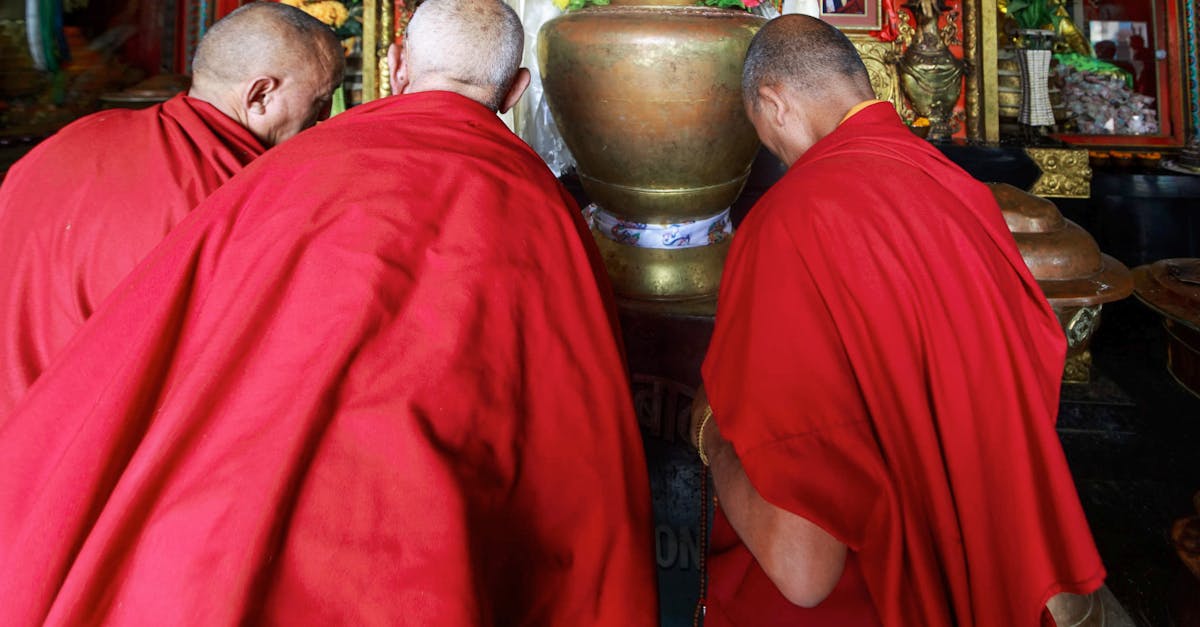
In a historic event, thirteen monks were awarded the Geshe Lharampa title, the highest honor in the teachings of the Gelug school of Tibetan Buddhism, after participating in a religious debate held on Sunday, April 5, in the Tibet Autonomous Region of China. This occasion reflects the ongoing efforts to enhance religious education in the region.
The title awarding ceremony took place at the Jokhang Temple, considered one of the holiest Buddhist temples in Tibet, where numerous religious and social figures gathered to celebrate this achievement. Since 2004, this title has been awarded to 215 monks, demonstrating the continuity of religious education in the area.
Details of the Event
The satra debate in which the monks participated is a fundamental part of the educational process in Tibetan Buddhism. Knowledge and deep understanding of religious texts are tested through live debates, enhancing students' critical thinking and ability to express their opinions.
The title received by the monks is equivalent to a doctoral degree in modern educational systems, highlighting the importance of religious education in Tibetan society. This achievement not only reflects the personal dedication of the monks but also the community's commitment to promoting spiritual teachings.
Background & Context
Historically, Tibet has always been a center of Buddhist culture and religion, where many schools of thought have emerged. The Gelug school, to which the awarded monks belong, is one of the most prominent schools that contributed to shaping Buddhist thought in Tibet.
For decades, Tibet has witnessed significant political and social changes; however, religious education still holds a prominent place in the lives of the inhabitants. Granting titles such as Geshe Lharampa is seen as evidence of the continuation of this tradition in the face of challenges.
Impact & Consequences
The awarding of this title to the monks reflects the Buddhist community's commitment to enhancing spiritual education, which may influence future generations of learners in Tibet. Additionally, this achievement could contribute to boosting cultural and religious tourism in the region, as many visitors seek to experience the rich Buddhist culture.
This event may lead to increased global interest in Tibetan Buddhism, potentially opening new avenues for cultural and religious cooperation between Tibet and the rest of the world.
Regional Significance
Although Buddhism is not a major religion in the Arab world, events like this reflect the importance of education and cultural traditions, which can positively impact dialogue between different cultures. Furthermore, fostering mutual understanding between religions can contribute to building bridges of cooperation and peace.
In conclusion, this event serves as a testament to the power of religious education in shaping communities and demonstrates how ancient traditions can continue to influence new generations.