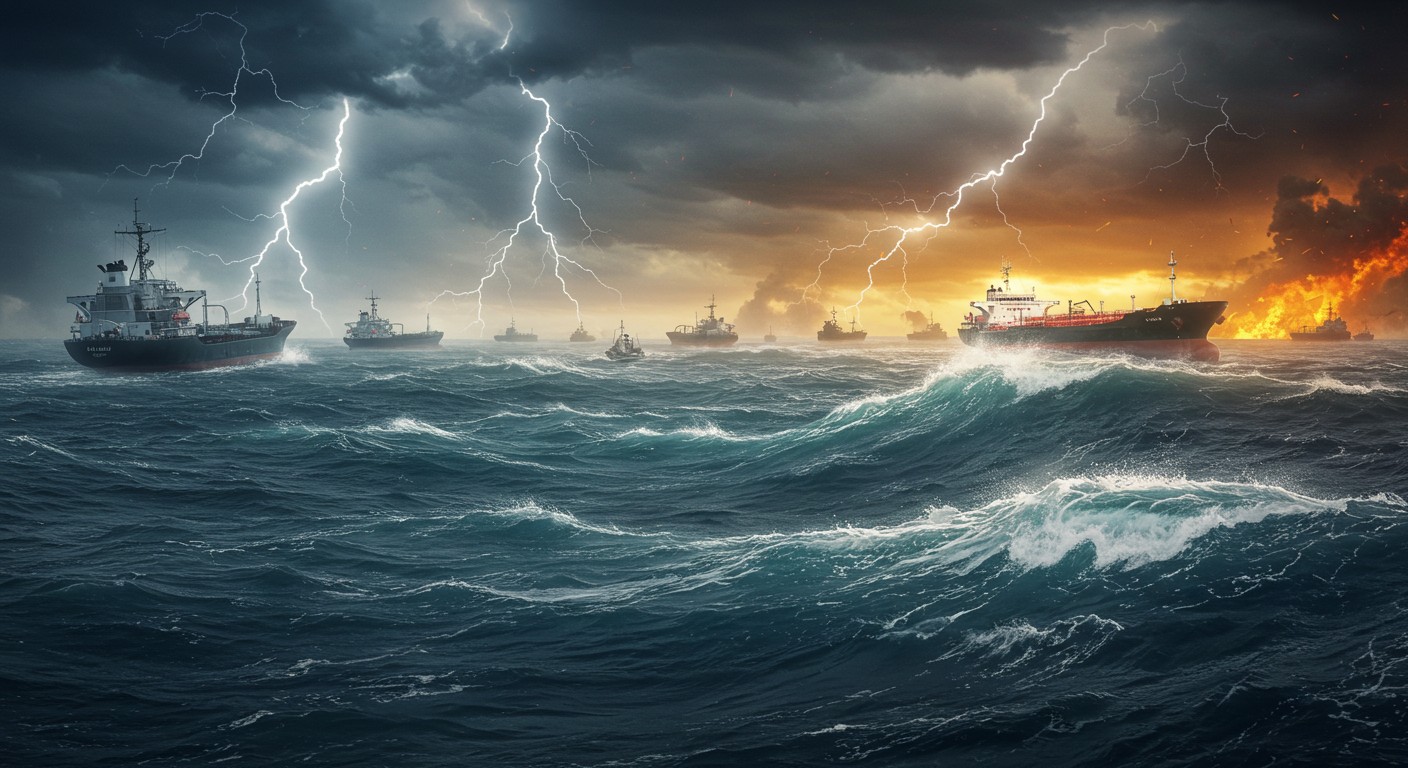
The humanitarian situation in the Hormuz Strait is worsening, with thousands of sailors stranded at sea facing harsh conditions due to the ongoing war. Commercial vessels have turned into terrifying waiting areas, where crews suffer from acute shortages of food and water, in addition to the threat of attacks and the uncertainty surrounding their fate.
According to a report published by the Wall Street Journal, journalist Rebecca Feng indicates that the war with Iran has led to the forced detention of thousands of ships and tens of thousands of sailors in the Gulf. Approximately 2,000 ships and more than 20,000 sailors are trapped amidst increasing risks and severe supply shortages.
Details of the Crisis
The tragic details include the death of the captain of one of the oil tankers, Rakesh Ranjan Singh, who died after 19 days of his ship being detained due to a heart attack, as medical supplies could not reach him nor was air evacuation possible. This incident reflects the direct human cost of war on those working at sea.
The closure of the Hormuz Strait, which is a vital passage for about 20% of the world's oil, has led to widespread paralysis in maritime traffic. Fewer than 200 ships have been able to pass through, while others remain stuck for weeks, raising concerns about when normal navigation will resume.
Context and Background
Historically, the Hormuz Strait has been a strategic point in global trade, linking the Arabian Gulf with the Sea of Oman. As tensions rise between Iran and Western countries, navigation in this strait has become threatened, directly impacting global trade flows.
Security risks are increasing, with ships subjected to direct attacks. In one incident, a ship's captain reported via radio a missile attack that resulted in the death of a crew member, highlighting the significant challenges faced by sailors in this troubled region.
Impact and Consequences
The suffering of sailors goes beyond food shortages, as they live in constant fear of death. One Chinese sailor recounts how he sees missiles and drones flying overhead, heightening the state of anxiety and fear. Additionally, rising food supply prices exacerbate their suffering, with some resorting to primitive solutions like fishing.
Shipping companies are under increasing pressure, as some owners still send their ships to this dangerous area, provoking criticism from labor unions. One official states, "Sailors should be able to return home when they request it; they do not want to be heroes."
Impact on the Arab Region
This situation significantly affects the Arab region, as trade movement through the Hormuz Strait is a vital artery for Arab economies. Any disruptions in this corridor could lead to rising oil prices and exacerbate economic crises in countries dependent on these supplies.
In conclusion, the current crisis in the Hormuz Strait reflects the significant challenges faced by sailors amid wartime conditions, as they live in a state of fear and anxiety, necessitating urgent solutions to end this humanitarian crisis.