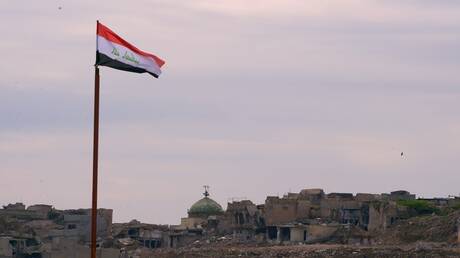
Thousands of Iraqis demonstrated in the streets of Baghdad on Saturday, protesting against US and Israeli strikes targeting Iran. These protests reflect the growing anger in Iraqi society towards foreign interventions in the region's affairs, as demonstrators gathered in Tahrir Square, expressing their rejection of these military operations, which they consider a violation of their country's sovereignty.
The demonstrations come at a time when tensions between the United States and Iran are escalating, following a series of airstrikes targeting Iranian sites in recent days, which sparked strong reactions from both the Iraqi government and citizens alike.
Details of the Event
Protesters gathered in Tahrir Square, holding banners condemning the military strikes and calling on the Iraqi government to take a firm stance against these interventions. Images circulated on social media showed large crowds, reflecting the magnitude of public anger. The demonstrators also chanted slogans calling for national unity and rejecting foreign interference in Iraq's affairs.
The protests were not limited to Baghdad alone; other cities in Iraq witnessed similar demonstrations, indicating that anger over US and Israeli strikes has spread across the country. Reports indicated that some protesters blocked major roads in the capital, leading to traffic disruptions.
Background & Context
The roots of the current tensions trace back to the ongoing conflict between the United States and Iran, which escalated after the US withdrawal from the Iranian nuclear deal in 2018. Since then, the US has imposed strict economic sanctions on Iran, exacerbating the economic and political situation in the country.
Although the Iraqi government adopts a policy of non-alignment, external pressures from both the US and Iran place it in a difficult position. Many Iraqi politicians have expressed concern that these pressures could destabilize Iraq, which still suffers from the aftermath of civil war and internal conflicts.
Impact & Consequences
These protests are seen as an indicator of the increasing public awareness in Iraq regarding foreign interventions. They also reflect growing concerns that Iraq could become a battleground for major powers, potentially worsening the security and economic conditions in the country.
These protests are likely to influence the Iraqi government's policies, as it may be compelled to take firmer steps against external pressures. Additionally, they could strengthen national sentiments, contributing to unity against foreign interventions.
Regional Significance
These events are part of the larger picture of conflict in the Middle East, where tensions between regional and international powers are on the rise. The protests in Iraq may inspire other peoples in the region to express their rejection of foreign interventions, potentially leading to political and social changes in other countries.
Ultimately, the situation in Iraq remains contingent on the developments in the US-Iran conflict and the Iraqi government's ability to maintain its sovereignty and stability in the face of these pressures.